• Contact info@abtriva.com for inquiries and orders.
  • Chinese (Simplified)

  • English

  • German

  • Korean

  • Spanish

United States (English / $ USD)

Rabbit anti-Human CD84 Polyclonal Antibody

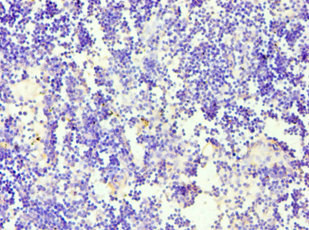
The antibody against CD84 was raised in rabbit using the Recombinant Human SLAM family member 5 protein (22-225AA) as the immunogen. This antibody exists as a non-conjugated isotype IgG, Antigen affinity purified. This antibody has been validated on ELISA, WB, IHC.

ADC-44358A

The antibody against CD84 was raised in rabbit using the Recombinant Human SLAM family member 5 protein (22-225AA) as the immunogen. This antibody exists as a non-conjugated isotype IgG, Antigen affinity purified. This antibody has been validated on ELISA, WB, IHC.

$299.00

Number
Order Exclusive Products Now

Request a Quote
High Purity LevelsPrecision and ReliabilityCustomization Options

Specifications


Cat.No ADC-44358A ClonalityPolyclonal
Host SpeciesRabbitTarget NameCD84
FormLiquidSpecies ReactivityHuman, Mouse
IsotypeIgGStorage Buffer50% Glycerol, PBS with 0.02% sodium azide, pH7.3.
Purification MethodAntigen affinity purifiedConjugateNon-conjugated
ApplicationELISA, IHC, WBStorageUpon receipt

Immunogen Information


Immunogen DescriptionRecombinant Human SLAM family member 5 protein (22-225AA)Target SpeciesHuman
Immunogen SequenceComplete sequences for the immunogen, target protein, and peptides are available upon request.Uniprot IDQ9UIB8
Background Information
  • Uniprot Id

    Q9UIB8

  • Target Species

    Human

  • Target Name

    CD84

  • Target Full Name

    SLAM family member 5

  • Target Function

    Self-ligand receptor of the signaling lymphocytic activation molecule (SLAM) family. SLAM receptors triggered by homo- or heterotypic cell-cell interactions are modulating the activation and differentiation of a wide variety of immune cells and thus are involved in the regulation and interconnection of both innate and adaptive immune response. Activities are controlled by presence or absence of small cytoplasmic adapter proteins, SH2D1A/SAP and/or SH2D1B/EAT-2. Can mediate natural killer (NK) cell cytotoxicity dependent on SH2D1A and SH2D1B. Increases proliferative responses of activated T-cells and SH2D1A/SAP does not seem be required for this process. Homophilic interactions enhance interferon gamma/IFNG secretion in lymphocytes and induce platelet stimulation via a SH2D1A-dependent pathway. May serve as a marker for hematopoietic progenitor cells Required for a prolonged T-cell:B-cell contact, optimal T follicular helper function, and germinal center formation. In germinal centers involved in maintaining B-cell tolerance and in preventing autoimmunity. In mast cells negatively regulates high affinity immunoglobulin epsilon receptor signaling; independent of SH2D1A and SH2D1B but implicating FES and PTPN6/SHP-1. In macrophages enhances LPS-induced MAPK phosphorylation and NF-kappaB activation and modulates LPS-induced cytokine secretion; involving ITSM 2. Positively regulates macroautophagy in primary dendritic cells via stabilization of IRF8; inhibits TRIM21-mediated proteasomal degradation of IRF8.

  • Target Subcellular Location

    Cell membrane; Single-pass type I membrane protein.

  • Target Tissue Specificity

    Predominantly expressed in hematopoietic tissues, such as lymph node, spleen and peripheral leukocytes. Expressed in macrophages, B-cells, monocytes, platelets, thymocytes, T-cells and dendritic cells. Highly expressed in memory T-cells. Expressed in mast

  • Target Synonyms

    LY9B; hCD84; mCD84; SLAMF5; CD84

  • Target Background

    This gene encodes a membrane glycoprotein that is a member of the signaling lymphocyte activation molecule (SLAM) family. This family forms a subset of the larger CD2 cell-surface receptor Ig superfamily. The encoded protein is a homophilic adhesion molecule that is expressed in numerous immune cells types and is involved in regulating receptor-mediated signaling in those cells. Alternate splicing results in multiple transcript variants.

Inquire Rabbit anti-Human CD84 Polyclonal Antibody Now


AbTriva respects your privacy and protects your personal data in accordance with AbTriva. For more information, please see our data protection statement. *

Notification