-
Chinese (Simplified)
-
English
-
German
-
Korean
-
Spanish
Chinese (Simplified)
English
German
Korean
Spanish
Sign up for an account to enjoy easy online shopping and instant order tracking.
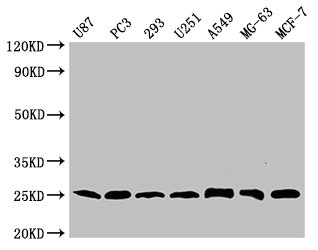
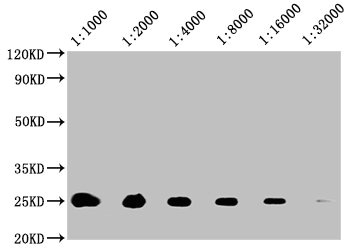
The antibody against CD9 was raised in mouse using the Recombinant Human CD9 antigen protein (112-195AA) as the immunogen. This antibody exists as a non-conjugated isotype IgG1, purified by protein G with a purity greater than 95%. This antibody has been validated on ELISA, WB, IHC, IF, FC.
$350.00
| Cat.No | ADC-56087A | Clonality | Monoclonal |
|---|---|---|---|
| Host Species | Mouse | Target Name | CD9 |
| Target Synonyms | CD9; MIC3; TSPAN29; GIG2; CD9 antigen; 5H9 antigen; Cell growth-inhibiting gene 2 protein; Leukocyte antigen MIC3; Motility-related protein; MRP-1; Tetraspanin-29; Tspan-29; p24; CD antigen CD9 | Form | Liquid |
| Species Reactivity | Human | Isotype | IgG1 |
| Storage Buffer | 0.01M PBS, 0.03% Proclin 300; Constituents: 50% Glycerol, PH 7.4 | Purification Method | >95%, Protein G purified |
| Conjugate | Non-conjugated | Application | ELISA, IF, IHC, WB, FC |
| Storage | Upon receipt |
| Immunogen Description | Recombinant Human CD9 antigen protein (112-195AA) | Target Species | Human |
|---|---|---|---|
| Immunogen Sequence | Complete sequences for the immunogen, target protein, and peptides are available upon request. | Uniprot ID | P21926 |
Uniprot Id
P21926
Target Species
Human
Target Name
CD9
Target Full Name
CD9 antigen
Target Function
Integral membrane protein associated with integrins, which regulates different processes, such as sperm-egg fusion, platelet activation and aggregation, and cell adhesion. Present at the cell surface of oocytes and plays a key role in sperm-egg fusion, possibly by organizing multiprotein complexes and the morphology of the membrane required for the fusion. In myoblasts, associates with CD81 and PTGFRN and inhibits myotube fusion during muscle regeneration. In macrophages, associates with CD81 and beta-1 and beta-2 integrins, and prevents macrophage fusion into multinucleated giant cells specialized in ingesting complement-opsonized large particles. Also prevents the fusion between mononuclear cell progenitors into osteoclasts in charge of bone resorption. Acts as a receptor for PSG17. Involved in platelet activation and aggregation. Regulates paranodal junction formation. Involved in cell adhesion, cell motility and tumor metastasis.
Target Subcellular Location
Cell membrane; Multi-pass membrane protein. Membrane; Multi-pass membrane protein. Secreted, extracellular exosome.
Target Protein Families
Tetraspanin (TM4SF) family
Target Tissue Specificity
Detected in platelets (at protein level). Expressed by a variety of hematopoietic and epithelial cells.
Target Research Area
Cardiovascular
Target Synonyms
CD9; MIC3; TSPAN29; GIG2; CD9 antigen; 5H9 antigen; Cell growth-inhibiting gene 2 protein; Leukocyte antigen MIC3; Motility-related protein; MRP-1; Tetraspanin-29; Tspan-29; p24; CD antigen CD9
Target Background
This gene encodes a member of the transmembrane 4 superfamily, also known as the tetraspanin family. Tetraspanins are cell surface glycoproteins with four transmembrane domains that form multimeric complexes with other cell surface proteins. The encoded protein functions in many cellular processes including differentiation, adhesion, and signal transduction, and expression of this gene plays a critical role in the suppression of cancer cell motility and metastasis.
Notification