-
Chinese (Simplified)
-
English
-
German
-
Korean
-
Spanish
Chinese (Simplified)
English
German
Korean
Spanish
Sign up for an account to enjoy easy online shopping and instant order tracking.
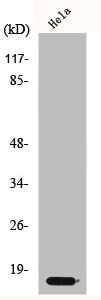
The antibody against CDKN2A was raised in rabbit using the Synthesized peptide derived from the Internal region of Human p14. as the immunogen. This antibody exists as a non-conjugated isotype IgG. The antibody was affinity-purified from rabbit antiserum by affinity-chromatography using epitope-specific immunogen. This antibody has been validated on WB, IHC, IF, ELISA.
$167.00
| Cat.No | ADC-37949A | Clonality | Polyclonal |
|---|---|---|---|
| Host Species | Rabbit | Target Name | CDKN2A |
| Target Synonyms | CDKN2A antibody; CDKN2 antibody; MLM antibody; Tumor suppressor ARF antibody; Alternative reading frame antibody; ARF antibody; Cyclin-dependent kinase inhibitor 2A antibody; p14ARF antibody | Form | Liquid |
| Species Reactivity | Human | Isotype | IgG |
| Storage Buffer | 0.5% BSA and 0.02% sodium azide., Liquid in PBS containing 50% glycerol | Purification Method | The antibody was affinity-purified from rabbit antiserum by affinity-chromatography using epitope-specific immunogen. |
| Conjugate | Non-conjugated | Application | ELISA, IF, IHC, WB |
| Storage | Upon receipt |
| Immunogen Description | Synthesized peptide derived from the Internal region of Human p14. | Target Species | Human |
|---|---|---|---|
| Immunogen Sequence | Complete sequences for the immunogen, target protein, and peptides are available upon request. | Uniprot ID | Q8N726 |
Uniprot Id
Q8N726
Target Species
Human
Target Name
CDKN2A
Target Full Name
Tumor suppressor ARF
Target Function
Capable of inducing cell cycle arrest in G1 and G2 phases. Acts as a tumor suppressor. Binds to MDM2 and blocks its nucleocytoplasmic shuttling by sequestering it in the nucleolus. This inhibits the oncogenic action of MDM2 by blocking MDM2-induced degradation of p53 and enhancing p53-dependent transactivation and apoptosis. Also induces G2 arrest and apoptosis in a p53-independent manner by preventing the activation of cyclin B1/CDC2 complexes. Binds to BCL6 and down-regulates BCL6-induced transcriptional repression. Binds to E2F1 and MYC and blocks their transcriptional activator activity but has no effect on MYC transcriptional repression. Binds to TOP1/TOPOI and stimulates its activity. This complex binds to rRNA gene promoters and may play a role in rRNA transcription and/or maturation. Interacts with NPM1/B23 and promotes its polyubiquitination and degradation, thus inhibiting rRNA processing. Interacts with COMMD1 and promotes its 'Lys63'-linked polyubiquitination. Interacts with UBE2I/UBC9 and enhances sumoylation of a number of its binding partners including MDM2 and E2F1. Binds to HUWE1 and represses its ubiquitin ligase activity. May play a role in controlling cell proliferation and apoptosis during mammary gland development. Isoform smARF may be involved in regulation of autophagy and caspase-independent cell death; the short-lived mitochondrial isoform is stabilized by C1QBP.
Target Subcellular Location
Nucleus, nucleolus. Nucleus, nucleoplasm.; [Isoform smARF]: Mitochondrion.
Target Synonyms
CDKN2A; CDKN2; MLM; Tumor suppressor ARF; Alternative reading frame; ARF; Cyclin-dependent kinase inhibitor 2A; p14ARF
Notification