-
Chinese (Simplified)
-
English
-
German
-
Korean
-
Spanish
Chinese (Simplified)
English
German
Korean
Spanish
Sign up for an account to enjoy easy online shopping and instant order tracking.
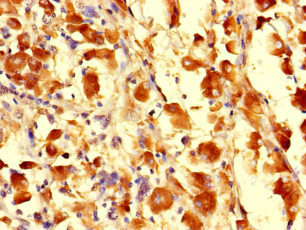
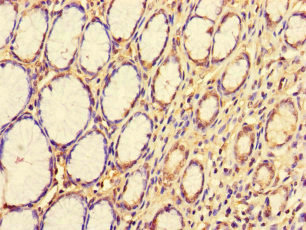
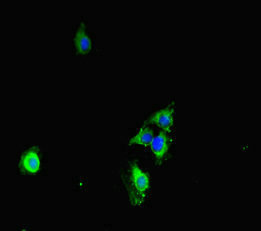
The antibody against CDS1 was raised in rabbit using the Recombinant Human Phosphatidate cytidylyltransferase 1 protein (6-85AA) as the immunogen. This antibody exists as a non-conjugated isotype IgG, purified by protein G with a purity greater than 95%. This antibody has been validated on ELISA, IHC, IF.
$299.00
| Cat.No | ADC-15137A | Clonality | Polyclonal |
|---|---|---|---|
| Host Species | Rabbit | Target Name | CDS1 |
| Form | Liquid | Species Reactivity | Human |
| Isotype | IgG | Storage Buffer | 0.01M PBS, 0.03% Proclin 300; Constituents: 50% Glycerol, PH 7.4 |
| Purification Method | >95%, Protein G purified | Conjugate | Non-conjugated |
| Application | ELISA, IF, IHC | Storage | Upon receipt |
| Immunogen Description | Recombinant Human Phosphatidate cytidylyltransferase 1 protein (6-85AA) | Target Species | Human |
|---|---|---|---|
| Immunogen Sequence | Complete sequences for the immunogen, target protein, and peptides are available upon request. | Uniprot ID | Q92903 |
Uniprot Id
Q92903
Target Species
Human
Target Name
CDS1
Target Full Name
Phosphatidate cytidylyltransferase 1
Target Function
Catalyzes the conversion of phosphatidic acid (PA) to CDP-diacylglycerol (CDP-DAG), an essential intermediate in the synthesis of phosphatidylglycerol, cardiolipin and phosphatidylinositol. Exhibits almost no acyl chain preference for PA, showing no discrimination for the sn-1/sn-2 acyl chain composition of PAs. Plays an important role in regulating the growth of lipid droplets which are storage organelles at the center of lipid and energy homeostasis. Positively regulates the differentiation and development of adipocytes.
Target Subcellular Location
Endoplasmic reticulum membrane; Multi-pass membrane protein.
Target Protein Families
CDS family
Target Tissue Specificity
Expressed in adult tissues such as placenta, brain, small intestine, ovary, testis and prostate. Highly expressed in fetal kidney, lung and brain. Lower level in fetal liver.
Target Synonyms
CDS1; CDS; Phosphatidate cytidylyltransferase 1; CDP-DAG synthase 1; CDP-DG synthase 1; CDP-diacylglycerol synthase 1; CDS 1; CDP-diglyceride pyrophosphorylase 1; CDP-diglyceride synthase 1; CTP:phosphatidate cytidylyltransferase 1
Target Background
Breakdown products of phosphoinositides are ubiquitous second messengers that function downstream of many G protein-coupled receptors and tyrosine kinases regulating cell growth, calcium metabolism, and protein kinase C activity. This gene encodes an enzyme which regulates the amount of phosphatidylinositol available for signaling by catalyzing the conversion of phosphatidic acid to CDP-diacylglycerol. This enzyme is an integral membrane protein localized to two subcellular domains, the matrix side of the inner mitochondrial membrane where it is thought to be involved in the synthesis of phosphatidylglycerol and cardiolipin and the cytoplasmic side of the endoplasmic reticulum where it functions in phosphatidylinositol biosynthesis. Two genes encoding this enzyme have been identified in humans, one mapping to human chromosome 4q21 and a second to 20p13.
Notification