-
Chinese (Simplified)
-
English
-
German
-
Korean
-
Spanish
Chinese (Simplified)
English
German
Korean
Spanish
Sign up for an account to enjoy easy online shopping and instant order tracking.
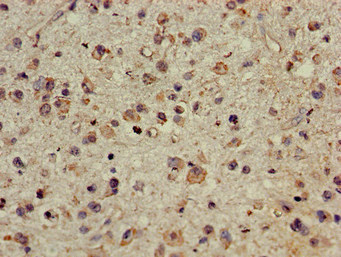
The antibody against CDYL was raised in rabbit using the Recombinant Human Chromodomain Y-like protein (8-260AA) as the immunogen. This antibody exists as a non-conjugated isotype IgG, purified by protein G with a purity greater than 95%. This antibody has been validated on ELISA, WB, IHC.
$299.00
| Cat.No | ADC-11470A | Clonality | Polyclonal |
|---|---|---|---|
| Host Species | Rabbit | Target Name | CDYL |
| Form | Liquid | Species Reactivity | Human |
| Isotype | IgG | Storage Buffer | 0.01M PBS, 0.03% Proclin 300; Constituents: 50% Glycerol, PH 7.4 |
| Purification Method | >95%, Protein G purified | Conjugate | Non-conjugated |
| Application | ELISA, IHC, WB | Storage | Upon receipt |
| Immunogen Description | Recombinant Human Chromodomain Y-like protein (8-260AA) | Target Species | Human |
|---|---|---|---|
| Immunogen Sequence | Complete sequences for the immunogen, target protein, and peptides are available upon request. | Uniprot ID | Q9Y232 |
Uniprot Id
Q9Y232
Target Species
Human
Target Name
CDYL
Target Full Name
Chromodomain Y-like protein
Target Function
Chromatin reader protein that recognizes and binds histone H3 trimethylated at 'Lys-9', dimethylated at 'Lys-27' and trimethylated at 'Lys-27' (H3K9me3, H3K27me2 and H3K27me3, respectively). Part of multimeric repressive chromatin complexes, where it is required for transmission and restoration of repressive histone marks, thereby preserving the epigenetic landscape. Required for chromatin targeting and maximal enzymatic activity of Polycomb repressive complex 2 (PRC2); acts as a positive regulator of PRC2 activity by bridging the pre-existing histone H3K27me3 and newly recruited PRC2 on neighboring nucleosomes. Acts as a corepressor for REST by facilitating histone-lysine N-methyltransferase EHMT2 recruitment and H3K9 dimethylation at REST target genes for repression. Involved in X chromosome inactivation in females: recruited to Xist RNA-coated X chromosome and facilitates propagation of H3K9me2 by anchoring EHMT2. Promotes EZH2 accumulation and H3K27me3 methylation at DNA double strand breaks (DSBs), thereby facilitating transcriptional repression at sites of DNA damage and homology-directed repair of DSBs. Required for neuronal migration during brain development by repressing expression of RHOA. By repressing the expression of SCN8A, contributes to the inhibition of intrinsic neuronal excitability and epileptogenesis. In addition to acting as a chromatin reader, acts as a hydro-lyase. Shows crotonyl-coA hydratase activity by mediating the conversion of crotonyl-CoA ((2E)-butenoyl-CoA) to beta-hydroxybutyryl-CoA (3-hydroxybutanoyl-CoA), thereby acting as a negative regulator of histone crotonylation. Histone crotonylation is required during spermatogenesis; down-regulation of histone crotonylation by CDYL regulates the reactivation of sex chromosome-linked genes in round spermatids and histone replacement in elongating spermatids. By regulating histone crotonylation and trimethylation of H3K27, may be involved in stress-induced depression-like behaviors, possibly by regulating VGF expression.; Not able to recognize and bind histone H3K9me3, histone H3K27me2 and histone H3K27me3, due to the presence of a N-terminal extension that inactivates the chromo domain.; Not able to recognize and bind histone H3K9me3, histone H3K27me2 and histone H3K27me3, due to the absence of the chromo domain. Acts as a negative regulator of isoform 2 by displacing isoform 2 from chromatin.
Target Subcellular Location
[Isoform 2]: Nucleus. Chromosome.
Target Tissue Specificity
Expressed in the hippocampus with reduced expression in epileptic tissue compared to normal adjacent tissue (at protein level). Ubiquitous. Expressed at moderate levels in all tissues examined. Isoform 2: Most abundantly expressed isoform.
Target Synonyms
CDY-like; CDY-like autosomal; Cdyl; CDYL: chromodomain protein Y-like; CDYL1; CDYL1_HUMAN; chromodomain protein Y chromosome-like 6; Chromodomain protein Y like; Chromodomain Y-like protein; DKFZP586C1622; MGC131936; OTTHUMP00000015984; OTTHUMP00000211185; OTTHUMP00000211186; OTTHUMP00000211189; testis-specific chromodomain Y-like protein; Weakly similar to enoyl-CoA hydratase [H.sapiens]
Target Background
Chromodomain Y is a primate-specific Y-chromosomal gene family expressed exclusively in the testis and implicated in infertility. Although the Y-linked genes are testis-specific, this autosomal gene is ubiquitously expressed. The Y-linked genes arose by retrotransposition of an mRNA from this gene, followed by amplification of the retroposed gene. Proteins encoded by this gene superfamily possess a chromodomain, a motif implicated in chromatin binding and gene suppression, and a catalytic domain believed to be involved in histone acetylation. Multiple proteins are encoded by transcript variants of this gene.
Notification