-
Chinese (Simplified)
-
English
-
German
-
Korean
-
Spanish
Chinese (Simplified)
English
German
Korean
Spanish
Sign up for an account to enjoy easy online shopping and instant order tracking.
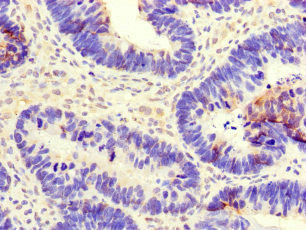
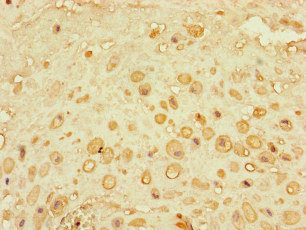
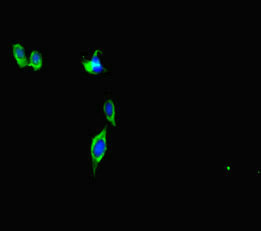
The antibody against CEP290 was raised in rabbit using the Recombinant Human Centrosomal protein of 290 kDa protein (86-156AA) as the immunogen. This antibody exists as a non-conjugated isotype IgG, purified by protein G with a purity greater than 95%. This antibody has been validated on ELISA, IHC, IF.
$299.00
| Cat.No | ADC-16098A | Clonality | Polyclonal |
|---|---|---|---|
| Host Species | Rabbit | Target Name | CEP290 |
| Form | Liquid | Species Reactivity | Human |
| Isotype | IgG | Storage Buffer | 0.01M PBS, 0.03% Proclin 300; Constituents: 50% Glycerol, PH 7.4 |
| Purification Method | >95%, Protein G purified | Conjugate | Non-conjugated |
| Application | ELISA, IF, IHC | Storage | Upon receipt |
| Immunogen Description | Recombinant Human Centrosomal protein of 290 kDa protein (86-156AA) | Target Species | Human |
|---|---|---|---|
| Immunogen Sequence | Complete sequences for the immunogen, target protein, and peptides are available upon request. | Uniprot ID | O15078 |
Uniprot Id
O15078
Target Species
Human
Target Name
CEP290
Target Full Name
Centrosomal protein of 290 kDa
Target Function
Involved in early and late steps in cilia formation. Its association with CCP110 is required for inhibition of primary cilia formation by CCP110. May play a role in early ciliogenesis in the disappearance of centriolar satellites and in the transition of primary ciliar vesicles (PCVs) to capped ciliary vesicles (CCVs). Required for the centrosomal recruitment of RAB8A and for the targeting of centriole satellite proteins to centrosomes such as of PCM1. Required for the correct localization of ciliary and phototransduction proteins in retinal photoreceptor cells; may play a role in ciliary transport processes. Required for efficient recruitment of RAB8A to primary cilium. In the ciliary transition zone is part of the tectonic-like complex which is required for tissue-specific ciliogenesis and may regulate ciliary membrane composition. Involved in regulation of the BBSome complex integrity, specifically for presence of BBS2, BBS5 and BBS8/TTC8 in the complex, and in ciliary targeting of selected BBSome cargos. May play a role in controlling entry of the BBSome complex to cilia possibly implicating IQCB1/NPHP5. Activates ATF4-mediated transcription.
Target Involvement
Joubert syndrome 5 (JBTS5); Senior-Loken syndrome 6 (SLSN6); Leber congenital amaurosis 10 (LCA10); Meckel syndrome 4 (MKS4); Bardet-Biedl syndrome 14 (BBS14)
Target Subcellular Location
Cytoplasm, cytoskeleton, microtubule organizing center, centrosome. Cytoplasm, cytoskeleton, microtubule organizing center, centrosome, centriolar satellite. Nucleus. Cell projection, cilium. Cytoplasm, cytoskeleton, cilium basal body. Cytoplasm, cytoskeleton, microtubule organizing center, centrosome, centriole. Cytoplasmic vesicle.
Target Tissue Specificity
Ubiquitous. Expressed strongly in placenta and weakly in brain.
Target Synonyms
3H11AG; Bardet-Biedl syndrome 14 protein; BBS14; Cancer/testis antigen 87; CE290_HUMAN; Centrosomal protein 290; Centrosomal protein 290kDa; Centrosomal protein of 290 kDa; Cep290; CT87; CTCL tumor antigen se2 2; FLJ13615; FLJ21979; JBTS5; JBTS6; KIAA0373; LCA10; Meckel syndrome; type 4; MKS4; Monoclonal 3H11 antigen; Nephrocystin 6; Nephrocystin-6; NPHP6; POC3; POC3 centriolar protein homolog; Prostate cancer antigen T21; rd16; SLSN6 1; 2; 5; SLSN6; Tumor antigen se2-2
Target Background
This gene encodes a protein with 13 putative coiled-coil domains, a region with homology to SMC chromosome segregation ATPases, six KID motifs, three tropomyosin homology domains and an ATP/GTP binding site motif A. The protein is localized to the centrosome and cilia and has sites for N-glycosylation, tyrosine sulfation, phosphorylation, N-myristoylation, and amidation. Mutations in this gene have been associated with Joubert syndrome and nephronophthisis and the presence of antibodies against this protein is associated with several forms of cancer.
Notification