-
Chinese (Simplified)
-
English
-
German
-
Korean
-
Spanish
Chinese (Simplified)
English
German
Korean
Spanish
Sign up for an account to enjoy easy online shopping and instant order tracking.
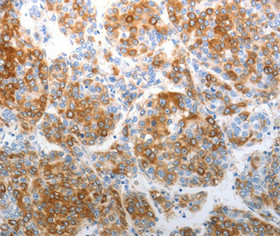
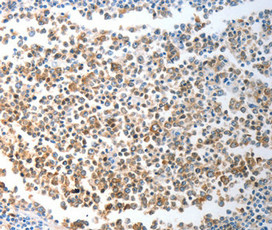
The antibody against CHD5 was raised in rabbit using the Synthetic peptide corresponding to residues near the C terminal of Human Cadherin 5, type 2 (vascular endothelium) as the immunogen. This antibody exists as a polyclonal antibody to the immunogen, Antigen affinity purified. This antibody has been validated on ELISA, IHC.
$297.00
| Cat.No | ADC-40630A | Clonality | Polyclonal |
|---|---|---|---|
| Host Species | Rabbit | Target Name | CHD5 |
| Form | Liquid | Species Reactivity | Human, Mouse, Rat |
| Storage Buffer | 0.05% NaN3, 50% Glycerol, Rabbit IgG in pH7.3 PBS | Purification Method | Antigen affinity purified |
| Application | ELISA, IHC | Storage | Upon receipt |
| Immunogen Description | Synthetic peptide corresponding to residues near the C terminal of Human Cadherin 5, type 2 (vascular endothelium) | Target Species | Human |
|---|---|---|---|
| Immunogen Sequence | Complete sequences for the immunogen, target protein, and peptides are available upon request. | Uniprot ID | Q8TDI0 |
Uniprot Id
Q8TDI0
Target Species
Human
Target Name
CHD5
Target Full Name
Chromodomain-helicase-DNA-binding protein 5
Target Function
Chromatin-remodeling protein that binds DNA through histones and regulates gene transcription. May specifically recognize and bind trimethylated 'Lys-27' (H3K27me3) and non-methylated 'Lys-4' of histone H3. Plays a role in the development of the nervous system by activating the expression of genes promoting neuron terminal differentiation. In parallel, it may also positively regulate the trimethylation of histone H3 at 'Lys-27' thereby specifically repressing genes that promote the differentiation into non-neuronal cell lineages. Tumor suppressor, it regulates the expression of genes involved in cell proliferation and differentiation. Downstream activated genes may include CDKN2A that positively regulates the p53/TP53 pathway, which in turn, prevents cell proliferation. In spermatogenesis, it probably regulates histone hyperacetylation and the replacement of histones by transition proteins in chromatin, a crucial step in the condensation of spermatid chromatin and the production of functional spermatozoa.
Target Involvement
Defects in CHD5 may be a cause of the development of cancers from epithelial, neural and hematopoietic origin. CHD5 is one of the missing genes in the del(1p36), a deletion which is extremely common in this type of cancers. A decrease of its expression, results in increased susceptibility of cells to Ras-mediated transformation in vitro and in vivo (PubMed:17289567).
Target Subcellular Location
Nucleus.
Target Protein Families
SNF2/RAD54 helicase family
Target Tissue Specificity
Preferentially expressed in total brain, fetal brain, and cerebellum. It is also moderately expressed in the adrenal gland and detected in testis.
Target Synonyms
ATP-dependent helicase CHD5; CHD 5; CHD-5; CHD5; CHD5_HUMAN; Chromodomain-helicase-DNA-binding protein 5; DKFZp434N231; KIAA0444; RP1-233K16.2
Target Background
This gene encodes a member of the chromodomain helicase DNA-binding protein family. Members of this family are characterized by a chromodomain, a helicase ATP-binding domain and an additional functional domain. This gene encodes a neuron-specific protein that may function in chromatin remodeling and gene transcription. This gene is a potential tumor suppressor gene that may play a role in the development of neuroblastoma.
Notification