-
Chinese (Simplified)
-
English
-
German
-
Korean
-
Spanish
Chinese (Simplified)
English
German
Korean
Spanish
Sign up for an account to enjoy easy online shopping and instant order tracking.
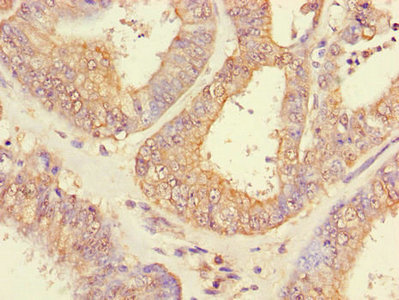
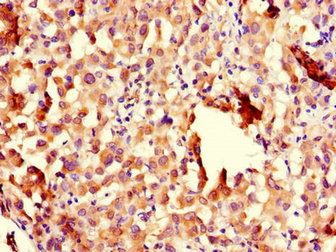
The antibody against CHFR was raised in rabbit using the Recombinant Human E3 ubiquitin-protein ligase CHFR protein (141-422AA) as the immunogen. This antibody exists as a non-conjugated isotype IgG, purified by protein G with a purity greater than 95%. This antibody has been validated on ELISA, WB, IHC.
$299.00
| Cat.No | ADC-14254A | Clonality | Polyclonal |
|---|---|---|---|
| Host Species | Rabbit | Target Name | CHFR |
| Form | Liquid | Species Reactivity | Human, Mouse |
| Isotype | IgG | Storage Buffer | 0.01M PBS, 0.03% Proclin 300; Constituents: 50% Glycerol, PH 7.4 |
| Purification Method | >95%, Protein G purified | Conjugate | Non-conjugated |
| Application | ELISA, IHC, WB | Storage | Upon receipt |
| Immunogen Description | Recombinant Human E3 ubiquitin-protein ligase CHFR protein (141-422AA) | Target Species | Human |
|---|---|---|---|
| Immunogen Sequence | Complete sequences for the immunogen, target protein, and peptides are available upon request. | Uniprot ID | Q96EP1 |
Uniprot Id
Q96EP1
Target Species
Human
Target Name
CHFR
Target Full Name
E3 ubiquitin-protein ligase CHFR
Target Function
E3 ubiquitin-protein ligase that functions in the antephase checkpoint by actively delaying passage into mitosis in response to microtubule poisons. Acts in early prophase before chromosome condensation, when the centrosome move apart from each other along the periphery of the nucleus. Probably involved in signaling the presence of mitotic stress caused by microtubule poisons by mediating the 'Lys-48'-linked ubiquitination of target proteins, leading to their degradation by the proteasome. Promotes the ubiquitination and subsequent degradation of AURKA and PLK1. Probably acts as a tumor suppressor, possibly by mediating the polyubiquitination of HDAC1, leading to its degradation. May also promote the formation of 'Lys-63'-linked polyubiquitin chains and functions with the specific ubiquitin-conjugating UBC13-MMS2 (UBE2N-UBE2V2) heterodimer. Substrates that are polyubiquitinated at 'Lys-63' are usually not targeted for degradation, but are rather involved in signaling cellular stress.
Target Subcellular Location
Nucleus, PML body.
Target Protein Families
CHFR family
Target Tissue Specificity
Ubiquitous.
Target Synonyms
Checkpoint with forkhead and ring finger domains; Checkpoint with forkhead and RING finger domains protein; Chfr; CHFR_HUMAN; E3 ubiquitin protein ligase CHFR; E3 ubiquitin-protein ligase CHFR; EC 6.3.2.; FLJ10796; FLJ33629; RING finger protein 196; RNF 116; RNF 196; RNF116; RNF196; Ubiquitin ligase protein
Target Background
This gene encodes an E3 ubiquitin-protein ligase required for the maintenance of the antephase checkpoint that regulates cell cycle entry into mitosis and, therefore, may play a key role in cell cycle progression and tumorigenesis. The encoded protein has an N-terminal forkhead-associated domain, a central RING-finger domain, and a cysteine-rich C-terminal region. Alternatively spliced transcript variants that encode different protein isoforms have been described.
Notification