-
Chinese (Simplified)
-
English
-
German
-
Korean
-
Spanish

Chinese (Simplified)
English
German
Korean
Spanish
Sign up for an account to enjoy easy online shopping and instant order tracking.
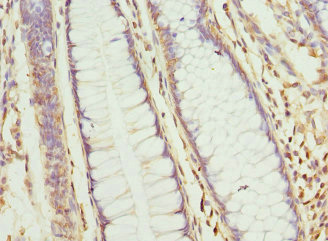
The antibody against CLCN7 was raised in rabbit using the Recombinant Human H(+)/Cl(-) exchange transporter 7 protein (626-805AA) as the immunogen. This antibody exists as a non-conjugated isotype IgG, Antigen affinity purified. This antibody has been validated on ELISA, IHC.
$299.00
| Cat.No | ADC-17302A | Clonality | Polyclonal |
|---|---|---|---|
| Host Species | Rabbit | Target Name | CLCN7 |
| Form | Liquid | Species Reactivity | Human |
| Isotype | IgG | Storage Buffer | 50% Glycerol, PBS with 0.02% sodium azide, pH7.3. |
| Purification Method | Antigen affinity purified | Conjugate | Non-conjugated |
| Application | ELISA, IHC | Storage | Upon receipt |
| Immunogen Description | Recombinant Human H(+)/Cl(-) exchange transporter 7 protein (626-805AA) | Target Species | Human |
|---|---|---|---|
| Immunogen Sequence | Complete sequences for the immunogen, target protein, and peptides are available upon request. | Uniprot ID | P51798 |
Uniprot Id
P51798
Target Species
Human
Target Name
CLCN7
Target Full Name
H(+)/Cl(-) exchange transporter 7
Target Function
Slowly voltage-gated channel mediating the exchange of chloride ions against protons. Functions as antiporter and contributes to the acidification of the lysosome lumen and may be involved in maintaining lysosomal pH. The CLC channel family contains both chloride channels and proton-coupled anion transporters that exchange chloride or another anion for protons. The presence of conserved gating glutamate residues is typical for family members that function as antiporters.
Target Involvement
Osteopetrosis, autosomal recessive 4 (OPTB4); Osteopetrosis, autosomal dominant 2 (OPTA2); Osteopetrosis, autosomal recessive 2 (OPTB2)
Target Subcellular Location
Lysosome membrane; Multi-pass membrane protein.
Target Protein Families
Chloride channel (TC 2.A.49) family, ClC-7/CLCN7 subfamily
Target Tissue Specificity
Brain and kidney.
Target Synonyms
Chloride channel protein 7; CLC 7; ClC-7; ClC7; CLCN7; CLCN7_HUMAN; FLJ26686; FLJ39644; FLJ46423; H(+)/Cl(-) exchange transporter 7; OPTA2; OPTB4
Target Background
The product of this gene belongs to the CLC chloride channel family of proteins. Chloride channels play important roles in the plasma membrane and in intracellular organelles. This gene encodes chloride channel 7. Defects in this gene are the cause of osteopetrosis autosomal recessive type 4 (OPTB4), also called infantile malignant osteopetrosis type 2 as well as the cause of autosomal dominant osteopetrosis type 2 (OPTA2), also called autosomal dominant Albers-Schonberg disease or marble disease autosoml dominant. Osteopetrosis is a rare genetic disease characterized by abnormally dense bone, due to defective resorption of immature bone. OPTA2 is the most common form of osteopetrosis, occurring in adolescence or adulthood.
Notification