• Contact info@abtriva.com for inquiries and orders.
  • Chinese (Simplified)

  • English

  • German

  • Korean

  • Spanish

United States (English / $ USD)

Rabbit anti-Human Cleaved-KLK8 (V33) Polyclonal Antibody

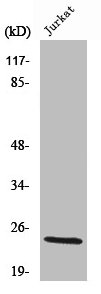
The antibody against KLK8 was raised in rabbit using the Synthesized peptide derived from the N-terminal region of Human KLK8. as the immunogen. This antibody exists as a non-conjugated isotype IgG. The antibody was affinity-purified from rabbit antiserum by affinity-chromatography using epitope-specific immunogen. This antibody has been validated on WB, ELISA.

ADC-39933A

The antibody against KLK8 was raised in rabbit using the Synthesized peptide derived from the N-terminal region of Human KLK8. as the immunogen. This antibody exists as a non-conjugated isotype IgG. The antibody was affinity-purified from rabbit antiserum by affinity-chromatography using epitope-specific immunogen. This antibody has been validated on WB, ELISA.

$167.00

Number
Order Exclusive Products Now

Request a Quote
High Purity LevelsPrecision and ReliabilityCustomization Options

Specifications


Cat.No ADC-39933A ClonalityPolyclonal
Host SpeciesRabbitTarget NameKLK8
FormLiquidSpecies ReactivityHuman
IsotypeIgGStorage Buffer0.5% BSA and 0.02% sodium azide., Liquid in PBS containing 50% glycerol
Purification MethodThe antibody was affinity-purified from rabbit antiserum by affinity-chromatography using epitope-specific immunogen.ConjugateNon-conjugated
ApplicationELISA, WBStorageUpon receipt

Immunogen Information


Immunogen DescriptionSynthesized peptide derived from the N-terminal region of Human KLK8.Target SpeciesHuman
Immunogen SequenceComplete sequences for the immunogen, target protein, and peptides are available upon request.Uniprot IDO60259
Background Information
  • Uniprot Id

    O60259

  • Target Species

    Human

  • Target Name

    KLK8

  • Target Full Name

    Kallikrein-8

  • Target Function

    Serine protease which is capable of degrading a number of proteins such as casein, fibrinogen, kininogen, fibronectin and collagen type IV. Also cleaves L1CAM in response to increased neural activity. Induces neurite outgrowth and fasciculation of cultured hippocampal neurons. Plays a role in the formation and maturation of orphan and small synaptic boutons in the Schaffer-collateral pathway, regulates Schaffer-collateral long-term potentiation in the hippocampus and is required for memory acquisition and synaptic plasticity. Involved in skin desquamation and keratinocyte proliferation. Plays a role in the secondary phase of pathogenesis following spinal cord injury.

  • Target Subcellular Location

    Secreted. Cytoplasm. Note=Shows a cytoplasmic distribution in the keratinocytes.

  • Target Protein Families

    Peptidase S1 family, Kallikrein subfamily

  • Target Tissue Specificity

    Isoform 1 is predominantly expressed in the pancreas. Isoform 2 is expressed in adult brain and hippocampus. Isoform 1 and isoform 2 are found in fetal brain and placenta. Detected in salivary gland, uterus, thymus, breast, testis and kidney but not in sp

  • Target Synonyms

    Brain serine protease 1; BSP1; hK8; HNP; HPN; Kallikrein 8 (neuropsin/ovasin); Kallikrein related peptidase 8; Kallikrein-8; Kallikrein8; KLK 8; Klk8; KLK8 protein type 1; KLK8 protein type 2; KLK8_HUMAN; Neuropsin; neuropsin type 1; Neuropsin type 1; included; Neuropsin type 2; Neuropsin type 2; included; Neuropsin; mouse; homolog of; NP; NRPN; Ovasin; PRO322; Protease serine 19; PRSS 19; PRSS19; Serine protease 19; Serine protease kallikrein; Serine protease kallikrein/ovasin/neuropsin; Serine protease TADG 14; Serine protease TADG-14; Serine protease TADG14; TADG 14; TADG14; Tumor associated differentially expressed gene 14; Tumor associated differentially expressed gene 14 protein; Tumor-associated differentially expressed gene 14 protein; UNQ283

  • Target Background

    Kallikreins are a subgroup of serine proteases having diverse physiological functions. Growing evidence suggests that many kallikreins are implicated in carcinogenesis and some have potential as novel cancer and other disease biomarkers. This gene is one of the fifteen kallikrein subfamily members located in tandem in a gene cluster on chromosome 19. The encoded protein may be involved in proteolytic cascade in the skin and may serve as a biomarker for ovarian cancer. Alternate splicing of this gene results in multiple transcript variants encoding different isoforms.

Inquire Rabbit anti-Human Cleaved-KLK8 (V33) Polyclonal Antibody Now


AbTriva respects your privacy and protects your personal data in accordance with AbTriva. For more information, please see our data protection statement. *

Notification