• Contact info@abtriva.com for inquiries and orders.
  • Chinese (Simplified)

  • English

  • German

  • Korean

  • Spanish

United States (English / $ USD)

Rabbit anti-Human CLU Polyclonal Antibody

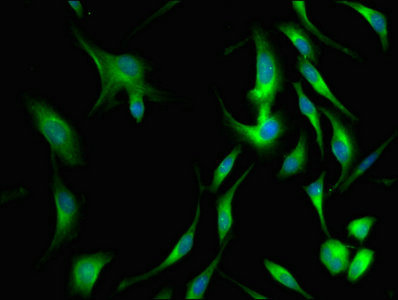
The antibody against CLU was raised in rabbit using the Recombinant Human Clusterin protein (23-224AA) as the immunogen. This antibody exists as a non-conjugated isotype IgG, purified by protein G with a purity greater than 95%. This antibody has been validated on ELISA, IHC, IF.

ADC-46426A

The antibody against CLU was raised in rabbit using the Recombinant Human Clusterin protein (23-224AA) as the immunogen. This antibody exists as a non-conjugated isotype IgG, purified by protein G with a purity greater than 95%. This antibody has been validated on ELISA, IHC, IF.

$299.00

Number
Order Exclusive Products Now

Request a Quote
High Purity LevelsPrecision and ReliabilityCustomization Options

Specifications


Cat.No ADC-46426A ClonalityPolyclonal
Host SpeciesRabbitTarget NameCLU
FormLiquidSpecies ReactivityHuman
IsotypeIgGStorage Buffer0.01M PBS, 0.03% Proclin 300; Constituents: 50% Glycerol, PH 7.4
Purification Method>95%, Protein G purifiedConjugateNon-conjugated
ApplicationELISA, IF, IHCStorageUpon receipt

Immunogen Information


Immunogen DescriptionRecombinant Human Clusterin protein (23-224AA)Target SpeciesHuman
Immunogen SequenceComplete sequences for the immunogen, target protein, and peptides are available upon request.Uniprot IDP10909
Background Information
  • Uniprot Id

    P10909

  • Target Species

    Human

  • Target Name

    CLU

  • Target Full Name

    Clusterin

  • Target Function

    Functions as extracellular chaperone that prevents aggregation of non native proteins. Prevents stress-induced aggregation of blood plasma proteins. Inhibits formation of amyloid fibrils by APP, APOC2, B2M, CALCA, CSN3, SNCA and aggregation-prone LYZ variants (in vitro). Does not require ATP. Maintains partially unfolded proteins in a state appropriate for subsequent refolding by other chaperones, such as HSPA8/HSC70. Does not refold proteins by itself. Binding to cell surface receptors triggers internalization of the chaperone-client complex and subsequent lysosomal or proteasomal degradation. Protects cells against apoptosis and against cytolysis by complement. Intracellular forms interact with ubiquitin and SCF (SKP1-CUL1-F-box protein) E3 ubiquitin-protein ligase complexes and promote the ubiquitination and subsequent proteasomal degradation of target proteins. Promotes proteasomal degradation of COMMD1 and IKBKB. Modulates NF-kappa-B transcriptional activity. A mitochondrial form suppresses BAX-dependent release of cytochrome c into the cytoplasm and inhibit apoptosis. Plays a role in the regulation of cell proliferation. An intracellular form suppresses stress-induced apoptosis by stabilizing mitochondrial membrane integrity through interaction with HSPA5. Secreted form does not affect caspase or BAX-mediated intrinsic apoptosis and TNF-induced NF-kappa-B-activity. Secreted form act as an important modulator during neuronal differentiation through interaction with STMN3. Plays a role in the clearance of immune complexes that arise during cell injury.; Does not affect caspase or BAX-mediated intrinsic apoptosis and TNF-induced NF-kappa-B-activity.; Does not affect caspase or BAX-mediated intrinsic apoptosis and TNF-induced NF-kappa-B-activity. Promotes cell death through interaction with BCL2L1 that releases and activates BAX.

  • Target Subcellular Location

    [Isoform 1]: Secreted.; [Isoform 4]: Cytoplasm.; [Isoform 6]: Cytoplasm.; Nucleus. Cytoplasm. Mitochondrion membrane; Peripheral membrane protein; Cytoplasmic side. Cytoplasm, cytosol. Microsome. Endoplasmic reticulum. Mitochondrion. Mitochondrion membrane. Cytoplasm, perinuclear region. Cytoplasmic vesicle, secretory vesicle, chromaffin granule.

  • Target Protein Families

    Clusterin family

  • Target Tissue Specificity

    Detected in blood plasma, cerebrospinal fluid, milk, seminal plasma and colon mucosa. Detected in the germinal center of colon lymphoid nodules and in colon parasympathetic ganglia of the Auerbach plexus (at protein level). Ubiquitous. Detected in brain,

  • Target Research Area

    Immunology, Apoptosis

  • Target Synonyms

    40; AAG 4; AAG4; Aging associated protein 4; Aging-associated gene 4 protein; AI893575; APO J; Apo-J; APOJ; ApoJalpha; ApoJbeta; Apolipoprotein J; ApolipoproteinJ; CLI; CLU; CLU1; CLU2; CLUS_HUMAN; Clusterin alpha chain; Clusterin; Clusterin beta chain; Complement associated protein SP 40 40; Complement associated protein SP 40; Complement associated protein SP40; Complement cytolysis inhibitor a chain; Complement cytolysis inhibitor; Complement cytolysis inhibitor b chain; Complement lysis inhibitor; Complement-associated protein SP-40; D14Ucla3; Dimeric acid glycoprotein; Glycoprotein 80; Glycoprotein III; GP80; Ku70-binding protein 1; KUB 1; KUB1; MGC24903; NA1/NA2; RATTRPM2B; SGP 2; SGP2; SP 40; SP40; Sugp-2; Sulfated glycoprotein 2; Testosterone repressed prostate message 2; Testosterone-repressed prostate message 2; TRPM 2; TRPM-2; TRPM2; TRPM2B; Trpmb

  • Target Background

    The protein encoded by this gene is a secreted chaperone that can under some stress conditions also be found in the cell cytosol. It has been suggested to be involved in several basic biological events such as cell death, tumor progression, and neurodegenerative disorders. Alternate splicing results in both coding and non-coding variants.

Inquire Rabbit anti-Human CLU Polyclonal Antibody Now


AbTriva respects your privacy and protects your personal data in accordance with AbTriva. For more information, please see our data protection statement. *

Notification