-
Chinese (Simplified)
-
English
-
German
-
Korean
-
Spanish
Chinese (Simplified)
English
German
Korean
Spanish
Sign up for an account to enjoy easy online shopping and instant order tracking.
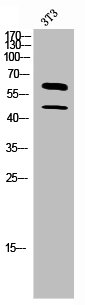
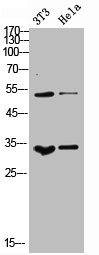
The antibody against CSF1 was raised in rabbit using the Synthesized peptide derived from the C-terminal region of Human M-CSF. as the immunogen. This antibody exists as a non-conjugated isotype IgG. The antibody was affinity-purified from rabbit antiserum by affinity-chromatography using epitope-specific immunogen. This antibody has been validated on WB, ELISA.
$167.00
| Cat.No | ADC-36824A | Clonality | Polyclonal |
|---|---|---|---|
| Host Species | Rabbit | Target Name | CSF1 |
| Form | Liquid | Species Reactivity | Human |
| Isotype | IgG | Storage Buffer | 0.5% BSA and 0.02% sodium azide., Liquid in PBS containing 50% glycerol |
| Purification Method | The antibody was affinity-purified from rabbit antiserum by affinity-chromatography using epitope-specific immunogen. | Conjugate | Non-conjugated |
| Application | ELISA, WB | Storage | Upon receipt |
| Immunogen Description | Synthesized peptide derived from the C-terminal region of Human M-CSF. | Target Species | Human |
|---|---|---|---|
| Immunogen Sequence | Complete sequences for the immunogen, target protein, and peptides are available upon request. | Uniprot ID | P09603 |
Uniprot Id
P09603
Target Species
Human
Target Name
CSF1
Target Full Name
Macrophage colony-stimulating factor 1
Target Function
Cytokine that plays an essential role in the regulation of survival, proliferation and differentiation of hematopoietic precursor cells, especially mononuclear phagocytes, such as macrophages and monocytes. Promotes the release of proinflammatory chemokines, and thereby plays an important role in innate immunity and in inflammatory processes. Plays an important role in the regulation of osteoclast proliferation and differentiation, the regulation of bone resorption, and is required for normal bone development. Required for normal male and female fertility. Promotes reorganization of the actin cytoskeleton, regulates formation of membrane ruffles, cell adhesion and cell migration. Plays a role in lipoprotein clearance.
Target Involvement
Aberrant expression of CSF1 or CSF1R can promote cancer cell proliferation, invasion and formation of metastases. Overexpression of CSF1 or CSF1R is observed in a significant percentage of breast, ovarian, prostate, and endometrial cancers.; DISEASE: Note=Aberrant expression of CSF1 or CSF1R may play a role in inflammatory diseases, such as rheumatoid arthritis, glomerulonephritis, atherosclerosis, and allograft rejection.
Target Subcellular Location
Cell membrane; Single-pass type I membrane protein.; [Processed macrophage colony-stimulating factor 1]: Secreted, extracellular space.
Target Research Area
Cardiovascular
Target Synonyms
Colony stimulating factor 1 (macrophage); Colony stimulating factor 1; Colony stimulating factor macrophage specific; CSF 1; CSF-1; CSF1; CSF1_HUMAN; Csfm; Lanimostim; M CSF; M-CSF; Macrophage Colony Stimulating Factor 1; Macrophage colony stimulating factor; MCSF; MGC31930; Processed macrophage colony-stimulating factor 1
Target Background
The protein encoded by this gene is a cytokine that controls the production, differentiation, and function of macrophages. The active form of the protein is found extracellularly as a disulfide-linked homodimer, and is thought to be produced by proteolytic cleavage of membrane-bound precursors. The encoded protein may be involved in development of the placenta. Alternate splicing results in multiple transcript variants.
Notification