-
Chinese (Simplified)
-
English
-
German
-
Korean
-
Spanish
Chinese (Simplified)
English
German
Korean
Spanish
Sign up for an account to enjoy easy online shopping and instant order tracking.
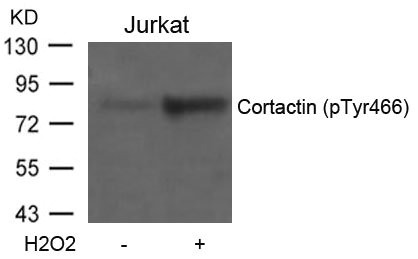
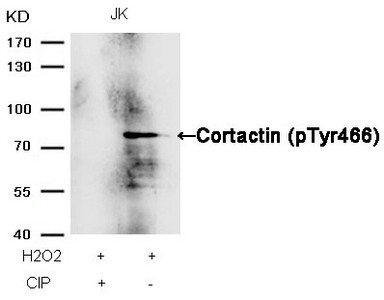
The antibody against CTTN was raised in rabbit using the Peptide sequence around phosphorylation site of tyrosine 466 (P-V-Y(p)-E-T) derived from Human CORTACTIN. as the immunogen. Antibodies were produced by immunizing rabbits with synthetic phosphopeptide and KLH conjugates. Antibodies were purified by affinity-chromatography using epitope-specific phosphopeptide. Non-phospho specific antibodies were removed by chromatogramphy usi This antibody has been validated on ELISA, WB.
$360.00
| Cat.No | ADC-43630A | Clonality | Polyclonal |
|---|---|---|---|
| Host Species | Rabbit | Target Name | CTTN |
| Form | Liquid | Species Reactivity | Human, Mouse |
| Storage Buffer | PH 7.4, 0.02% sodium azide and 50% glycerol., 150mM NaCl, Supplied at 1.0mg/mL in phosphate buffered saline (without Mg2+ and Ca2+) | Application | ELISA, WB |
| Storage | Upon receipt |
| Immunogen Description | Peptide sequence around phosphorylation site of tyrosine 466 (P-V-Y(p)-E-T) derived from Human CORTACTIN. | Target Species | Human |
|---|---|---|---|
| Immunogen Sequence | Complete sequences for the immunogen, target protein, and peptides are available upon request. | Uniprot ID | Q14247 |
Uniprot Id
Q14247
Target Species
Human
Target Name
CTTN
Target Full Name
Src substrate cortactin
Target Function
Contributes to the organization of the actin cytoskeleton and cell shape. Plays a role in the formation of lamellipodia and in cell migration. Plays a role in the regulation of neuron morphology, axon growth and formation of neuronal growth cones. Through its interaction with CTTNBP2, involved in the regulation of neuronal spine density. Plays a role in the invasiveness of cancer cells, and the formation of metastases. Plays a role in focal adhesion assembly and turnover. In complex with ABL1 and MYLK regulates cortical actin-based cytoskeletal rearrangement critical to sphingosine 1-phosphate (S1P)-mediated endothelial cell (EC) barrier enhancement. Plays a role in intracellular protein transport and endocytosis, and in modulating the levels of potassium channels present at the cell membrane. Plays a role in receptor-mediated endocytosis via clathrin-coated pits. Required for stabilization of KCNH1 channels at the cell membrane.
Target Subcellular Location
Cytoplasm, cytoskeleton. Cell projection, lamellipodium. Cell projection, ruffle. Cell projection, dendrite. Cell projection. Cell membrane; Peripheral membrane protein; Cytoplasmic side. Cell projection, podosome. Cell junction. Cell junction, focal adhesion. Membrane, clathrin-coated pit. Cell projection, dendritic spine. Cytoplasm, cell cortex.
Target Synonyms
Amplaxin; CTTN; EMS 1; EMS1; FLJ34459; Mammary tumor and squamous cell carcinoma associated; Oncogene EMS1; p80/85 src substrate; Src substrate cortactin; SRC8_HUMAN
Target Background
This gene is overexpressed in breast cancer and squamous cell carcinomas of the head and neck. The encoded protein is localized in the cytoplasm and in areas of the cell-substratum contacts. This gene has two roles: (1) regulating the interactions between components of adherens-type junctions and (2) organizing the cytoskeleton and cell adhesion structures of epithelia and carcinoma cells. During apoptosis, the encoded protein is degraded in a caspase-dependent manner. The aberrant regulation of this gene contributes to tumor cell invasion and metastasis. Three splice variants that encode different isoforms have been identified for this gene.
Notification