-
Chinese (Simplified)
-
English
-
German
-
Korean
-
Spanish
Chinese (Simplified)
English
German
Korean
Spanish
Sign up for an account to enjoy easy online shopping and instant order tracking.
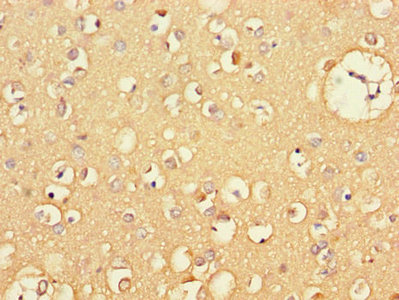
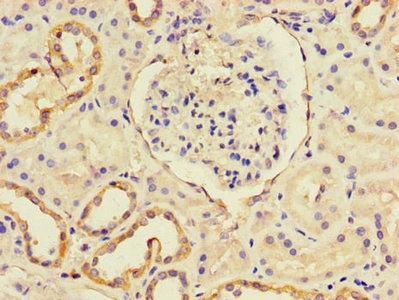
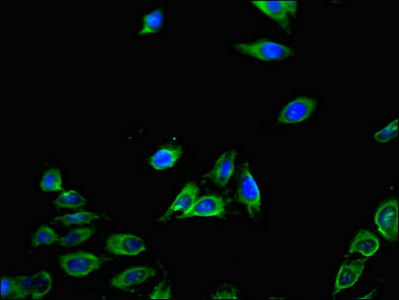
The antibody against CXCL11 was raised in rabbit using the Recombinant Human C-X-C motif chemokine 11 protein (22-94AA) as the immunogen. This antibody exists as a non-conjugated isotype IgG, purified by protein G with a purity greater than 95%. This antibody has been validated on ELISA, IHC, IF.
$299.00
| Cat.No | ADC-14454A | Clonality | Polyclonal |
|---|---|---|---|
| Host Species | Rabbit | Target Name | CXCL11 |
| Form | Liquid | Species Reactivity | Human |
| Isotype | IgG | Storage Buffer | 0.01M PBS, 0.03% Proclin 300; Constituents: 50% Glycerol, PH 7.4 |
| Purification Method | >95%, Protein G purified | Conjugate | Non-conjugated |
| Application | ELISA, IF, IHC | Storage | Upon receipt |
| Immunogen Description | Recombinant Human C-X-C motif chemokine 11 protein (22-94AA) | Target Species | Human |
|---|---|---|---|
| Immunogen Sequence | Complete sequences for the immunogen, target protein, and peptides are available upon request. | Uniprot ID | O14625 |
Uniprot Id
O14625
Target Species
Human
Target Name
CXCL11
Target Full Name
C-X-C motif chemokine 11
Target Function
Chemotactic for interleukin-activated T-cells but not unstimulated T-cells, neutrophils or monocytes. Induces calcium release in activated T-cells. Binds to CXCR3. May play an important role in CNS diseases which involve T-cell recruitment. May play a role in skin immune responses.
Target Subcellular Location
Secreted.
Target Protein Families
Intercrine alpha (chemokine CxC) family
Target Tissue Specificity
High levels in peripheral blood leukocytes, pancreas and liver astrocytes. Moderate levels in thymus, spleen and lung. Low levels in placenta, prostate and small intestine. Also found in epidermal basal layer keratinocytes in skin disorders.
Target Synonyms
b R1; b-R1; Beta-R1; betaR1; C-X-C motif chemokine 11; Chemokine (C-X-C motif) ligand 11; Chemokine C-X-C motif ligand 11; CXC11; CXCL11; CXL11_HUMAN; H174; I TAC; I-TAC; Interferon gamma inducible protein 9; Interferon gamma-inducible protein 9; Interferon inducible T cell alpha chemoattractant; Interferon-inducible T-cell a chemoattractant I-TAC; Interferon-inducible T-cell alpha chemoattractant; IP 9; IP-9; IP9; ITAC; MGC102770; SCYB11; SCYB9B; Small inducible cytokine B11; Small inducible cytokine subfamily B (Cys-X-Cys) member 11; Small inducible cytokine subfamily B (Cys-X-Cys) member 9B; Small inducible cytokine subfamily B; member 11; Small inducible cytokine subfamily B; member 9B; Small-inducible cytokine B11
Target Background
Chemokines are a group of small (approximately 8 to 14 kD), mostly basic, structurally related molecules that regulate cell trafficking of various types of leukocytes through interactions with a subset of 7-transmembrane, G protein-coupled receptors. Chemokines also play fundamental roles in the development, homeostasis, and function of the immune system, and they have effects on cells of the central nervous system as well as on endothelial cells involved in angiogenesis or angiostasis. Chemokines are divided into 2 major subfamilies, CXC and CC. This antimicrobial gene is a CXC member of the chemokine superfamily. Its encoded protein induces a chemotactic response in activated T-cells and is the dominant ligand for CXC receptor-3. The gene encoding this protein contains 4 exons and at least three polyadenylation signals which might reflect cell-specific regulation of expression. IFN-gamma is a potent inducer of transcription of this gene. Two transcript variants encoding different isoforms have been found for this gene.
Notification