• Contact info@abtriva.com for inquiries and orders.
  • Chinese (Simplified)

  • English

  • German

  • Korean

  • Spanish

United States (English / $ USD)

Rabbit anti-Human CXCL12 Polyclonal Antibody

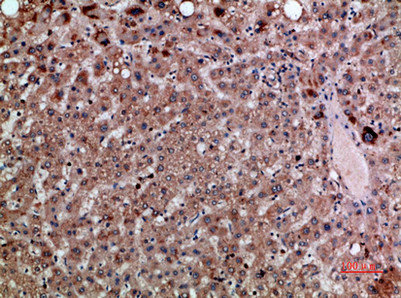
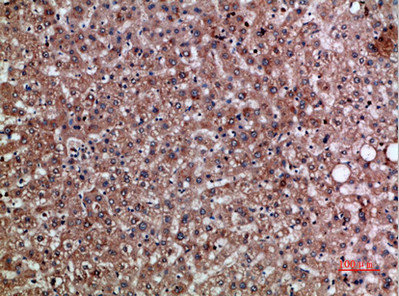
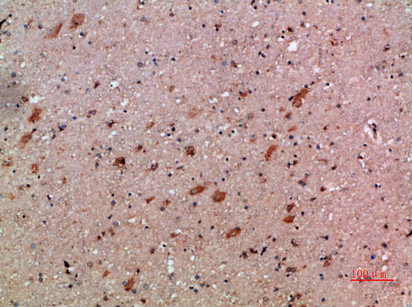
The antibody against CXCL12 was raised in rabbit using the Synthetic peptide from Human protein at AA range: 31-80 as the immunogen. This antibody exists as a non-conjugated antibody. The antibody was affinity-purified from rabbit serum by affinity-chromatography using specific immunogen. This antibody has been validated on IHC, ELISA.

ADC-12985A

The antibody against CXCL12 was raised in rabbit using the Synthetic peptide from Human protein at AA range: 31-80 as the immunogen. This antibody exists as a non-conjugated antibody. The antibody was affinity-purified from rabbit serum by affinity-chromatography using specific immunogen. This antibody has been validated on IHC, ELISA.

$167.00

Number
Order Exclusive Products Now

Request a Quote
High Purity LevelsPrecision and ReliabilityCustomization Options

Specifications


Cat.No ADC-12985A ClonalityPolyclonal
Host SpeciesRabbitTarget NameCXCL12
FormLiquidSpecies ReactivityHuman, Mouse, Rat
Storage BufferPH 7.4, containing 0.02% sodium azide as Preservative and 50% Glycerol., PBSPurification MethodThe antibody was affinity-purified from rabbit serum by affinity-chromatography using specific immunogen.
ConjugateNon-conjugatedApplicationELISA, IHC
StorageUpon receipt

Immunogen Information


Immunogen DescriptionSynthetic peptide from Human protein at AA range: 31-80Target SpeciesHuman
Immunogen SequenceComplete sequences for the immunogen, target protein, and peptides are available upon request.Uniprot IDP48061
Background Information
  • Uniprot Id

    P48061

  • Target Species

    Human

  • Target Name

    CXCL12

  • Target Full Name

    Stromal cell-derived factor 1

  • Target Function

    Chemoattractant active on T-lymphocytes and monocytes but not neutrophils. Activates the C-X-C chemokine receptor CXCR4 to induce a rapid and transient rise in the level of intracellular calcium ions and chemotaxis. SDF-1-beta(3-72) and SDF-1-alpha(3-67) show a reduced chemotactic activity. Binding to cell surface proteoglycans seems to inhibit formation of SDF-1-alpha(3-67) and thus to preserve activity on local sites. Also binds to atypical chemokine receptor ACKR3, which activates the beta-arrestin pathway and acts as a scavenger receptor for SDF-1. Binds to the allosteric site (site 2) of integrins and activates integrins ITGAV:ITGB3, ITGA4:ITGB1 and ITGA5:ITGB1 in a CXCR4-independent manner. Acts as a positive regulator of monocyte migration and a negative regulator of monocyte adhesion via the LYN kinase. Stimulates migration of monocytes and T-lymphocytes through its receptors, CXCR4 and ACKR3, and decreases monocyte adherence to surfaces coated with ICAM-1, a ligand for beta-2 integrins. SDF1A/CXCR4 signaling axis inhibits beta-2 integrin LFA-1 mediated adhesion of monocytes to ICAM-1 through LYN kinase. Inhibits CXCR4-mediated infection by T-cell line-adapted HIV-1. Plays a protective role after myocardial infarction. Induces down-regulation and internalization of ACKR3 expressed in various cells. Has several critical functions during embryonic development; required for B-cell lymphopoiesis, myelopoiesis in bone marrow and heart ventricular septum formation. Stimulates the proliferation of bone marrow-derived B-cell progenitors in the presence of IL7 as well as growth of stromal cell-dependent pre-B-cells.

  • Target Subcellular Location

    Secreted.

  • Target Protein Families

    Intercrine alpha (chemokine CxC) family

  • Target Tissue Specificity

    Isoform Alpha and isoform Beta are ubiquitously expressed, with highest levels detected in liver, pancreas and spleen. Isoform Gamma is mainly expressed in heart, with weak expression detected in several other tissues. Isoform Delta, isoform Epsilon and i

  • Target Synonyms

    12-O-tetradecanoylphorbol 13-acetate repressed protein 1; AI174028; C-X-C motif chemokine 12; Chemokine (C-X-C motif) ligand 12 (stromal cell-derived factor 1); Chemokine (C-X-C motif) ligand 12; Chemokine CXC motif ligand 12; cxcl12; hIRH; hSDF-1; Intercrine reduced in hepatomas; IRH; OTTHUMP00000019491 ; PBSF; Pre-B cell growth-stimulating factor; SCYB12; SDF 1; SDF-1; SDF-1-alpha(3-67); SDF-1a; SDF-1b; SDF1_HUMAN; SDF1A; SDF1B; Stromal cell-derived factor 1; Stromal cell-derived factor 1 delta ; Stromal cell-derived factor 1 gamma ; Stromal cell-derived factor 1a ; Stromal cell-derived factor-1 alpha ; Thymic lymphoma cell-stimulating factor; Tlsf; TLSF-a; TLSF-b; Tlsfa; Tlsfb; TPAR1

  • Target Background

    This antimicrobial gene encodes a stromal cell-derived alpha chemokine member of the intercrine family. The encoded protein functions as the ligand for the G-protein coupled receptor, chemokine (C-X-C motif) receptor 4, and plays a role in many diverse cellular functions, including embryogenesis, immune surveillance, inflammation response, tissue homeostasis, and tumor growth and metastasis. Mutations in this gene are associated with resistance to human immunodeficiency virus type 1 infections. Multiple transcript variants encoding different isoforms have been found for this gene.

Inquire Rabbit anti-Human CXCL12 Polyclonal Antibody Now


AbTriva respects your privacy and protects your personal data in accordance with AbTriva. For more information, please see our data protection statement. *

Notification