• Contact info@abtriva.com for inquiries and orders.
  • Chinese (Simplified)

  • English

  • German

  • Korean

  • Spanish

United States (English / $ USD)

Rabbit anti-Human CYP1B1 Polyclonal Antibody

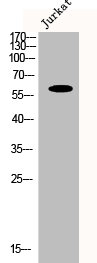
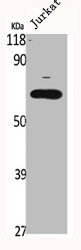
The antibody against CYP1B1 was raised in rabbit using the Synthesized peptide derived from the Internal region of Human CYP1B1. as the immunogen. This antibody exists as a non-conjugated isotype IgG. The antibody was affinity-purified from rabbit antiserum by affinity-chromatography using epitope-specific immunogen. This antibody has been validated on WB, ELISA.

ADC-38911A

The antibody against CYP1B1 was raised in rabbit using the Synthesized peptide derived from the Internal region of Human CYP1B1. as the immunogen. This antibody exists as a non-conjugated isotype IgG. The antibody was affinity-purified from rabbit antiserum by affinity-chromatography using epitope-specific immunogen. This antibody has been validated on WB, ELISA.

$167.00

Number
Order Exclusive Products Now

Request a Quote
High Purity LevelsPrecision and ReliabilityCustomization Options

Specifications


Cat.No ADC-38911A ClonalityPolyclonal
Host SpeciesRabbitTarget NameCYP1B1
FormLiquidSpecies ReactivityHuman
IsotypeIgGStorage Buffer0.5% BSA and 0.02% sodium azide., Liquid in PBS containing 50% glycerol
Purification MethodThe antibody was affinity-purified from rabbit antiserum by affinity-chromatography using epitope-specific immunogen.ConjugateNon-conjugated
ApplicationELISA, WBStorageUpon receipt

Immunogen Information


Immunogen DescriptionSynthesized peptide derived from the Internal region of Human CYP1B1.Target SpeciesHuman
Immunogen SequenceComplete sequences for the immunogen, target protein, and peptides are available upon request.Uniprot IDQ16678
Background Information
  • Uniprot Id

    Q16678

  • Target Species

    Human

  • Target Name

    CYP1B1

  • Target Full Name

    Cytochrome P450 1B1

  • Target Function

    A cytochrome P450 monooxygenase involved in the metabolism of various endogenous substrates, including fatty acids, steroid hormones and vitamins. Mechanistically, uses molecular oxygen inserting one oxygen atom into a substrate, and reducing the second into a water molecule, with two electrons provided by NADPH via cytochrome P450 reductase (NADPH--hemoprotein reductase). Exhibits catalytic activity for the formation of hydroxyestrogens from estrone (E1) and 17beta-estradiol (E2), namely 2- and 4-hydroxy E1 and E2. Displays a predominant hydroxylase activity toward E2 at the C-4 position. Metabolizes testosterone and progesterone to B or D ring hydroxylated metabolites. May act as a major enzyme for all-trans retinoic acid biosynthesis in extrahepatic tissues. Catalyzes two successive oxidative transformation of all-trans retinol to all-trans retinal and then to the active form all-trans retinoic acid. Catalyzes the epoxidation of double bonds of certain PUFA. Converts arachidonic acid toward epoxyeicosatrienoic acid (EpETrE) regioisomers, 8,9-, 11,12-, and 14,15- EpETrE, that function as lipid mediators in the vascular system. Additionally, displays dehydratase activity toward oxygenated eicosanoids hydroperoxyeicosatetraenoates (HpETEs). This activity is independent of cytochrome P450 reductase, NADPH, and O2. Also involved in the oxidative metabolism of xenobiotics, particularly converting polycyclic aromatic hydrocarbons and heterocyclic aryl amines procarcinogens to DNA-damaging products. Plays an important role in retinal vascular development. Under hyperoxic O2 conditions, promotes retinal angiogenesis and capillary morphogenesis, likely by metabolizing the oxygenated products generated during the oxidative stress. Also, contributes to oxidative homeostasis and ultrastructural organization and function of trabecular meshwork tissue through modulation of POSTN expression.

  • Target Involvement

    Anterior segment dysgenesis 6 (ASGD6); Glaucoma 3, primary congenital, A (GLC3A); Glaucoma 1, open angle, A (GLC1A)

  • Target Subcellular Location

    Endoplasmic reticulum membrane; Peripheral membrane protein. Microsome membrane; Peripheral membrane protein. Mitochondrion.

  • Target Protein Families

    Cytochrome P450 family

  • Target Tissue Specificity

    Expressed in heart, brain, lung, skeletal muscle, kidney, spleen, thymus, prostate, testis, ovary, small intestine, colon, and peripheral blood leukocytes. Expressed in retinal endothelial cells and umbilical vein endothelial cells (at protein level).

  • Target Synonyms

    Aryl hydrocarbon hydroxylase; CP1B; CP1B1_HUMAN; Cyp1b1; CYPIB1; Cytochrome P450 1B1; Cytochrome P450 family 1 subfamily B polypeptide 1; Cytochrome P450 subfamily I (dioxin inducible) polypeptide 1 (glaucoma 3 primary infantile); Flavoprotein linked monooxygenase; GLC3A; Microsomal monooxygenase; P4501B1; Xenobiotic monooxygenase

  • Target Background

    This gene encodes a member of the cytochrome P450 superfamily of enzymes. The cytochrome P450 proteins are monooxygenases which catalyze many reactions involved in drug metabolism and synthesis of cholesterol, steroids and other lipids. The enzyme encoded by this gene localizes to the endoplasmic reticulum and metabolizes procarcinogens such as polycyclic aromatic hydrocarbons and 17beta-estradiol. Mutations in this gene have been associated with primary congenital glaucoma; therefore it is thought that the enzyme also metabolizes a signaling molecule involved in eye development, possibly a steroid.

Inquire Rabbit anti-Human CYP1B1 Polyclonal Antibody Now


AbTriva respects your privacy and protects your personal data in accordance with AbTriva. For more information, please see our data protection statement. *

Notification