-
Chinese (Simplified)
-
English
-
German
-
Korean
-
Spanish

Chinese (Simplified)
English
German
Korean
Spanish
Sign up for an account to enjoy easy online shopping and instant order tracking.
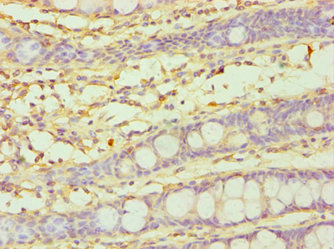
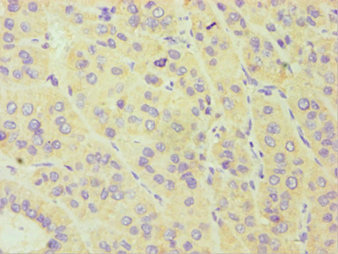
The antibody against CYP3A5 was raised in rabbit using the Recombinant Human Cytochrome P450 3A5 protein (233-502AA) as the immunogen. This antibody exists as a non-conjugated isotype IgG, Antigen affinity purified. This antibody has been validated on ELISA, WB, IHC.
$299.00
| Cat.No | ADC-44389A | Clonality | Polyclonal |
|---|---|---|---|
| Host Species | Rabbit | Target Name | CYP3A5 |
| Form | Liquid | Species Reactivity | Human, Mouse |
| Isotype | IgG | Storage Buffer | 50% Glycerol, PBS with 0.02% sodium azide, pH7.3. |
| Purification Method | Antigen affinity purified | Conjugate | Non-conjugated |
| Application | ELISA, IHC, WB | Storage | Upon receipt |
| Immunogen Description | Recombinant Human Cytochrome P450 3A5 protein (233-502AA) | Target Species | Human |
|---|---|---|---|
| Immunogen Sequence | Complete sequences for the immunogen, target protein, and peptides are available upon request. | Uniprot ID | P20815 |
Uniprot Id
P20815
Target Species
Human
Target Name
CYP3A5
Target Full Name
Cytochrome P450 3A5
Target Function
A cytochrome P450 monooxygenase involved in the metabolism of steroid hormones and vitamins. Mechanistically, uses molecular oxygen inserting one oxygen atom into a substrate, and reducing the second into a water molecule, with two electrons provided by NADPH via cytochrome P450 reductase (NADPH--hemoprotein reductase). Catalyzes the hydroxylation of carbon-hydrogen bonds. Exhibits high catalytic activity for the formation of catechol estrogens from 17beta-estradiol (E2) and estrone (E1), namely 2-hydroxy E1 and E2. Catalyzes 6beta-hydroxylation of the steroid hormones testosterone, progesterone, and androstenedione. Catalyzes the oxidative conversion of all-trans-retinol to all-trans-retinal, a rate-limiting step for the biosynthesis of all-trans-retinoic acid (atRA). Further metabolizes all trans-retinoic acid (atRA) to 4-hydroxyretinoate and may play a role in hepatic atRA clearance. Also involved in the oxidative metabolism of xenobiotics, including calcium channel blocking drug nifedipine and immunosuppressive drug cyclosporine.
Target Subcellular Location
Endoplasmic reticulum membrane; Peripheral membrane protein. Microsome membrane; Peripheral membrane protein.
Target Protein Families
Cytochrome P450 family
Target Research Area
Cardiovascular
Target Synonyms
Aryl hydrocarbon hydroxylase; CP35; CP3A5_HUMAN; CYP3A5; CYPIIIA5; Cytochrome P450 3A5; Cytochrome P450; Cytochrome P450 family 3 subfamily A polypeptide 5; Cytochrome P450 HLp2; Cytochrome P450 subfamily IIIA (niphedipine oxidase) polypeptide 5; Cytochrome P450-PCN3; DKFZp686L16231; Flavoprotein linked monooxygenase; FLJ31317; HLp2; Microsomal monooxygenase; Niphedipine oxidase; P450PCN3; PCN3; Xenobiotic monooxygenase
Target Background
This gene encodes a member of the cytochrome P450 superfamily of enzymes. The cytochrome P450 proteins are monooxygenases which catalyze many reactions involved in drug metabolism and synthesis of cholesterol, steroids and other lipids. The encoded protein metabolizes drugs as well as the steroid hormones testosterone and progesterone. This gene is part of a cluster of cytochrome P450 genes on chromosome 7q21.1. Two pseudogenes of this gene have been identified within this cluster on chromosome 7. Expression of this gene is widely variable among populations, and a single nucleotide polymorphism that affects transcript splicing has been associated with susceptibility to hypertensions. Alternative splicing results in multiple transcript variants.
Notification