-
Chinese (Simplified)
-
English
-
German
-
Korean
-
Spanish
Chinese (Simplified)
English
German
Korean
Spanish
Sign up for an account to enjoy easy online shopping and instant order tracking.
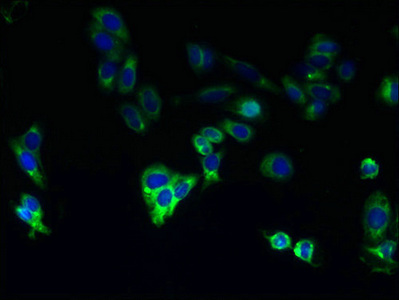
The antibody against CYP4F11 was raised in rabbit using the Recombinant Human Phylloquinone omega-hydroxylase CYP4F11 protein (38-524AA) as the immunogen. This antibody exists as a non-conjugated isotype IgG, purified by protein G with a purity greater than 95%. This antibody has been validated on ELISA, WB, IF.
$299.00
| Cat.No | ADC-32795A | Clonality | Polyclonal |
|---|---|---|---|
| Host Species | Rabbit | Target Name | CYP4F11 |
| Form | Liquid | Species Reactivity | Human, Mouse |
| Isotype | IgG | Storage Buffer | 0.01M PBS, 0.03% Proclin 300; Constituents: 50% Glycerol, PH 7.4 |
| Purification Method | >95%, Protein G purified | Conjugate | Non-conjugated |
| Application | ELISA, IF, WB | Storage | Upon receipt |
| Immunogen Description | Recombinant Human Phylloquinone omega-hydroxylase CYP4F11 protein (38-524AA) | Target Species | Human |
|---|---|---|---|
| Immunogen Sequence | Complete sequences for the immunogen, target protein, and peptides are available upon request. | Uniprot ID | Q9HBI6 |
Uniprot Id
Q9HBI6
Target Species
Human
Target Name
CYP4F11
Target Full Name
Cytochrome P450 4F11
Target Function
A cytochrome P450 monooxygenase involved in the metabolism of various endogenous substrates, including fatty acids and their oxygenated derivatives (oxylipins). Mechanistically, uses molecular oxygen inserting one oxygen atom into a substrate, and reducing the second into a water molecule, with two electrons provided by NADPH via cytochrome P450 reductase (CPR; NADPH-ferrihemoprotein reductase). Catalyzes with high efficiency the oxidation of the terminal carbon (omega-oxidation) of 3-hydroxy fatty acids, such as 3-hydroxyhexadecanoic and 3-hydroxyoctadecanoic acids, likely participating in the biosynthesis of long-chain 3-hydroxydicarboxylic acids. Omega-hydroxylates and inactivates phylloquinone (vitamin K1), and menaquinone-4 (MK-4, a form of vitamin K2), both acting as cofactors in blood coagulation. Metabolizes with low efficiciency fatty acids, including (5Z,8Z,11Z,14Z)-eicosatetraenoic acid (arachidonate) and its oxygenated metabolite 8-hydroxyeicosatetraenoic acid (8-HETE). Catalyzes N- and O-demethylation of drugs such as erythromycin, benzphetamine, ethylmorphine, chlorpromazine, imipramine and verapamil.
Target Subcellular Location
Endoplasmic reticulum membrane; Single-pass membrane protein. Microsome membrane; Single-pass membrane protein.
Target Protein Families
Cytochrome P450 family
Target Tissue Specificity
Expressed mainly in human liver, followed by kidney, heart, and skeletal muscle.
Target Research Area
Cardiovascular
Target Synonyms
CYP4F11Cytochrome P450 4F11; CYPIVF11; EC 1.14.14.1; 3-hydroxy fatty acids omega-hydroxylase CYP4F11; Docosahexaenoic acid omega-hydroxylase; EC 1.14.14.79; Long-chain fatty acid omega-monooxygenase; EC 1.14.14.80; Phylloquinone omega-hydroxylase CYP4F11; EC 1.14.14.78
Target Background
This gene, CYP4F11, encodes a member of the cytochrome P450 superfamily of enzymes. The cytochrome P450 proteins are monooxygenases which catalyze many reactions involved in drug metabolism and synthesis of cholesterol, steroids and other lipids. This gene is part of a cluster of cytochrome P450 genes on chromosome 19. Another member of this family, CYP4F2, is approximately 16 kb away. Alternatively spliced transcript variants encoding the same protein have been found for this gene.
Notification