• Contact info@abtriva.com for inquiries and orders.
  • Chinese (Simplified)

  • English

  • German

  • Korean

  • Spanish

United States (English / $ USD)

Rabbit anti-Human DAB2IP Polyclonal Antibody

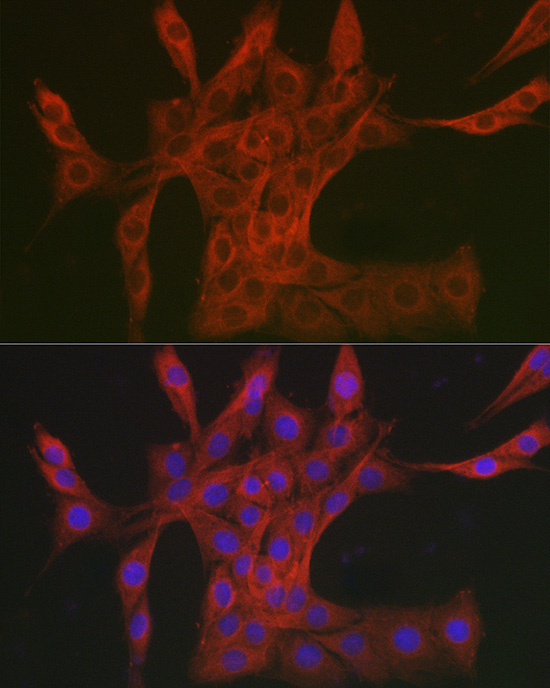
The antibody against DAB2IP was raised in Rabbit using the recombinant fusion protein containing a sequence corresponding to amino acids 205-320 of human DAB2IP (NP_619723.1) as the immunogen. The polyclonal antibody exists as a isotype IgG, by affinity purification. This antibody has been validated on WB, IF/ICC, ELISA.

ADA-04317A

The antibody against DAB2IP was raised in Rabbit using the recombinant fusion protein containing a sequence corresponding to amino acids 205-320 of human DAB2IP (NP_619723.1) as the immunogen. The polyclonal antibody exists as a isotype IgG, by affinity purification. This antibody has been validated on WB, IF/ICC, ELISA.

Number
Order Exclusive Products Now

Request a Quote
High Purity LevelsPrecision and ReliabilityCustomization Options

Specifications


Cat.No ADA-04317A ClonalityPolyclonal
Host SpeciesRabbitTarget NameDAB2IP
Target SynonymsAIP1; AIP-1; AF9Q34; DIP1/2; DAB2IPFormLiquid
Species ReactivityHuman, RatIsotypeIgG
Storage Buffer50% Glycerol, PBS with 0.05% proclin300, pH7.3.Purification MethodAffinity purification
ApplicationELISA, WB, IF/ICC

Immunogen Information


Immunogen DescriptionRecombinant fusion protein containing a sequence corresponding to amino acids 205-320 of human DAB2IP (NP_619723.1).Target SpeciesHuman
Immunogen SequenceRIKARYQTITILPMEMYKEFAEHITNHYLGLCAALEPILSAKTKEEMASALVHILQSTGKVKDFLTDLMMSEVDRCGDNEHLIFRENTLATKAIEEYLKLVGQKYLQDALGEFIKAUniprot IDQ5VWQ8
Background Information
  • Uniprot Id

    Q5VWQ8

  • Target Species

    Human

  • Target Name

    DAB2IP

  • Target Full Name

    Disabled homolog 2-interacting protein

  • Target Function

    Functions as a scaffold protein implicated in the regulation of a large spectrum of both general and specialized signaling pathways. Involved in several processes such as innate immune response, inflammation and cell growth inhibition, apoptosis, cell survival, angiogenesis, cell migration and maturation. Plays also a role in cell cycle checkpoint control; reduces G1 phase cyclin levels resulting in G0/G1 cell cycle arrest. Mediates signal transduction by receptor-mediated inflammatory signals, such as the tumor necrosis factor (TNF), interferon (IFN) or lipopolysaccharide (LPS). Modulates the balance between phosphatidylinositol 3-kinase (PI3K)-AKT-mediated cell survival and apoptosis stimulated kinase (MAP3K5)-JNK signaling pathways; sequesters both AKT1 and MAP3K5 and counterbalances the activity of each kinase by modulating their phosphorylation status in response to proinflammatory stimuli. Acts as a regulator of the endoplasmic reticulum (ER) unfolded protein response (UPR) pathway; specifically involved in transduction of the ER stress-response to the JNK cascade through ERN1. Mediates TNF-alpha-induced apoptosis activation by facilitating dissociation of inhibitor 14-3-3 from MAP3K5; recruits the PP2A phosphatase complex which dephosphorylates MAP3K5 on 'Ser-966', leading to the dissociation of 13-3-3 proteins and activation of the MAP3K5-JNK signaling pathway in endothelial cells. Mediates also TNF/TRAF2-induced MAP3K5-JNK activation, while it inhibits CHUK-NF-kappa-B signaling. Acts a negative regulator in the IFN-gamma-mediated JAK-STAT signaling cascade by inhibiting smooth muscle cell (VSMCs) proliferation and intimal expansion, and thus, prevents graft arteriosclerosis (GA). Acts as a GTPase-activating protein (GAP) for the ADP ribosylation factor 6 (ARF6) and Ras. Promotes hydrolysis of the ARF6-bound GTP and thus, negatively regulates phosphatidylinositol 4,5-bisphosphate (PIP2)-dependent TLR4-TIRAP-MyD88 and NF-kappa-B signaling pathways in endothelial cells in response to lipopolysaccharides (LPS). Binds specifically to phosphatidylinositol 4-phosphate (PtdIns4P) and phosphatidylinositol 3-phosphate (PtdIns3P). In response to vascular endothelial growth factor (VEGFA), acts as a negative regulator of the VEGFR2-PI3K-mediated angiogenic signaling pathway by inhibiting endothelial cell migration and tube formation. In the developing brain, promotes both the transition from the multipolar to the bipolar stage and the radial migration of cortical neurons from the ventricular zone toward the superficial layer of the neocortex in a glial-dependent locomotion process. Probable downstream effector of the Reelin signaling pathway; promotes Purkinje cell (PC) dendrites development and formation of cerebellar synapses. Functions also as a tumor suppressor protein in prostate cancer progression; prevents cell proliferation and epithelial-to-mesenchymal transition (EMT) through activation of the glycogen synthase kinase-3 beta (GSK3B)-induced beta-catenin and inhibition of PI3K-AKT and Ras-MAPK survival downstream signaling cascades, respectively.

  • Target Involvement

    A chromosomal aberration involving DAB2IP is found in a patient with acute myeloid leukemia (AML). Translocation t(9;11)(q34;q23) with KMT2A/MLL1. May give rise to a KMT2A/MLL1-DAB2IP fusion protein lacking the PH domain (PubMed:14978793).

  • Target Subcellular Location

    Cytoplasm. Cell membrane; Peripheral membrane protein. Membrane. Cell projection, dendrite.

  • Target Tissue Specificity

    Expressed in endothelial and vascular smooth muscle cells (VSMCs). Expressed in prostate epithelial but poorly in prostate cancer cells. Poorly expressed in medulloblastoma cells compared to cerebellar precursor proliferating progenitor cells (at protein

  • Target Synonyms

    DAB2IP; AF9Q34; AIP1; KIAA1743Disabled homolog 2-interacting protein; DAB2 interaction protein; DAB2-interacting protein; ASK-interacting protein 1; AIP-1; DOC-2/DAB-2 interactive protein

  • Target Background

    DAB2IP is a Ras (MIM 190020) GTPase-activating protein (GAP) that acts as a tumor suppressor. The DAB2IP gene is inactivated by methylation in prostate and breast cancers (Yano et al., 2005 [PubMed 15386433]).

Inquire Rabbit anti-Human DAB2IP Polyclonal Antibody Now


AbTriva respects your privacy and protects your personal data in accordance with AbTriva. For more information, please see our data protection statement. *

Notification