• Contact info@abtriva.com for inquiries and orders.
  • Chinese (Simplified)

  • English

  • German

  • Korean

  • Spanish

United States (English / $ USD)

Rabbit anti-Human DGKZ Polyclonal Antibody

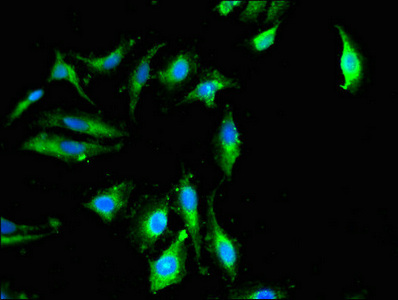
The antibody against DGKZ was raised in rabbit using the Recombinant Human Diacylglycerol kinase zeta protein (11-152AA) as the immunogen. This antibody exists as a non-conjugated isotype IgG, purified by protein G with a purity greater than 95%. This antibody has been validated on ELISA, IF.

ADC-11971A

The antibody against DGKZ was raised in rabbit using the Recombinant Human Diacylglycerol kinase zeta protein (11-152AA) as the immunogen. This antibody exists as a non-conjugated isotype IgG, purified by protein G with a purity greater than 95%. This antibody has been validated on ELISA, IF.

$299.00

Number
Order Exclusive Products Now

Request a Quote
High Purity LevelsPrecision and ReliabilityCustomization Options

Specifications


Cat.No ADC-11971A ClonalityPolyclonal
Host SpeciesRabbitTarget NameDGKZ
FormLiquidSpecies ReactivityHuman
IsotypeIgGStorage Buffer0.01M PBS, 0.03% Proclin 300; Constituents: 50% Glycerol, PH 7.4
Purification Method>95%, Protein G purifiedConjugateNon-conjugated
ApplicationELISA, IFStorageUpon receipt

Immunogen Information


Immunogen DescriptionRecombinant Human Diacylglycerol kinase zeta protein (11-152AA)Target SpeciesHuman
Immunogen SequenceComplete sequences for the immunogen, target protein, and peptides are available upon request.Uniprot IDQ13574
Background Information
  • Uniprot Id

    Q13574

  • Target Species

    Human

  • Target Name

    DGKZ

  • Target Full Name

    Diacylglycerol kinase zeta

  • Target Function

    Diacylglycerol kinase that converts diacylglycerol/DAG into phosphatidic acid/phosphatidate/PA and regulates the respective levels of these two bioactive lipids. Thereby, acts as a central switch between the signaling pathways activated by these second messengers with different cellular targets and opposite effects in numerous biological processes. Also plays an important role in the biosynthesis of complex lipids. Does not exhibit an acyl chain-dependent substrate specificity among diacylglycerol species. Can also phosphorylate 1-alkyl-2-acylglycerol in vitro but less efficiently and with a preference for alkylacylglycerols containing an arachidonoyl group. The biological processes it is involved in include T cell activation since it negatively regulates T-cell receptor signaling which is in part mediated by diacylglycerol. By generating phosphatidic acid, stimulates PIP5KIA activity which regulates actin polymerization. Through the same mechanism could also positively regulate insulin-induced translocation of SLC2A4 to the cell membrane.; Regulates RASGRP1 activity.; Does not regulate RASGRP1 activity.

  • Target Subcellular Location

    Nucleus. Cytoplasm, cytosol. Cell membrane. Cell projection, lamellipodium.

  • Target Protein Families

    Eukaryotic diacylglycerol kinase family

  • Target Tissue Specificity

    Highest levels in brain, and substantial levels in skeletal muscle, heart, and pancreas.; [Isoform 2]: Predominantly expressed in muscle.

  • Target Synonyms

    DAG kinase zeta; DAGK5 ; DAGK5 PEN; DAGK6 ; DGK ZETA ; DGK-zeta; Dgkz; DGKZ_HUMAN; Diacylglycerol kinase zeta; Diglyceride kinase zeta; hDGKzeta

  • Target Background

    The protein encoded by this gene belongs to the eukaryotic diacylglycerol kinase family. It may attenuate protein kinase C activity by regulating diacylglycerol levels in intracellular signaling cascade and signal transduction. Alternative splicing occurs at this locus and multiple transcript variants encoding distinct isoforms have been identified.

Inquire Rabbit anti-Human DGKZ Polyclonal Antibody Now


AbTriva respects your privacy and protects your personal data in accordance with AbTriva. For more information, please see our data protection statement. *

Notification