• Contact info@abtriva.com for inquiries and orders.
  • Chinese (Simplified)

  • English

  • German

  • Korean

  • Spanish

United States (English / $ USD)

Rabbit anti-Human DLAT Polyclonal Antibody

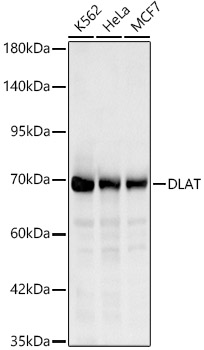
The antibody against DLAT was raised in Rabbit using the recombinant fusion protein containing a sequence corresponding to amino acids 87-270 of human DLAT (NP_001922.2) as the immunogen. The polyclonal antibody exists as a isotype IgG, by affinity purification. This antibody has been validated on WB, IHC-P, IF/ICC, ELISA.

ADA-12250A

The antibody against DLAT was raised in Rabbit using the recombinant fusion protein containing a sequence corresponding to amino acids 87-270 of human DLAT (NP_001922.2) as the immunogen. The polyclonal antibody exists as a isotype IgG, by affinity purification. This antibody has been validated on WB, IHC-P, IF/ICC, ELISA.

Number
Order Exclusive Products Now

Request a Quote
High Purity LevelsPrecision and ReliabilityCustomization Options

Specifications


Cat.No ADA-12250A ClonalityPolyclonal
Host SpeciesRabbitTarget NameDLAT
Target SynonymsE2; PBC; DLTA; PDCE2; PDC-E2; DLATFormLiquid
Species ReactivityHuman, Mouse, RatIsotypeIgG
Storage Buffer50% Glycerol, PBS with 0.01% thimerosal, pH7.3.Purification MethodAffinity purification
Positive SamplesHeLa, K562, MCF7ApplicationELISA, WB, IF/ICC, IHC-P

Immunogen Information


Immunogen DescriptionRecombinant fusion protein containing a sequence corresponding to amino acids 87-270 of human DLAT (NP_001922.2).Target SpeciesHuman
Immunogen SequenceSLPPHQKVPLPSLSPTMQAGTIARWEKKEGDKINEGDLIAEVETDKATVGFESLEECYMAKILVAEGTRDVPIGAIICITVGKPEDIEAFKNYTLDSSAAPTPQAAPAPTPAATASPPTPSAQAPGSSYPPHMQVLLPALSPTMTMGTVQRWEKKVGEKLSEGDLLAEIETDKATIGFEVQEEGUniprot IDP10515
Background Information
  • Uniprot Id

    P10515

  • Target Species

    Human

  • Target Name

    DLAT

  • Target Full Name

    Dihydrolipoyllysine-residue acetyltransferase component of pyruvate dehydrogenase complex, mitochondrial

  • Target Function

    The pyruvate dehydrogenase complex catalyzes the overall conversion of pyruvate to acetyl-CoA and CO(2), and thereby links the glycolytic pathway to the tricarboxylic cycle.

  • Target Involvement

    Pyruvate dehydrogenase E2 deficiency (PDHE2 deficiency)

  • Target Subcellular Location

    Mitochondrion matrix.

  • Target Protein Families

    2-oxoacid dehydrogenase family

  • Target Research Area

    Metabolism

  • Target Synonyms

    70 kDa mitochondrial autoantigen of primary biliary cirrhosis; Dihydrolipoamide acetyltransferase component of pyruvate dehydrogenase complex; Dihydrolipoamide S Acetyltransferase; Dihydrolipoyllysine-residue acetyltransferase component of pyruvate dehydrogenase complex; dihydrolipoyllysine-residue acetyltransferase component of pyruvate dehydrogenase complex mitochondrial; DLAT; DLTA; E2; E2 component of pyruvate dehydrogenase complex; M2 antigen complex 70 kDa subunit; mitochondrial; ODP2_HUMAN; PBC; PDC E2; PDC-E2; PDCE2; Pyruvate dehydrogenase complex component E2; Pyruvate dehydrogenase complex E2 subunit

  • Target Background

    This gene encodes component E2 of the multi-enzyme pyruvate dehydrogenase complex (PDC). PDC resides in the inner mitochondrial membrane and catalyzes the conversion of pyruvate to acetyl coenzyme A. The protein product of this gene, dihydrolipoamide acetyltransferase, accepts acetyl groups formed by the oxidative decarboxylation of pyruvate and transfers them to coenzyme A. Dihydrolipoamide acetyltransferase is the antigen for antimitochondrial antibodies. These autoantibodies are present in nearly 95% of patients with the autoimmune liver disease primary biliary cirrhosis (PBC). In PBC, activated T lymphocytes attack and destroy epithelial cells in the bile duct where this protein is abnormally distributed and overexpressed. PBC enventually leads to cirrhosis and liver failure. Mutations in this gene are also a cause of pyruvate dehydrogenase E2 deficiency which causes primary lactic acidosis in infancy and early childhood.

Inquire Rabbit anti-Human DLAT Polyclonal Antibody Now


AbTriva respects your privacy and protects your personal data in accordance with AbTriva. For more information, please see our data protection statement. *

Notification