-
Chinese (Simplified)
-
English
-
German
-
Korean
-
Spanish

Chinese (Simplified)
English
German
Korean
Spanish
Sign up for an account to enjoy easy online shopping and instant order tracking.
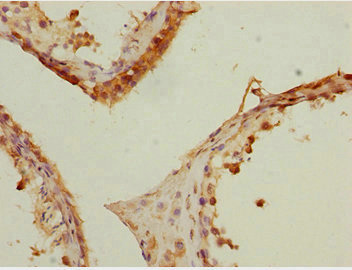
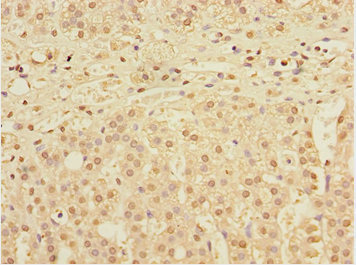
The antibody against DNAJB9 was raised in rabbit using the Recombinant Human DnaJ homolog subfamily B member 9 protein (24-223AA) as the immunogen. This antibody exists as a non-conjugated isotype IgG, Antigen affinity purified. This antibody has been validated on ELISA, IHC.
$299.00
| Cat.No | ADC-17169A | Clonality | Polyclonal |
|---|---|---|---|
| Host Species | Rabbit | Target Name | DNAJB9 |
| Form | Liquid | Species Reactivity | Human |
| Isotype | IgG | Storage Buffer | 50% Glycerol, PBS with 0.02% sodium azide, pH7.3. |
| Purification Method | Antigen affinity purified | Conjugate | Non-conjugated |
| Application | ELISA, IHC | Storage | Upon receipt |
| Immunogen Description | Recombinant Human DnaJ homolog subfamily B member 9 protein (24-223AA) | Target Species | Human |
|---|---|---|---|
| Immunogen Sequence | Complete sequences for the immunogen, target protein, and peptides are available upon request. | Uniprot ID | Q9UBS3 |
Uniprot Id
Q9UBS3
Target Species
Human
Target Name
DNAJB9
Target Full Name
DnaJ homolog subfamily B member 9
Target Function
Co-chaperone for Hsp70 protein HSPA5/BiP that acts as a key repressor of the ERN1/IRE1-mediated unfolded protein response (UPR). J domain-containing co-chaperones stimulate the ATPase activity of Hsp70 proteins and are required for efficient substrate recognition by Hsp70 proteins. In the unstressed endoplasmic reticulum, interacts with the luminal region of ERN1/IRE1 and selectively recruits HSPA5/BiP: HSPA5/BiP disrupts the dimerization of the active ERN1/IRE1 luminal region, thereby inactivating ERN1/IRE1. Also involved in endoplasmic reticulum-associated degradation (ERAD) of misfolded proteins. Required for survival of B-cell progenitors and normal antibody production.
Target Subcellular Location
Endoplasmic reticulum lumen.
Target Tissue Specificity
Widely expressed. Expressed at highest level in the liver, placenta and kidney.
Target Synonyms
DKFZP564F1862; DnaJ (Hsp40) homolog subfamily B member 9; DnaJ homolog subfamily B member 9; DNAJB9; DNJB9_HUMAN; eEndoplasmic reticulum DNA J domain containing protein 4; Endoplasmic reticulum DnaJ homolog 4; ER resident protein ERdj4; ERdj4; MDG 1; Mdg-1; MDG1; Microvascular endothelial differentiation gene 1; Microvascular endothelial differentiation gene 1 protein; MST049; MSTP049; OTTHUMP00000206840
Target Background
This gene is a member of the J protein family. J proteins function in many cellular processes by regulating the ATPase activity of 70 kDa heat shock proteins. This gene is a member of the type 2 subgroup of DnaJ proteins. The encoded protein is localized to the endoplasmic reticulum. This protein is induced by endoplasmic reticulum stress and plays a role in protecting stressed cells from apoptosis.
Notification