-
Chinese (Simplified)
-
English
-
German
-
Korean
-
Spanish
Chinese (Simplified)
English
German
Korean
Spanish
Sign up for an account to enjoy easy online shopping and instant order tracking.
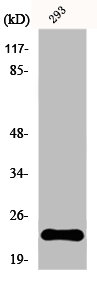
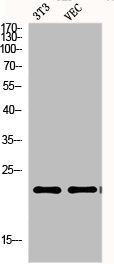
The antibody against EFNA1 was raised in rabbit using the Synthesized peptide derived from the Internal region of Human Ephrin-A1. as the immunogen. This antibody exists as a non-conjugated isotype IgG. The antibody was affinity-purified from rabbit antiserum by affinity-chromatography using epitope-specific immunogen. This antibody has been validated on WB, IHC, IF, ELISA.
$167.00
| Cat.No | ADC-38735A | Clonality | Polyclonal |
|---|---|---|---|
| Host Species | Rabbit | Target Name | EFNA1 |
| Form | Liquid | Species Reactivity | Human, Mouse, Rat |
| Isotype | IgG | Storage Buffer | 0.5% BSA and 0.02% sodium azide., Liquid in PBS containing 50% glycerol |
| Purification Method | The antibody was affinity-purified from rabbit antiserum by affinity-chromatography using epitope-specific immunogen. | Conjugate | Non-conjugated |
| Application | ELISA, IF, IHC, WB | Storage | Upon receipt |
| Immunogen Description | Synthesized peptide derived from the Internal region of Human Ephrin-A1. | Target Species | Human |
|---|---|---|---|
| Immunogen Sequence | Complete sequences for the immunogen, target protein, and peptides are available upon request. | Uniprot ID | P20827 |
Uniprot Id
P20827
Target Species
Human
Target Name
EFNA1
Target Full Name
Ephrin-A1
Target Function
Cell surface GPI-bound ligand for Eph receptors, a family of receptor tyrosine kinases which are crucial for migration, repulsion and adhesion during neuronal, vascular and epithelial development. Binds promiscuously Eph receptors residing on adjacent cells, leading to contact-dependent bidirectional signaling into neighboring cells. Plays an important role in angiogenesis and tumor neovascularization. The recruitment of VAV2, VAV3 and PI3-kinase p85 subunit by phosphorylated EPHA2 is critical for EFNA1-induced RAC1 GTPase activation and vascular endothelial cell migration and assembly. Exerts anti-oncogenic effects in tumor cells through activation and down-regulation of EPHA2. Activates EPHA2 by inducing tyrosine phosphorylation which leads to its internalization and degradation. Acts as a negative regulator in the tumorigenesis of gliomas by down-regulating EPHA2 and FAK. Can evoke collapse of embryonic neuronal growth cone and regulates dendritic spine morphogenesis.
Target Subcellular Location
Cell membrane; Lipid-anchor, GPI-anchor.; [Ephrin-A1, secreted form]: Secreted.
Target Protein Families
Ephrin family
Target Tissue Specificity
Brain. Down-regulated in primary glioma tissues compared to the normal tissues. The soluble monomeric form is expressed in the glioblastoma multiforme (GBM) and breast cancer cells (at protein level).
Target Research Area
Cardiovascular
Target Synonyms
B61; ECKLG; EFL 1; EFL1; EFNA 1; Efna1; EFNA1_HUMAN; EPH related receptor tyrosine kinase ligand 1; EPH-related receptor tyrosine kinase ligand 1; Ephrin-A1; Ephrin-A1, secreted form ; EphrinA1; EPLG 1; EPLG1; Immediate early response protein B61; LERK 1; LERK-1; LERK1; Ligand of eph related kinase 1; OTTHUMP00000033242; OTTHUMP00000033271; secreted form; TNF alpha-induced protein 4; TNFAIP 4; TNFAIP4; Tumor necrosis factor alpha induced protein 4 ; Tumor necrosis factor alpha-induced protein 4
Target Background
This gene encodes a member of the ephrin (EPH) family. The ephrins and EPH-related receptors comprise the largest subfamily of receptor protein-tyrosine kinases and have been implicated in mediating developmental events, especially in the nervous system and in erythropoiesis. Based on their structures and sequence relationships, ephrins are divided into the ephrin-A (EFNA) class, which are anchored to the membrane by a glycosylphosphatidylinositol linkage, and the ephrin-B (EFNB) class, which are transmembrane proteins. This gene encodes an EFNA class ephrin which binds to the EPHA2, EPHA4, EPHA5, EPHA6, and EPHA7 receptors. Two transcript variants that encode different isoforms were identified through sequence analysis.
Notification