• Contact info@abtriva.com for inquiries and orders.
  • Chinese (Simplified)

  • English

  • German

  • Korean

  • Spanish

United States (English / $ USD)

Rabbit anti-Human EFNB1 Polyclonal Antibody

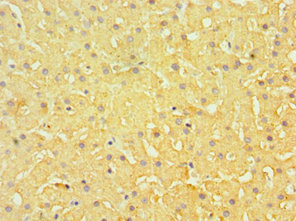
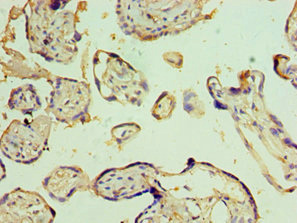
The antibody against EFNB1 was raised in rabbit using the Recombinant Human Ephrin-B1 protein (28-237AA) as the immunogen. This antibody exists as a non-conjugated isotype IgG, Antigen affinity purified. This antibody has been validated on ELISA, IHC.

ADC-44576A

The antibody against EFNB1 was raised in rabbit using the Recombinant Human Ephrin-B1 protein (28-237AA) as the immunogen. This antibody exists as a non-conjugated isotype IgG, Antigen affinity purified. This antibody has been validated on ELISA, IHC.

$299.00

Number
Order Exclusive Products Now

Request a Quote
High Purity LevelsPrecision and ReliabilityCustomization Options

Specifications


Cat.No ADC-44576A ClonalityPolyclonal
Host SpeciesRabbitTarget NameEFNB1
Target SynonymsEFNB1; EFL3; EPLG2; LERK2; Ephrin-B1; EFL-3; ELK ligand; ELK-L; EPH-related receptor tyrosine kinase ligand 2; LERK-2FormLiquid
Species ReactivityHumanIsotypeIgG
Storage Buffer50% Glycerol, PBS with 0.02% sodium azide, pH7.3.Purification MethodAntigen affinity purified
ConjugateNon-conjugatedApplicationELISA, IHC
StorageUpon receipt

Immunogen Information


Immunogen DescriptionRecombinant Human Ephrin-B1 protein (28-237AA)Target SpeciesHuman
Immunogen SequenceComplete sequences for the immunogen, target protein, and peptides are available upon request.Uniprot IDP98172
Background Information
  • Uniprot Id

    P98172

  • Target Species

    Human

  • Target Name

    EFNB1

  • Target Full Name

    Ephrin-B1

  • Target Function

    Cell surface transmembrane ligand for Eph receptors, a family of receptor tyrosine kinases which are crucial for migration, repulsion and adhesion during neuronal, vascular and epithelial development. Binding to Eph receptors residing on adjacent cells leads to contact-dependent bidirectional signaling into neighboring cells. Shows high affinity for the receptor tyrosine kinase EPHB1/ELK. Can also bind EPHB2 and EPHB3. Binds to, and induces collapse of, commissural axons/growth cones in vitro. May play a role in constraining the orientation of longitudinally projecting axons.

  • Target Involvement

    Craniofrontonasal syndrome (CFNS)

  • Target Subcellular Location

    Cell membrane; Single-pass type I membrane protein. Membrane raft.; [Ephrin-B1 C-terminal fragment]: Cell membrane; Single-pass type I membrane protein.; [Ephrin-B1 intracellular domain]: Nucleus.

  • Target Protein Families

    Ephrin family

  • Target Tissue Specificity

    Widely expressed. Detected in both neuronal and non-neuronal tissues. Seems to have particularly strong expression in retina, sciatic nerve, heart and spinal cord.

  • Target Synonyms

    EFNB1; EFL3; EPLG2; LERK2; Ephrin-B1; EFL-3; ELK ligand; ELK-L; EPH-related receptor tyrosine kinase ligand 2; LERK-2

  • Target Background

    The protein encoded by this gene is a type I membrane protein and a ligand of Eph-related receptor tyrosine kinases. It may play a role in cell adhesion and function in the development or maintenance of the nervous system.

Inquire Rabbit anti-Human EFNB1 Polyclonal Antibody Now


AbTriva respects your privacy and protects your personal data in accordance with AbTriva. For more information, please see our data protection statement. *

Notification