• Contact info@abtriva.com for inquiries and orders.
  • Chinese (Simplified)

  • English

  • German

  • Korean

  • Spanish

United States (English / $ USD)

Rabbit anti-Human EFNB3 Polyclonal Antibody

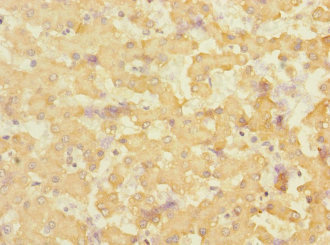
The antibody against EFNB3 was raised in rabbit using the Recombinant Human Ephrin-B3 protein (28-226AA) as the immunogen. This antibody exists as a non-conjugated isotype IgG, Antigen affinity purified. This antibody has been validated on ELISA, WB, IHC.

ADC-16363A

The antibody against EFNB3 was raised in rabbit using the Recombinant Human Ephrin-B3 protein (28-226AA) as the immunogen. This antibody exists as a non-conjugated isotype IgG, Antigen affinity purified. This antibody has been validated on ELISA, WB, IHC.

$299.00

Number
Order Exclusive Products Now

Request a Quote
High Purity LevelsPrecision and ReliabilityCustomization Options

Specifications


Cat.No ADC-16363A ClonalityPolyclonal
Host SpeciesRabbitTarget NameEFNB3
FormLiquidSpecies ReactivityHuman
IsotypeIgGStorage Buffer50% Glycerol, PBS with 0.02% sodium azide, pH7.3.
Purification MethodAntigen affinity purifiedConjugateNon-conjugated
ApplicationELISA, IHC, WBStorageUpon receipt

Immunogen Information


Immunogen DescriptionRecombinant Human Ephrin-B3 protein (28-226AA)Target SpeciesHuman
Immunogen SequenceComplete sequences for the immunogen, target protein, and peptides are available upon request.Uniprot IDQ15768
Background Information
  • Uniprot Id

    Q15768

  • Target Species

    Human

  • Target Name

    EFNB3

  • Target Full Name

    Ephrin-B3

  • Target Function

    Cell surface transmembrane ligand for Eph receptors, a family of receptor tyrosine kinases which are crucial for migration, repulsion and adhesion during neuronal, vascular and epithelial development. Binds promiscuously Eph receptors residing on adjacent cells, leading to contact-dependent bidirectional signaling into neighboring cells. The signaling pathway downstream of the receptor is referred to as forward signaling while the signaling pathway downstream of the ephrin ligand is referred to as reverse signaling. May play a pivotal role in forebrain function. Binds to, and induce the collapse of, commissural axons/growth cones in vitro. May play a role in constraining the orientation of longitudinally projecting axons.; (Microbial infection) Acts as a receptor for nipah virus and hendra virus.

  • Target Subcellular Location

    Membrane; Single-pass type I membrane protein.

  • Target Protein Families

    Ephrin family

  • Target Tissue Specificity

    Highly expressed in brain; expressed in embryonic floor plate, roof plate and hindbrain segments.

  • Target Synonyms

    EFL 6; EFL6; EFNB 3; Efnb3; EFNB3_HUMAN; EPH related receptor transmembrane ligand ELK L3; EPH related receptor transmembrane ligand ELKL3; EPH related receptor tyrosine kinase ligand 8; EPH-related receptor transmembrane ligand ELK-L3; EPH-related receptor tyrosine kinase ligand 8; Ephrin B3; Ephrin-B3; EphrinB3; EPLG 8; EPLG8; LERK 8; LERK-8; LERK8

  • Target Background

    EFNB3, a member of the ephrin gene family, is important in brain development as well as in its maintenance. Moreover, since levels of EFNB3 expression were particularly high in several forebrain subregions compared to other brain subregions, it may play a pivotal role in forebrain function. The EPH and EPH-related receptors comprise the largest subfamily of receptor protein-tyrosine kinases and have been implicated in mediating developmental events, particularly in the nervous system. EPH Receptors typically have a single kinase domain and an extracellular region containing a Cys-rich domain and 2 fibronectin type III repeats. The ephrin ligands and receptors have been named by the Eph Nomenclature Committee (1997). Based on their structures and sequence relationships, ephrins are divided into the ephrin-A (EFNA) class, which are anchored to the membrane by a glycosylphosphatidylinositol linkage, and the ephrin-B (EFNB) class, which are transmembrane proteins. The Eph family of receptors are similarly divided into 2 groups based on the similarity of their extracellular domain sequences and their affinities for binding ephrin-A and ephrin-B ligands.

Inquire Rabbit anti-Human EFNB3 Polyclonal Antibody Now


AbTriva respects your privacy and protects your personal data in accordance with AbTriva. For more information, please see our data protection statement. *

Notification