• Contact info@abtriva.com for inquiries and orders.
  • Chinese (Simplified)

  • English

  • German

  • Korean

  • Spanish

United States (English / $ USD)

Rabbit anti-Human ELP3 Polyclonal Antibody

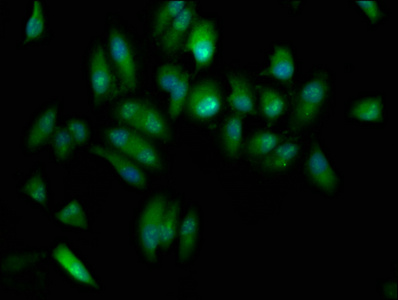
The antibody against ELP3 was raised in rabbit using the Recombinant Human Elongator complex protein 3 protein (1-85AA) as the immunogen. This antibody exists as a non-conjugated isotype IgG, purified by protein G with a purity greater than 95%. This antibody has been validated on ELISA, WB, IHC, IF, IP.

ADC-06266A

The antibody against ELP3 was raised in rabbit using the Recombinant Human Elongator complex protein 3 protein (1-85AA) as the immunogen. This antibody exists as a non-conjugated isotype IgG, purified by protein G with a purity greater than 95%. This antibody has been validated on ELISA, WB, IHC, IF, IP.

$299.00

Number
Order Exclusive Products Now

Request a Quote
High Purity LevelsPrecision and ReliabilityCustomization Options

Specifications


Cat.No ADC-06266A ClonalityPolyclonal
Host SpeciesRabbitTarget NameELP3
FormLiquidSpecies ReactivityHuman
IsotypeIgGStorage Buffer0.01M PBS, 0.03% Proclin 300; Constituents: 50% Glycerol, PH 7.4
Purification Method>95%, Protein G purifiedConjugateNon-conjugated
ApplicationELISA, IF, IHC, WB, IPStorageUpon receipt

Immunogen Information


Immunogen DescriptionRecombinant Human Elongator complex protein 3 protein (1-85AA)Target SpeciesHuman
Immunogen SequenceComplete sequences for the immunogen, target protein, and peptides are available upon request.Uniprot IDQ9H9T3
Background Information
  • Uniprot Id

    Q9H9T3

  • Target Species

    Human

  • Target Name

    ELP3

  • Target Full Name

    Elongator complex protein 3

  • Target Function

    Catalytic tRNA acetyltransferase subunit of the RNA polymerase II elongator complex, which is a component of the RNA polymerase II (Pol II) holoenzyme and is involved in transcriptional elongation. The elongator complex is required for multiple tRNA modifications, including mcm5U (5-methoxycarbonylmethyl uridine), mcm5s2U (5-methoxycarbonylmethyl-2-thiouridine), and ncm5U (5-carbamoylmethyl uridine). In the elongator complex, acts as a tRNA uridine(34) acetyltransferase by mediating formation of carboxymethyluridine in the wobble base at position 34 in tRNAs. May also act as a protein lysine acetyltransferase by mediating acetylation of target proteins; such activity is however unclear in vivo and recent evidences suggest that ELP3 primarily acts as a tRNA acetyltransferase. Involved in neurogenesis: regulates the migration and branching of projection neurons in the developing cerebral cortex, through a process depending on alpha-tubulin acetylation. Required for acetylation of GJA1 in the developing cerebral cortex.

  • Target Involvement

    ELP3 genetic variations may be associated with an increased risk for neurodegeneration and motor neuron diseases.

  • Target Subcellular Location

    Cytoplasm. Nucleus.; [Isoform 1]: Nucleus.; [Isoform 2]: Cytoplasm. Nucleus.

  • Target Protein Families

    ELP3 family

  • Target Tissue Specificity

    Expressed in the cerebellum and spinal motor neurons.

  • Target Synonyms

    DKFZp761L098; Elongation protein 3 homolog (S. cerevisiae); Elongation protein 3 homolog; ELONGATION PROTEIN 3; S. CEREVISIAE; HOMOLOG OF; elongator acetyltransferase complex subunit 3; Elongator complex protein 3; elp3; ELP3_HUMAN; FLJ10422; hELP3; Hypothetical protein DKFZp761L098; Kat9

  • Target Background

    Enables acetyltransferase activity and phosphorylase kinase regulator activity. Involved in regulation of transcription by RNA polymerase II and tRNA wobble uridine modification. Located in cytosol and nucleolus. Part of elongator holoenzyme complex.

Inquire Rabbit anti-Human ELP3 Polyclonal Antibody Now


AbTriva respects your privacy and protects your personal data in accordance with AbTriva. For more information, please see our data protection statement. *

Notification