• Contact info@abtriva.com for inquiries and orders.
  • Chinese (Simplified)

  • English

  • German

  • Korean

  • Spanish

United States (English / $ USD)

Rabbit anti-Human EPHA1 Polyclonal Antibody

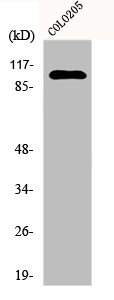
The antibody against EPHA1 was raised in rabbit using the Synthesized peptide derived from the Internal region of Human EphA1. as the immunogen. This antibody exists as a non-conjugated isotype IgG. The antibody was affinity-purified from rabbit antiserum by affinity-chromatography using epitope-specific immunogen. This antibody has been validated on WB, IHC, IF, ELISA.

ADC-38740A

The antibody against EPHA1 was raised in rabbit using the Synthesized peptide derived from the Internal region of Human EphA1. as the immunogen. This antibody exists as a non-conjugated isotype IgG. The antibody was affinity-purified from rabbit antiserum by affinity-chromatography using epitope-specific immunogen. This antibody has been validated on WB, IHC, IF, ELISA.

$167.00

Number
Order Exclusive Products Now

Request a Quote
High Purity LevelsPrecision and ReliabilityCustomization Options

Specifications


Cat.No ADC-38740A ClonalityPolyclonal
Host SpeciesRabbitTarget NameEPHA1
FormLiquidSpecies ReactivityHuman
IsotypeIgGStorage Buffer0.5% BSA and 0.02% sodium azide., Liquid in PBS containing 50% glycerol
Purification MethodThe antibody was affinity-purified from rabbit antiserum by affinity-chromatography using epitope-specific immunogen.ConjugateNon-conjugated
ApplicationELISA, IF, IHC, WBStorageUpon receipt

Immunogen Information


Immunogen DescriptionSynthesized peptide derived from the Internal region of Human EphA1.Target SpeciesHuman
Immunogen SequenceComplete sequences for the immunogen, target protein, and peptides are available upon request.Uniprot IDP21709
Background Information
  • Uniprot Id

    P21709

  • Target Species

    Human

  • Target Name

    EPHA1

  • Target Full Name

    Ephrin type-A receptor 1

  • Target Function

    Receptor tyrosine kinase which binds promiscuously membrane-bound ephrin-A family ligands residing on adjacent cells, leading to contact-dependent bidirectional signaling into neighboring cells. The signaling pathway downstream of the receptor is referred to as forward signaling while the signaling pathway downstream of the ephrin ligand is referred to as reverse signaling. Binds with a low affinity EFNA3 and EFNA4 and with a high affinity to EFNA1 which most probably constitutes its cognate/functional ligand. Upon activation by EFNA1 induces cell attachment to the extracellular matrix inhibiting cell spreading and motility through regulation of ILK and downstream RHOA and RAC. Plays also a role in angiogenesis and regulates cell proliferation. May play a role in apoptosis.

  • Target Subcellular Location

    Cell membrane; Single-pass type I membrane protein.

  • Target Protein Families

    Protein kinase superfamily, Tyr protein kinase family, Ephrin receptor subfamily

  • Target Tissue Specificity

    Overexpressed in several carcinomas.

  • Target Synonyms

    EPH; EPH receptor A1; EPH tyrosine kinase 1; EPH tyrosine kinase; Epha1; EPHA1_HUMAN; Ephrin receptor Eph A1; Ephrin type A receptor 1; Ephrin type-A receptor 1; EPHT 1; EPHT; EPHT1; Erythropoietin producing hepatoma amplified sequence; Erythropoietin-producing hepatoma receptor; Esk; hEpha1; MGC163163; Oncogene EPH; Soluble EPHA1 variant 1; Soluble EPHA1 variant 2; Tyrosine protein kinase receptor EPH; Tyrosine-protein kinase receptor EPH

  • Target Background

    This gene belongs to the ephrin receptor subfamily of the protein-tyrosine kinase family. EPH and EPH-related receptors have been implicated in mediating developmental events, particularly in the nervous system. Receptors in the EPH subfamily typically have a single kinase domain and an extracellular region containing a Cys-rich domain and 2 fibronectin type III repeats. The ephrin receptors are divided into 2 groups based on the similarity of their extracellular domain sequences and their affinities for binding ephrin-A and ephrin-B ligands. This gene is expressed in some human cancer cell lines and has been implicated in carcinogenesis.

Inquire Rabbit anti-Human EPHA1 Polyclonal Antibody Now


AbTriva respects your privacy and protects your personal data in accordance with AbTriva. For more information, please see our data protection statement. *

Notification