• Contact info@abtriva.com for inquiries and orders.
  • Chinese (Simplified)

  • English

  • German

  • Korean

  • Spanish

United States (English / $ USD)

Rabbit anti-Human EPHB1 Polyclonal Antibody

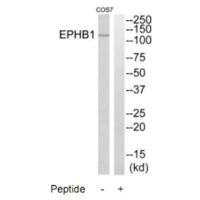
The antibody against EPHB1 was raised in rabbit using the Synthesized peptide derived from C-terminal of Human EPHB1. as the immunogen. The antibody was affinity-purified from rabbit antiserum by affinity-chromatography using epitope-specific immunogen. This antibody has been validated on ELISA, WB.

ADC-40697A

The antibody against EPHB1 was raised in rabbit using the Synthesized peptide derived from C-terminal of Human EPHB1. as the immunogen. The antibody was affinity-purified from rabbit antiserum by affinity-chromatography using epitope-specific immunogen. This antibody has been validated on ELISA, WB.

$297.00

Number
Order Exclusive Products Now

Request a Quote
High Purity LevelsPrecision and ReliabilityCustomization Options

Specifications


Cat.No ADC-40697A ClonalityPolyclonal
Host SpeciesRabbitTarget NameEPHB1
FormLiquidSpecies ReactivityHuman
Storage BufferPH 7.4, 0.02% sodium azide and 50% glycerol., 150mM NaCl, Rabbit IgG in phosphate buffered saline (without Mg2+ and Ca2+)Purification MethodThe antibody was affinity-purified from rabbit antiserum by affinity-chromatography using epitope-specific immunogen.
ApplicationELISA, WBStorageUpon receipt

Immunogen Information


Immunogen DescriptionSynthesized peptide derived from C-terminal of Human EPHB1.Target SpeciesHuman
Immunogen SequenceComplete sequences for the immunogen, target protein, and peptides are available upon request.Uniprot IDP54762
Background Information
  • Uniprot Id

    P54762

  • Target Species

    Human

  • Target Name

    EPHB1

  • Target Full Name

    Ephrin type-B receptor 1

  • Target Function

    Receptor tyrosine kinase which binds promiscuously transmembrane ephrin-B family ligands residing on adjacent cells, leading to contact-dependent bidirectional signaling into neighboring cells. The signaling pathway downstream of the receptor is referred to as forward signaling while the signaling pathway downstream of the ephrin ligand is referred to as reverse signaling. Cognate/functional ephrin ligands for this receptor include EFNB1, EFNB2 and EFNB3. During nervous system development, regulates retinal axon guidance redirecting ipsilaterally ventrotemporal retinal ganglion cells axons at the optic chiasm midline. This probably requires repulsive interaction with EFNB2. In the adult nervous system together with EFNB3, regulates chemotaxis, proliferation and polarity of the hippocampus neural progenitors. In addition to its role in axon guidance plays also an important redundant role with other ephrin-B receptors in development and maturation of dendritic spines and synapse formation. May also regulate angiogenesis. More generally, may play a role in targeted cell migration and adhesion. Upon activation by EFNB1 and probably other ephrin-B ligands activates the MAPK/ERK and the JNK signaling cascades to regulate cell migration and adhesion respectively. Involved in the maintenance of the pool of satellite cells (muscle stem cells) by promoting their self-renewal and reducing their activation and differentiation.

  • Target Subcellular Location

    Cell membrane; Single-pass type I membrane protein. Early endosome membrane. Cell projection, dendrite.

  • Target Protein Families

    Protein kinase superfamily, Tyr protein kinase family, Ephrin receptor subfamily

  • Target Tissue Specificity

    Preferentially expressed in brain.

  • Target Synonyms

    Cek 6; EK6; ELK; Elkh; EPH receptor B1; Eph tyrosine kinase 2; EPH-like kinase 6; Ephb1; EPHB1_HUMAN; Ephrin type B receptor 1; Ephrin type-B receptor 1; EPHT2; HEK 6; HEK6; NET; Neuronally-expressed EPH-related tyrosine kinase; soluble EPHB1 variant 1; Tyrosine protein kinase receptor EPH 2; Tyrosine-protein kinase receptor EPH-2

  • Target Background

    Ephrin receptors and their ligands, the ephrins, mediate numerous developmental processes, particularly in the nervous system. Based on their structures and sequence relationships, ephrins are divided into the ephrin-A (EFNA) class, which are anchored to the membrane by a glycosylphosphatidylinositol linkage, and the ephrin-B (EFNB) class, which are transmembrane proteins. The Eph family of receptors are divided into 2 groups based on the similarity of their extracellular domain sequences and their affinities for binding ephrin-A and ephrin-B ligands. Ephrin receptors make up the largest subgroup of the receptor tyrosine kinase (RTK) family. The protein encoded by this gene is a receptor for ephrin-B family members.

Inquire Rabbit anti-Human EPHB1 Polyclonal Antibody Now


AbTriva respects your privacy and protects your personal data in accordance with AbTriva. For more information, please see our data protection statement. *

Notification