• Contact info@abtriva.com for inquiries and orders.
  • Chinese (Simplified)

  • English

  • German

  • Korean

  • Spanish

United States (English / $ USD)

Rabbit anti-Human EPHB3 Polyclonal Antibody

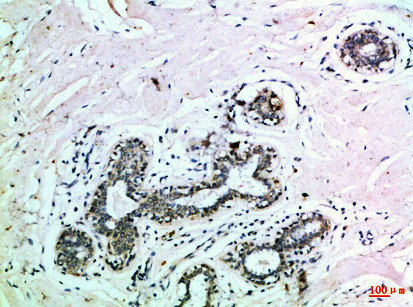
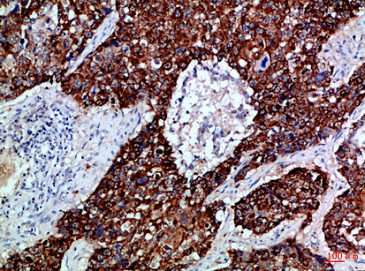
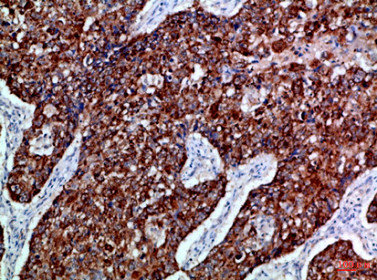
The antibody against EPHB3 was raised in rabbit using the Synthetic peptide from Human protein at AA range: 650-700 as the immunogen. This antibody exists as a non-conjugated antibody. The antibody was affinity-purified from rabbit serum by affinity-chromatography using specific immunogen. This antibody has been validated on IHC, ELISA.

ADC-12960A

The antibody against EPHB3 was raised in rabbit using the Synthetic peptide from Human protein at AA range: 650-700 as the immunogen. This antibody exists as a non-conjugated antibody. The antibody was affinity-purified from rabbit serum by affinity-chromatography using specific immunogen. This antibody has been validated on IHC, ELISA.

$167.00

Number
Order Exclusive Products Now

Request a Quote
High Purity LevelsPrecision and ReliabilityCustomization Options

Specifications


Cat.No ADC-12960A ClonalityPolyclonal
Host SpeciesRabbitTarget NameEPHB3
FormLiquidSpecies ReactivityHuman, Mouse, Rat
Storage BufferPH 7.4, containing 0.02% sodium azide as Preservative and 50% Glycerol., PBSPurification MethodThe antibody was affinity-purified from rabbit serum by affinity-chromatography using specific immunogen.
ConjugateNon-conjugatedApplicationELISA, IHC
StorageUpon receipt

Immunogen Information


Immunogen DescriptionSynthetic peptide from Human protein at AA range: 650-700Target SpeciesHuman
Immunogen SequenceComplete sequences for the immunogen, target protein, and peptides are available upon request.Uniprot IDP54753
Background Information
  • Uniprot Id

    P54753

  • Target Species

    Human

  • Target Name

    EPHB3

  • Target Full Name

    Ephrin type-B receptor 3

  • Target Function

    Receptor tyrosine kinase which binds promiscuously transmembrane ephrin-B family ligands residing on adjacent cells, leading to contact-dependent bidirectional signaling into neighboring cells. The signaling pathway downstream of the receptor is referred to as forward signaling while the signaling pathway downstream of the ephrin ligand is referred to as reverse signaling. Generally has an overlapping and redundant function with EPHB2. Like EPHB2, functions in axon guidance during development regulating for instance the neurons forming the corpus callosum and the anterior commissure, 2 major interhemispheric connections between the temporal lobes of the cerebral cortex. In addition to its role in axon guidance plays also an important redundant role with other ephrin-B receptors in development and maturation of dendritic spines and the formation of excitatory synapses. Controls other aspects of development through regulation of cell migration and positioning. This includes angiogenesis, palate development and thymic epithelium development for instance. Forward and reverse signaling through the EFNB2/EPHB3 complex also regulate migration and adhesion of cells that tubularize the urethra and septate the cloaca. Finally, plays an important role in intestinal epithelium differentiation segregating progenitor from differentiated cells in the crypt.

  • Target Subcellular Location

    Cell membrane; Single-pass type I membrane protein. Cell projection, dendrite.

  • Target Protein Families

    Protein kinase superfamily, Tyr protein kinase family, Ephrin receptor subfamily

  • Target Tissue Specificity

    Ubiquitous.

  • Target Synonyms

    Cek10; EK2; Embryonic kinase 2; EPH Like Tyrosine Kinase 2; EPH receptor B3; EPH-like kinase 2; ephb3; EPHB3_HUMAN; Ephrin receptor EphB3; Ephrin type B receptor 3; Ephrin type-B receptor 3; ETK2; hEK2; Human Embryo Kinase 2; Mdk5; Sek4; TYRO6; Tyrosine protein kinase receptor HEK2; Tyrosine protein kinase TYRO6; Tyrosine-protein kinase TYRO6

  • Target Background

    Ephrin receptors and their ligands, the ephrins, mediate numerous developmental processes, particularly in the nervous system. Based on their structures and sequence relationships, ephrins are divided into the ephrin-A (EFNA) class, which are anchored to the membrane by a glycosylphosphatidylinositol linkage, and the ephrin-B (EFNB) class, which are transmembrane proteins. The Eph family of receptors are divided into two groups based on the similarity of their extracellular domain sequences and their affinities for binding ephrin-A and ephrin-B ligands. Ephrin receptors make up the largest subgroup of the receptor tyrosine kinase (RTK) family. This gene encodes a receptor for ephrin-B family members.

Inquire Rabbit anti-Human EPHB3 Polyclonal Antibody Now


AbTriva respects your privacy and protects your personal data in accordance with AbTriva. For more information, please see our data protection statement. *

Notification