• Contact info@abtriva.com for inquiries and orders.
  • Chinese (Simplified)

  • English

  • German

  • Korean

  • Spanish

United States (English / $ USD)

Rabbit anti-Human ERCC1 Polyclonal Antibody

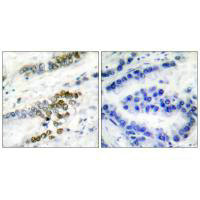
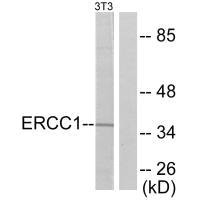
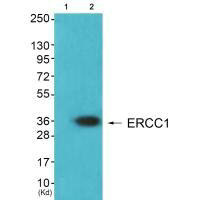
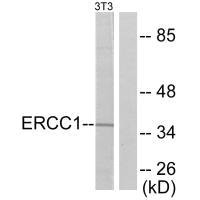
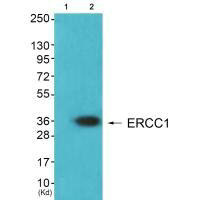
The antibody against ERCC1 was raised in rabbit using the Synthesized peptide derived from Human ERCC1. as the immunogen. The antibody was affinity-purified from rabbit antiserum by affinity-chromatography using epitope-specific immunogen. This antibody has been validated on ELISA, WB, IHC.

ADC-42421A

The antibody against ERCC1 was raised in rabbit using the Synthesized peptide derived from Human ERCC1. as the immunogen. The antibody was affinity-purified from rabbit antiserum by affinity-chromatography using epitope-specific immunogen. This antibody has been validated on ELISA, WB, IHC.

$297.00

Number
Order Exclusive Products Now

Request a Quote
High Purity LevelsPrecision and ReliabilityCustomization Options

Specifications


Cat.No ADC-42421A ClonalityPolyclonal
Host SpeciesRabbitTarget NameERCC1
FormLiquidSpecies ReactivityHuman, Mouse
Storage BufferPH 7.4, 0.02% sodium azide and 50% glycerol., 150mM NaCl, Rabbit IgG in phosphate buffered saline (without Mg2+ and Ca2+)Purification MethodThe antibody was affinity-purified from rabbit antiserum by affinity-chromatography using epitope-specific immunogen.
ApplicationELISA, IHC, WBStorageUpon receipt

Immunogen Information


Immunogen DescriptionSynthesized peptide derived from Human ERCC1.Target SpeciesHuman
Immunogen SequenceComplete sequences for the immunogen, target protein, and peptides are available upon request.Uniprot IDP07992
Background Information
  • Uniprot Id

    P07992

  • Target Species

    Human

  • Target Name

    ERCC1

  • Target Full Name

    DNA excision repair protein ERCC-1

  • Target Function

    Non-catalytic component of a structure-specific DNA repair endonuclease responsible for the 5'-incision during DNA repair. Responsible, in conjunction with SLX4, for the first step in the repair of interstrand cross-links (ICL). Participates in the processing of anaphase bridge-generating DNA structures, which consist in incompletely processed DNA lesions arising during S or G2 phase, and can result in cytokinesis failure. Also required for homology-directed repair (HDR) of DNA double-strand breaks, in conjunction with SLX4.; Not functional in the nucleotide excision repair pathway.; Not functional in the nucleotide excision repair pathway.; Not functional in the nucleotide excision repair pathway.

  • Target Involvement

    Cerebro-oculo-facio-skeletal syndrome 4 (COFS4)

  • Target Subcellular Location

    [Isoform 1]: Nucleus.; [Isoform 2]: Cytoplasm. Nucleus.; [Isoform 3]: Nucleus.; [Isoform 4]: Nucleus.

  • Target Protein Families

    ERCC1/RAD10/SWI10 family

  • Target Synonyms

    COFS 4; COFS4 ; DNA excision repair protein ERCC 1; DNA excision repair protein ERCC-1; DNA excision repair protein ERCC1; ERCC 1; ERCC1; ERCC1_HUMAN; Excision repair cross complementation group 1; Excision repair cross complementing 1; Excision Repair Cross Complementing Rodent Repair Deficiency Complementation Group 1; Excision repair protein; RAD 10; RAD10; UV 20; UV20

  • Target Background

    The product of this gene functions in the nucleotide excision repair pathway, and is required for the repair of DNA lesions such as those induced by UV light or formed by electrophilic compounds including cisplatin. The encoded protein forms a heterodimer with the XPF endonuclease (also known as ERCC4), and the heterodimeric endonuclease catalyzes the 5' incision in the process of excising the DNA lesion. The heterodimeric endonuclease is also involved in recombinational DNA repair and in the repair of inter-strand crosslinks. Mutations in this gene result in cerebrooculofacioskeletal syndrome, and polymorphisms that alter expression of this gene may play a role in carcinogenesis. Multiple transcript variants encoding different isoforms have been found for this gene. The last exon of this gene overlaps with the CD3e molecule, epsilon associated protein gene on the opposite strand.

Inquire Rabbit anti-Human ERCC1 Polyclonal Antibody Now


AbTriva respects your privacy and protects your personal data in accordance with AbTriva. For more information, please see our data protection statement. *

Notification