• Contact info@abtriva.com for inquiries and orders.
  • Chinese (Simplified)

  • English

  • German

  • Korean

  • Spanish

United States (English / $ USD)

Rabbit anti-Human ERVFRD-1 Polyclonal Antibody

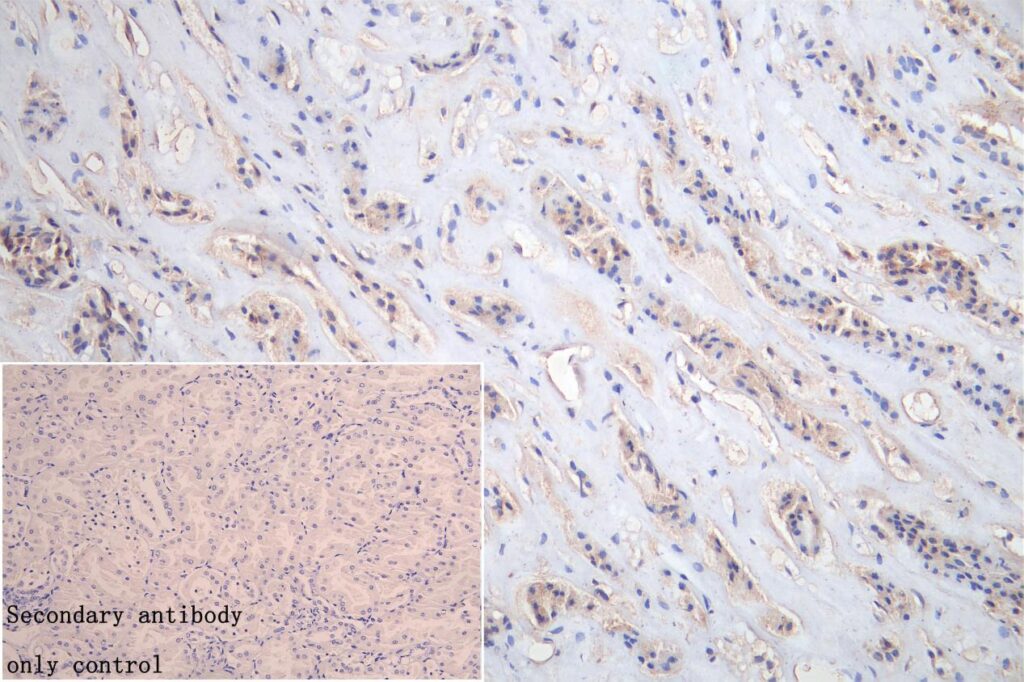
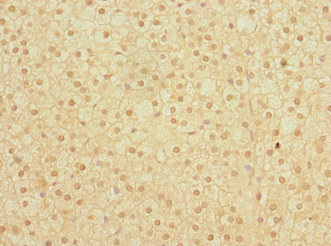
The antibody against ERVFRD-1 was raised in rabbit using the Recombinant Human Syncytin-2 protein (16-250AA) as the immunogen. This antibody exists as a non-conjugated isotype IgG, Antigen affinity purified. This antibody has been validated on ELISA, WB, IHC.

ADC-16448A

The antibody against ERVFRD-1 was raised in rabbit using the Recombinant Human Syncytin-2 protein (16-250AA) as the immunogen. This antibody exists as a non-conjugated isotype IgG, Antigen affinity purified. This antibody has been validated on ELISA, WB, IHC.

$299.00

Number
Order Exclusive Products Now

Request a Quote
High Purity LevelsPrecision and ReliabilityCustomization Options

Specifications


Cat.No ADC-16448A ClonalityPolyclonal
Host SpeciesRabbitTarget NameERVFRD-1
FormLiquidSpecies ReactivityHuman
IsotypeIgGStorage Buffer50% Glycerol, PBS with 0.02% sodium azide, pH7.3.
Purification MethodAntigen affinity purifiedConjugateNon-conjugated
ApplicationELISA, IHC, WBStorageUpon receipt

Immunogen Information


Immunogen DescriptionRecombinant Human Syncytin-2 protein (16-250AA)Target SpeciesHuman
Immunogen SequenceComplete sequences for the immunogen, target protein, and peptides are available upon request.Uniprot IDP60508
Background Information
  • Uniprot Id

    P60508

  • Target Species

    Human

  • Target Name

    ERVFRD-1

  • Target Full Name

    Syncytin-2

  • Target Function

    This endogenous retroviral envelope protein has retained its original fusogenic properties and participates in trophoblast fusion and the formation of a syncytium during placenta morphogenesis. The interaction with MFSD2A is apparently important for this process.; Endogenous envelope proteins may have kept, lost or modified their original function during evolution but this one can still make pseudotypes with MLV, HIV-1 or SIV-1 virions and confer infectivity. Retroviral envelope proteins mediate receptor recognition and membrane fusion during early infection. The surface protein mediates receptor recognition, while the transmembrane protein anchors the envelope heterodimer to the viral membrane through one transmembrane domain. The other hydrophobic domain, called fusion peptide, mediates fusion of the viral membrane with the target cell membrane.

  • Target Subcellular Location

    Virion.; [Surface protein]: Cell membrane; Peripheral membrane protein.; [Transmembrane protein]: Cell membrane; Single-pass membrane protein.

  • Target Protein Families

    Gamma type-C retroviral envelope protein family, HERV class-I FRD env subfamily

  • Target Tissue Specificity

    Expressed at higher level in placenta. Expressed at lower level in adrenal, bone marrow, brain, breast, colon, kidney, lung, ovary, peripheral blood lymphocytes, prostate, skin, spleen, testis, thymus, thyroid, trachea.

  • Target Research Area

    Cancer

  • Target Synonyms

    EFRD1_HUMAN; Endogenous retrovirus group FRD member 1; Envelope polyprotein; ERVFRD-1; FLJ41944; FLJ90611; GLLL6191; HERV FRD 6p24.1 provirus ancestral Env polyprotein; HERV FRD; HERV FRD provirus ancestral Env polyprotein; HERV-FRD; HERVFRD; HERVFRD provirus ancestral Env polyprotein; MGC87585; SU; Syncytin 2; Syncytin B; Syncytin-2; TM; Transmembrane protein; UNQ6191

  • Target Background

    Many different human endogenous retrovirus (HERV) families are expressed in normal placental tissue at high levels, suggesting that HERVs are functionally important in reproduction. This gene is part of a human endogenous retrovirus provirus on chromosome 6 that has inactivating mutations in the gag and pol genes. This gene is the envelope glycoprotein gene which appears to have been selectively preserved. The gene's protein product plays a major role in placental development and trophoblast fusion. The protein has the characteristics of a typical retroviral envelope protein, including a cleavage site that separates the surface (SU) and transmembrane (TM) proteins which form a heterodimer.

Inquire Rabbit anti-Human ERVFRD-1 Polyclonal Antibody Now


AbTriva respects your privacy and protects your personal data in accordance with AbTriva. For more information, please see our data protection statement. *

Notification