-
Chinese (Simplified)
-
English
-
German
-
Korean
-
Spanish
Chinese (Simplified)
English
German
Korean
Spanish
Sign up for an account to enjoy easy online shopping and instant order tracking.
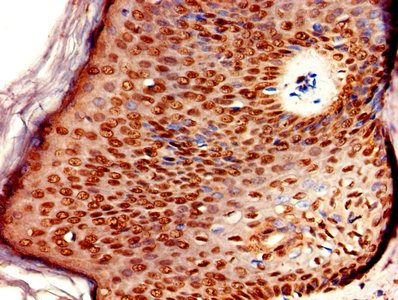
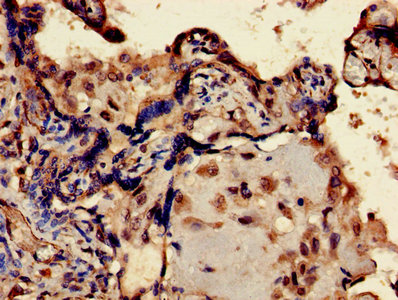
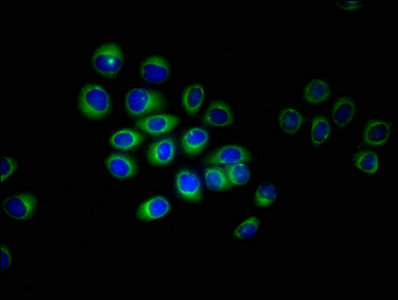
The antibody against ERVK-6 was raised in rabbit using the Recombinant Human Endogenous retrovirus group K member 6 Env polyprotein protein (90-632AA) as the immunogen. This antibody exists as a non-conjugated isotype IgG, purified by protein G with a purity greater than 95%. This antibody has been validated on ELISA, IHC, IF.
$299.00
| Cat.No | ADC-19900A | Clonality | Polyclonal |
|---|---|---|---|
| Host Species | Rabbit | Target Name | ERVK-6 |
| Form | Liquid | Species Reactivity | Human |
| Isotype | IgG | Storage Buffer | 0.01M PBS, 0.03% Proclin 300; Constituents: 50% Glycerol, PH 7.4 |
| Purification Method | >95%, Protein G purified | Conjugate | Non-conjugated |
| Application | ELISA, IF, IHC | Storage | Upon receipt |
| Immunogen Description | Recombinant Human Endogenous retrovirus group K member 6 Env polyprotein protein (90-632AA) | Target Species | Human |
|---|---|---|---|
| Immunogen Sequence | Complete sequences for the immunogen, target protein, and peptides are available upon request. | Uniprot ID | Q69384 |
Uniprot Id
Q69384
Target Species
Human
Target Name
ERVK-6
Target Full Name
Endogenous retrovirus group K member 6 Env polyprotein
Target Function
Retroviral envelope proteins mediate receptor recognition and membrane fusion during early infection. Endogenous envelope proteins may have kept, lost or modified their original function during evolution. This endogenous envelope protein has lost its original fusogenic properties.; SU mediates receptor recognition.; TM anchors the envelope heterodimer to the viral membrane through one transmembrane domain. The other hydrophobic domain, called fusion peptide, mediates fusion of the viral membrane with the target cell membrane.
Target Subcellular Location
[Transmembrane protein]: Cell membrane; Single-pass type I membrane protein.; [Surface protein]: Cell membrane; Peripheral membrane protein.; [Endogenous retrovirus group K member 6 Env polyprotein]: Virion.
Target Protein Families
Beta type-B retroviral envelope protein family, HERV class-II K(HML-2) env subfamily
Target Tissue Specificity
Expressed in testis, and peripheral blood lymphocytes.
Target Research Area
Others
Target Synonyms
ERVK-6; ERVK6Endogenous retrovirus group K member 6 Env polyprotein; EnvK2 protein; Envelope polyprotein; HERV-K(C7) envelope protein; HERV-K(HML-2.HOM) envelope protein; HERV-K108 envelope protein; HERV-K_7p22.1 provirus ancestral Env polyprotein) [Cleaved into: Surface protein; SU); Transmembrane protein; TM)]
Notification