-
Chinese (Simplified)
-
English
-
German
-
Korean
-
Spanish
Chinese (Simplified)
English
German
Korean
Spanish
Sign up for an account to enjoy easy online shopping and instant order tracking.
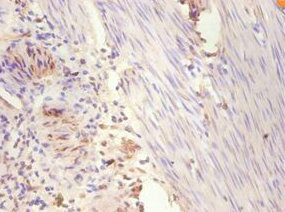
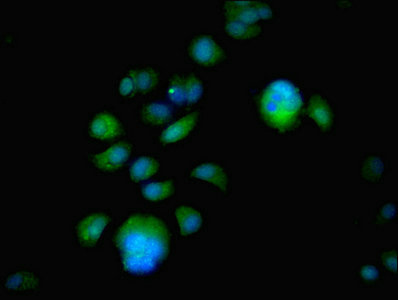
The antibody against ESR1 was raised in rabbit using the Recombinant Human Estrogen receptor protein (10-591AA) as the immunogen. This antibody exists as a non-conjugated isotype IgG, purified by protein G with a purity greater than 95%. This antibody has been validated on ELISA, IHC, IF.
$299.00
| Cat.No | ADC-49471A | Clonality | Polyclonal |
|---|---|---|---|
| Host Species | Rabbit | Target Name | ESR1 |
| Target Synonyms | 4, 5, 6, 7*, 7*/654 isoform antibody; Estrogen receptor alpha delta 4*, 7*/819 2 isoform antibody; Estrogen receptor alpha delta 4 +49 isoform antibody; Estrogen receptor alpha delta 4*, 7*/822 isoform antibody; Estrogen receptor alpha antibody; Estrogen receptor alpha delta 3*, 8*/941 isoform antibody; Estrogen receptor alpha delta 3* | Form | Liquid |
| Species Reactivity | Human | Isotype | IgG |
| Storage Buffer | 0.01M PBS, 0.03% Proclin 300; Constituents: 50% Glycerol, PH 7.4 | Purification Method | >95%, Protein G purified |
| Conjugate | Non-conjugated | Application | ELISA, IF, IHC |
| Storage | Upon receipt |
| Immunogen Description | Recombinant Human Estrogen receptor protein (10-591AA) | Target Species | Human |
|---|---|---|---|
| Immunogen Sequence | Complete sequences for the immunogen, target protein, and peptides are available upon request. | Uniprot ID | P03372 |
Uniprot Id
P03372
Target Species
Human
Target Name
ESR1
Target Full Name
Estrogen receptor
Target Function
Nuclear hormone receptor. The steroid hormones and their receptors are involved in the regulation of eukaryotic gene expression and affect cellular proliferation and differentiation in target tissues. Ligand-dependent nuclear transactivation involves either direct homodimer binding to a palindromic estrogen response element (ERE) sequence or association with other DNA-binding transcription factors, such as AP-1/c-Jun, c-Fos, ATF-2, Sp1 and Sp3, to mediate ERE-independent signaling. Ligand binding induces a conformational change allowing subsequent or combinatorial association with multiprotein coactivator complexes through LXXLL motifs of their respective components. Mutual transrepression occurs between the estrogen receptor (ER) and NF-kappa-B in a cell-type specific manner. Decreases NF-kappa-B DNA-binding activity and inhibits NF-kappa-B-mediated transcription from the IL6 promoter and displace RELA/p65 and associated coregulators from the promoter. Recruited to the NF-kappa-B response element of the CCL2 and IL8 promoters and can displace CREBBP. Present with NF-kappa-B components RELA/p65 and NFKB1/p50 on ERE sequences. Can also act synergistically with NF-kappa-B to activate transcription involving respective recruitment adjacent response elements; the function involves CREBBP. Can activate the transcriptional activity of TFF1. Also mediates membrane-initiated estrogen signaling involving various kinase cascades. Essential for MTA1-mediated transcriptional regulation of BRCA1 and BCAS3.; Involved in activation of NOS3 and endothelial nitric oxide production. Isoforms lacking one or several functional domains are thought to modulate transcriptional activity by competitive ligand or DNA binding and/or heterodimerization with the full-length receptor. Binds to ERE and inhibits isoform 1.
Target Involvement
Estrogen resistance (ESTRR)
Target Subcellular Location
[Isoform 1]: Nucleus. Cytoplasm. Cell membrane; Peripheral membrane protein; Cytoplasmic side.; Nucleus. Golgi apparatus. Cell membrane. Note=Colocalizes with ZDHHC7 and ZDHHC21 in the Golgi apparatus where most probably palmitoylation occurs. Associated with the plasma membrane when palmitoylated.
Target Protein Families
Nuclear hormone receptor family, NR3 subfamily
Target Tissue Specificity
Widely expressed. Not expressed in the pituitary gland.; [Isoform 3]: Widely expressed, however not expressed in the pituitary gland.
Target Research Area
Transcription
Target Synonyms
7*/654 isoform; 7*/819 2 isoform; 7*/822 isoform; 8*/901 isoform; 8*/941 isoform; DKFZp686N23123; ER alpha; ER; ER-alpha; Era; ESR; ESR1; ESR1_HUMAN; ESRA; Estradiol receptor; Estrogen nuclear receptor alpha; Estrogen receptor 1; Estrogen receptor alpha 3*,4,5,6,7*/822 isoform; Estrogen receptor alpha; Estrogen receptor alpha delta 3*,4,5,6,7*,8*/941 isoform; Estrogen receptor alpha delta 3*,4,5,6,7*/819 2 isoform; Estrogen receptor alpha delta 4 +49 isoform; Estrogen receptor alpha delta 4*,5,6,7*/654 isoform; Estrogen receptor alpha delta 4*,5,6,7,8*/901 isoform; Estrogen receptor alpha E1 E2 1 2; Estrogen receptor alpha E1 N2 E2 1 2; Estrogen receptor; ESTRR; NR3A1; Nuclear receptor subfamily 3 group A member 1
Target Background
This gene encodes an estrogen receptor and ligand-activated transcription factor. The canonical protein contains an N-terminal ligand-independent transactivation domain, a central DNA binding domain, a hinge domain, and a C-terminal ligand-dependent transactivation domain. The protein localizes to the nucleus where it may form either a homodimer or a heterodimer with estrogen receptor 2. The protein encoded by this gene regulates the transcription of many estrogen-inducible genes that play a role in growth, metabolism, sexual development, gestation, and other reproductive functions and is expressed in many non-reproductive tissues. The receptor encoded by this gene plays a key role in breast cancer, endometrial cancer, and osteoporosis. This gene is reported to have dozens of transcript variants due to the use of alternate promoters and alternative splicing, however, the full-length nature of many of these variants remain uncertain.
Notification