-
Chinese (Simplified)
-
English
-
German
-
Korean
-
Spanish
Chinese (Simplified)
English
German
Korean
Spanish
Sign up for an account to enjoy easy online shopping and instant order tracking.
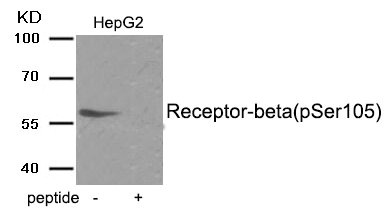
The antibody against ESR2 was raised in rabbit using the Peptide sequence around phosphorylation site of serine105(Q-R-S(p)-P-W) derived from Human Estrogen Receptor- beta. as the immunogen. Antibodies were produced by immunizing rabbits with synthetic phosphopeptide and KLH conjugates. Antibodies were purified by affinity-chromatography using epitope-specific phosphopeptide. Non-phospho specific antibodies were removed by chromatogramphy usi This antibody has been validated on ELISA, WB.
$360.00
| Cat.No | ADC-42807A | Clonality | Polyclonal |
|---|---|---|---|
| Host Species | Rabbit | Target Name | ESR2 |
| Form | Liquid | Species Reactivity | Human, Mouse, Rat |
| Storage Buffer | PH 7.4, 0.02% sodium azide and 50% glycerol., 150mM NaCl, Rabbit IgG in phosphate buffered saline (without Mg2+ and Ca2+) | Application | ELISA, WB |
| Storage | Upon receipt |
| Immunogen Description | Peptide sequence around phosphorylation site of serine105(Q-R-S(p)-P-W) derived from Human Estrogen Receptor- beta. | Target Species | Human |
|---|---|---|---|
| Immunogen Sequence | Complete sequences for the immunogen, target protein, and peptides are available upon request. | Uniprot ID | Q92731 |
Uniprot Id
Q92731
Target Species
Human
Target Name
ESR2
Target Full Name
Estrogen receptor beta
Target Function
Nuclear hormone receptor. Binds estrogens with an affinity similar to that of ESR1/ER-alpha, and activates expression of reporter genes containing estrogen response elements (ERE) in an estrogen-dependent manner.; Lacks ligand binding ability and has no or only very low ERE binding activity resulting in the loss of ligand-dependent transactivation ability.
Target Subcellular Location
Nucleus.
Target Protein Families
Nuclear hormone receptor family, NR3 subfamily
Target Tissue Specificity
[Isoform 1]: Expressed in testis and ovary, and at a lower level in heart, brain, placenta, liver, skeletal muscle, spleen, thymus, prostate, colon, bone marrow, mammary gland and uterus. Also found in uterine bone, breast, and ovarian tumor cell lines, b
Target Research Area
Transcription
Target Synonyms
ER BETA; ER-beta; Erb; ESR B; ESR BETA; ESR2; ESR2_HUMAN; ESRB; ESTRB; estrogen nuclear receptor beta variant a; estrogen nuclear receptor beta variant b; estrogen receptor 2 (ER beta); Estrogen receptor 2; estrogen receptor beta 4; Estrogen receptor beta; NR3A2; Nuclear receptor subfamily 3 group A member 2
Target Background
This gene encodes a member of the family of estrogen receptors and superfamily of nuclear receptor transcription factors. The gene product contains an N-terminal DNA binding domain and C-terminal ligand binding domain and is localized to the nucleus, cytoplasm, and mitochondria. Upon binding to 17beta-estradiol or related ligands, the encoded protein forms homo- or hetero-dimers that interact with specific DNA sequences to activate transcription. Some isoforms dominantly inhibit the activity of other estrogen receptor family members. Several alternatively spliced transcript variants of this gene have been described, but the full-length nature of some of these variants has not been fully characterized.
Notification