• Contact info@abtriva.com for inquiries and orders.
  • Chinese (Simplified)

  • English

  • German

  • Korean

  • Spanish

United States (English / $ USD)

Rabbit anti-Human FAT10/UBD Polyclonal Antibody

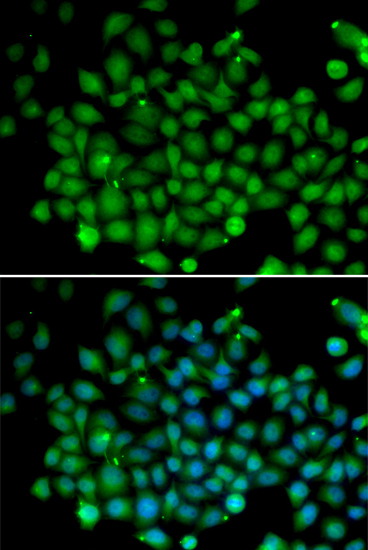
The antibody against FAT10/UBD was raised in Rabbit using the recombinant fusion protein containing a sequence corresponding to amino acids 1-165 of human FAT10/FAT10/UBD (NP_006389.2) as the immunogen. The polyclonal antibody exists as a isotype IgG, by affinity purification. This antibody has been validated on IF/ICC, ELISA.

ADA-06266A

The antibody against FAT10/UBD was raised in Rabbit using the recombinant fusion protein containing a sequence corresponding to amino acids 1-165 of human FAT10/FAT10/UBD (NP_006389.2) as the immunogen. The polyclonal antibody exists as a isotype IgG, by affinity purification. This antibody has been validated on IF/ICC, ELISA.

Number
Order Exclusive Products Now

Request a Quote
High Purity LevelsPrecision and ReliabilityCustomization Options

Specifications


Cat.No ADA-06266A ClonalityPolyclonal
Host SpeciesRabbitTarget NameFAT10/UBD
Target SynonymsFAT10; UBD-3; GABBR1; FAT10/UBDFormLiquid
Species ReactivityHuman, Mouse, RatIsotypeIgG
Storage Buffer50% Glycerol, PBS with 0.02% sodium azide, pH7.3.Purification MethodAffinity purification
ApplicationELISA, IF/ICC

Immunogen Information


Immunogen DescriptionRecombinant fusion protein containing a sequence corresponding to amino acids 1-165 of human FAT10/FAT10/UBD (NP_006389.2).Target SpeciesHuman
Immunogen SequenceMAPNASCLCVHVRSEEWDLMTFDANPYDSVKKIKEHVRSKTKVPVQDQVLLLGSKILKPRRSLSSYGIDKEKTIHLTLKVVKPSDEELPLFLVESGDEAKRHLLQVRRSSSVAQVKAMIETKTGIIPETQIVTCNGKRLEDGKMMADYGIRKGNLLFLACYCIGGUniprot IDO15205
Background Information
  • Uniprot Id

    O15205

  • Target Species

    Human

  • Target Name

    UBD

  • Target Full Name

    Ubiquitin D

  • Target Function

    Ubiquitin-like protein modifier which can be covalently attached to target protein and subsequently leads to their degradation by the 26S proteasome, in a NUB1-dependent manner. Probably functions as a survival factor. Conjugation ability activated by UBA6. Promotes the expression of the proteasome subunit beta type-9 (PSMB9/LMP2). Regulates TNF-alpha-induced and LPS-mediated activation of the central mediator of innate immunity NF-kappa-B by promoting TNF-alpha-mediated proteasomal degradation of ubiquitinated-I-kappa-B-alpha. Required for TNF-alpha-induced p65 nuclear translocation in renal tubular epithelial cells (RTECs). May be involved in dendritic cell (DC) maturation, the process by which immature dendritic cells differentiate into fully competent antigen-presenting cells that initiate T-cell responses. Mediates mitotic non-disjunction and chromosome instability, in long-term in vitro culture and cancers, by abbreviating mitotic phase and impairing the kinetochore localization of MAD2L1 during the prometaphase stage of the cell cycle. May be involved in the formation of aggresomes when proteasome is saturated or impaired. Mediates apoptosis in a caspase-dependent manner, especially in renal epithelium and tubular cells during renal diseases such as polycystic kidney disease and Human immunodeficiency virus (HIV)-associated nephropathy (HIVAN).

  • Target Subcellular Location

    Nucleus. Cytoplasm. Note=Accumulates in aggresomes under proteasome inhibition conditions.

  • Target Tissue Specificity

    Constitutively expressed in mature dendritic cells and B-cells. Mostly expressed in the reticuloendothelial system (e.g. thymus, spleen), the gastrointestinal system, kidney, lung and prostate gland.

  • Target Research Area

    Cell Biology

  • Target Synonyms

    Diubiquitin; FAT10; GABBR1; UBD 3; Ubd; UBD_HUMAN; Ubiquitin D; Ubiquitin like protein FAT10; Ubiquitin-like protein FAT10

  • Target Background

    This gene encodes a protein which contains two ubiquitin-like domains and appears to have similar function to ubiquitin. Through covalent attachment, the encoded protein targets other proteins for 26S proteasome degradation. This protein has been implicated to function in many cellular processes, including caspase-dependent apoptosis, formation of aggresomes, mitotic regulation, and dendritic cell maturation. Upregulation of this gene may promote inflammation in chronic kidney disease and has been observed in many cancer types.

Inquire Rabbit anti-Human FAT10/UBD Polyclonal Antibody Now


AbTriva respects your privacy and protects your personal data in accordance with AbTriva. For more information, please see our data protection statement. *

Notification