• Contact info@abtriva.com for inquiries and orders.
  • Chinese (Simplified)

  • English

  • German

  • Korean

  • Spanish

United States (English / $ USD)

Rabbit anti-Human FGFR1OP Polyclonal Antibody

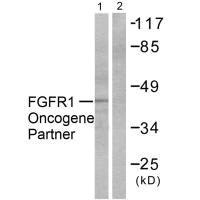
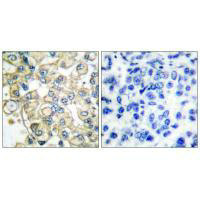
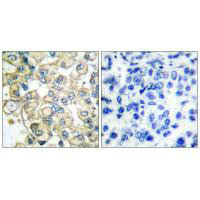
The antibody against FGFR1OP was raised in rabbit using the Synthesized peptide derived from Human FGFR1 Oncogene Partner. as the immunogen. The antibody was affinity-purified from rabbit antiserum by affinity-chromatography using epitope-specific immunogen. This antibody has been validated on ELISA, WB, IHC.

ADC-42417A

The antibody against FGFR1OP was raised in rabbit using the Synthesized peptide derived from Human FGFR1 Oncogene Partner. as the immunogen. The antibody was affinity-purified from rabbit antiserum by affinity-chromatography using epitope-specific immunogen. This antibody has been validated on ELISA, WB, IHC.

$297.00

Number
Order Exclusive Products Now

Request a Quote
High Purity LevelsPrecision and ReliabilityCustomization Options

Specifications


Cat.No ADC-42417A ClonalityPolyclonal
Host SpeciesRabbitTarget NameFGFR1OP
FormLiquidSpecies ReactivityHuman, Mouse, Rat
Storage BufferPH 7.4, 0.02% sodium azide and 50% glycerol., 150mM NaCl, Rabbit IgG in phosphate buffered saline (without Mg2+ and Ca2+)Purification MethodThe antibody was affinity-purified from rabbit antiserum by affinity-chromatography using epitope-specific immunogen.
ApplicationELISA, IHC, WBStorageUpon receipt

Immunogen Information


Immunogen DescriptionSynthesized peptide derived from Human FGFR1 Oncogene Partner.Target SpeciesHuman
Immunogen SequenceComplete sequences for the immunogen, target protein, and peptides are available upon request.Uniprot IDO95684
Background Information
  • Uniprot Id

    O95684

  • Target Species

    Human

  • Target Name

    CEP43

  • Target Full Name

    Centrosomal protein 43

  • Target Function

    Required for anchoring microtubules to the centrosomes. Required for ciliation.

  • Target Involvement

    A chromosomal aberration involving FGFR1OP may be a cause of stem cell myeloproliferative disorder (MPD). Translocation t(6;8)(q27;p11) with FGFR1. MPD is characterized by myeloid hyperplasia, eosinophilia and T-cell or B-cell lymphoblastic lymphoma. In general it progresses to acute myeloid leukemia. The fusion proteins FGFR1OP-FGFR1 or FGFR1-FGFR1OP may exhibit constitutive kinase activity and be responsible for the transforming activity (PubMed:9949182).

  • Target Subcellular Location

    Cytoplasm, cytoskeleton, microtubule organizing center, centrosome. Cytoplasm, cytoskeleton, microtubule organizing center, centrosome, centriole. Cytoplasm, cytoskeleton, cilium basal body.

  • Target Protein Families

    FGFR1OP family

  • Target Tissue Specificity

    Ubiquitous. Highly expressed in heart, liver, muscle, kidney, intestine, colon, adrenal gland, prostate, testis, and pancreas.

  • Target Synonyms

    FGFR1 oncogene partner; FGFR1OP; Fibroblast growth factor receptor 1 oncogene partner; FOP; FR1OP_HUMAN; OTTHUMP00000017612; OTTHUMP00000017613

  • Target Background

    This gene encodes a largely hydrophilic centrosomal protein that is required for anchoring microtubules to subcellular structures. A t(6;8)(q27;p11) chromosomal translocation, fusing this gene and the fibroblast growth factor receptor 1 (FGFR1) gene, has been found in cases of myeloproliferative disorder. The resulting chimeric protein contains the N-terminal leucine-rich region of this encoded protein fused to the catalytic domain of FGFR1. Alterations in this gene may also be associated with Crohn's disease, Graves' disease, and vitiligo. Alternatively spliced transcript variants that encode different proteins have been identified.

Inquire Rabbit anti-Human FGFR1OP Polyclonal Antibody Now


AbTriva respects your privacy and protects your personal data in accordance with AbTriva. For more information, please see our data protection statement. *

Notification