• Contact info@abtriva.com for inquiries and orders.
  • Chinese (Simplified)

  • English

  • German

  • Korean

  • Spanish

United States (English / $ USD)

Rabbit anti-Human FLRT3 Polyclonal Antibody

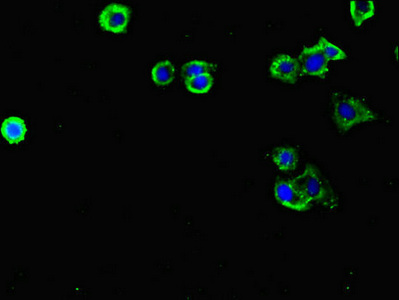
The antibody against FLRT3 was raised in rabbit using the Recombinant Human Leucine-rich repeat transmembrane protein FLRT3 protein (209-264AA) as the immunogen. This antibody exists as a non-conjugated isotype IgG, purified by protein G with a purity greater than 95%. This antibody has been validated on ELISA, WB, IF.

ADC-14953A

The antibody against FLRT3 was raised in rabbit using the Recombinant Human Leucine-rich repeat transmembrane protein FLRT3 protein (209-264AA) as the immunogen. This antibody exists as a non-conjugated isotype IgG, purified by protein G with a purity greater than 95%. This antibody has been validated on ELISA, WB, IF.

$299.00

Number
Order Exclusive Products Now

Request a Quote
High Purity LevelsPrecision and ReliabilityCustomization Options

Specifications


Cat.No ADC-14953A ClonalityPolyclonal
Host SpeciesRabbitTarget NameFLRT3
FormLiquidSpecies ReactivityHuman, Mouse
IsotypeIgGStorage Buffer0.01M PBS, 0.03% Proclin 300; Constituents: 50% Glycerol, PH 7.4
Purification Method>95%, Protein G purifiedConjugateNon-conjugated
ApplicationELISA, IF, WBStorageUpon receipt

Immunogen Information


Immunogen DescriptionRecombinant Human Leucine-rich repeat transmembrane protein FLRT3 protein (209-264AA)Target SpeciesHuman
Immunogen SequenceComplete sequences for the immunogen, target protein, and peptides are available upon request.Uniprot IDQ9NZU0
Background Information
  • Uniprot Id

    Q9NZU0

  • Target Species

    Human

  • Target Name

    FLRT3

  • Target Full Name

    Leucine-rich repeat transmembrane protein FLRT3

  • Target Function

    Functions in cell-cell adhesion, cell migration and axon guidance, exerting an attractive or repulsive role depending on its interaction partners. Plays a role in the spatial organization of brain neurons. Plays a role in vascular development in the retina. Plays a role in cell-cell adhesion via its interaction with ADGRL3 and probably also other latrophilins that are expressed at the surface of adjacent cells. Interaction with the intracellular domain of ROBO1 mediates axon attraction towards cells expressing NTN1. Mediates axon growth cone collapse and plays a repulsive role in neuron guidance via its interaction with UNC5B, and possibly also other UNC-5 family members. Promotes neurite outgrowth (in vitro). Mediates cell-cell contacts that promote an increase both in neurite number and in neurite length. Plays a role in the regulation of the density of glutamaergic synapses. Plays a role in fibroblast growth factor-mediated signaling cascades. Required for normal morphogenesis during embryonic development, but not for normal embryonic patterning. Required for normal ventral closure, headfold fusion and definitive endoderm migration during embryonic development. Required for the formation of a normal basement membrane and the maintenance of a normal anterior visceral endoderm during embryonic development.

  • Target Involvement

    Hypogonadotropic hypogonadism 21 with or without anosmia (HH21)

  • Target Subcellular Location

    Cell membrane; Single-pass membrane protein. Endoplasmic reticulum membrane. Cell junction, focal adhesion. Secreted. Cell projection, axon. Cell projection, growth cone membrane.

  • Target Tissue Specificity

    Expressed in kidney, brain, pancreas, skeletal muscle, lung, liver, placenta, and heart.

  • Target Synonyms

    fibronectin leucine rich transmembrane protein 3; Fibronectin-like domain-containing leucine-rich transmembrane protein 3; FLRT 3; FLRT3; FLRT3_HUMAN; KIAA1469; Leucine-rich repeat transmembrane protein FLRT3

Inquire Rabbit anti-Human FLRT3 Polyclonal Antibody Now


AbTriva respects your privacy and protects your personal data in accordance with AbTriva. For more information, please see our data protection statement. *

Notification