-
Chinese (Simplified)
-
English
-
German
-
Korean
-
Spanish
Chinese (Simplified)
English
German
Korean
Spanish
Sign up for an account to enjoy easy online shopping and instant order tracking.
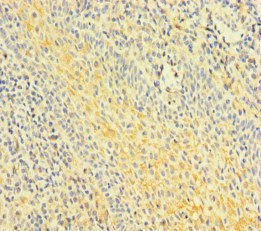
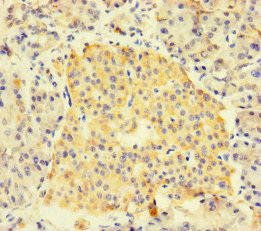
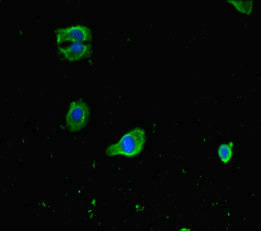
The antibody against FNIP1 was raised in rabbit using the Recombinant Human Folliculin-interacting protein 1 protein (221-508AA) as the immunogen. This antibody exists as a non-conjugated isotype IgG, purified by protein G with a purity greater than 95%. This antibody has been validated on ELISA, IHC, IF.
$299.00
| Cat.No | ADC-15212A | Clonality | Polyclonal |
|---|---|---|---|
| Host Species | Rabbit | Target Name | FNIP1 |
| Target Synonyms | FNIP1 antibody; KIAA1961Folliculin-interacting protein 1 antibody | Form | Liquid |
| Species Reactivity | Human | Isotype | IgG |
| Storage Buffer | 0.01M PBS, 0.03% Proclin 300; Constituents: 50% Glycerol, PH 7.4 | Purification Method | >95%, Protein G purified |
| Conjugate | Non-conjugated | Application | ELISA, IF, IHC |
| Storage | Upon receipt |
| Immunogen Description | Recombinant Human Folliculin-interacting protein 1 protein (221-508AA) | Target Species | Human |
|---|---|---|---|
| Immunogen Sequence | Complete sequences for the immunogen, target protein, and peptides are available upon request. | Uniprot ID | Q8TF40 |
Uniprot Id
Q8TF40
Target Species
Human
Target Name
FNIP1
Target Full Name
Folliculin-interacting protein 1
Target Function
Binding partner of the GTPase-activating protein FLCN: involved in the cellular response to amino acid availability by regulating the mTORC1 signaling cascade controlling the MiT/TFE factors TFEB and TFE3. In low-amino acid conditions, component of the lysosomal folliculin complex (LFC) on the membrane of lysosomes, which inhibits the GTPase-activating activity of FLCN, thereby inactivating mTORC1 and promoting nuclear translocation of TFEB and TFE3. Upon amino acid restimulation, disassembly of the LFC complex liberates the GTPase-activating activity of FLCN, leading to activation of mTORC1 and subsequent cytoplasmic retention of TFEB and TFE3. Required to promote FLCN recruitment to lysosomes and interaction with Rag GTPases. Together with FLCN, regulates autophagy: following phosphorylation by ULK1, interacts with GABARAP and promotes autophagy. In addition to its role in mTORC1 signaling, also acts as a co-chaperone of HSP90AA1/Hsp90: following gradual phosphorylation by CK2, inhibits the ATPase activity of HSP90AA1/Hsp90, leading to activate both kinase and non-kinase client proteins of HSP90AA1/Hsp90. Acts as a scaffold to load client protein FLCN onto HSP90AA1/Hsp90. Competes with the activating co-chaperone AHSA1 for binding to HSP90AA1, thereby providing a reciprocal regulatory mechanism for chaperoning of client proteins. Also acts as a core component of the reductive stress response by inhibiting activation of mitochondria in normal conditions: in response to reductive stress, the conserved Cys degron is reduced, leading to recognition and polyubiquitylation by the CRL2(FEM1B) complex, followed by proteasomal. Required for B-cell development.
Target Subcellular Location
Lysosome membrane. Cytoplasm, cytosol.
Target Protein Families
FNIP family
Target Tissue Specificity
Strong expression is found in the heart, liver placenta, muscle, nasal mucosa, salivary gland and uvula and moderate expression in kidney and lung. Higher levels detected in clear cell renal cell carcinoma (RCC) and chromophobe RCC than in normal kidney t
Target Synonyms
FNIP1; KIAA1961Folliculin-interacting protein 1
Notification