• Contact info@abtriva.com for inquiries and orders.
  • Chinese (Simplified)

  • English

  • German

  • Korean

  • Spanish

United States (English / $ USD)

Rabbit anti-Human FZD4 Polyclonal Antibody

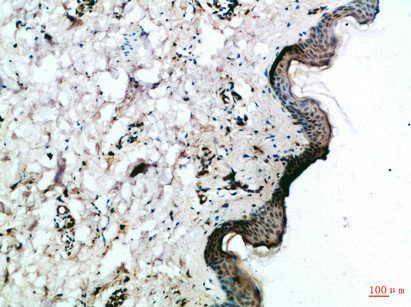
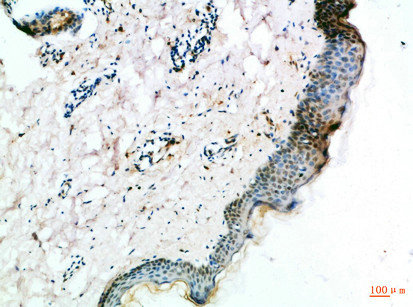
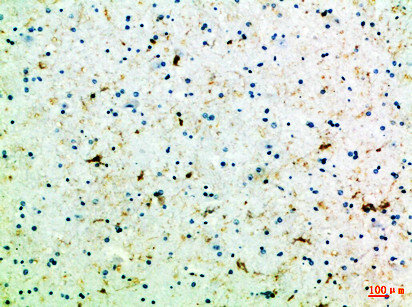
The antibody against FZD4 was raised in rabbit using the Synthetic peptide from Human protein at AA range: 11-60 as the immunogen. This antibody exists as a non-conjugated antibody. The antibody was affinity-purified from rabbit serum by affinity-chromatography using specific immunogen. This antibody has been validated on IHC, ELISA.

ADC-12949A

The antibody against FZD4 was raised in rabbit using the Synthetic peptide from Human protein at AA range: 11-60 as the immunogen. This antibody exists as a non-conjugated antibody. The antibody was affinity-purified from rabbit serum by affinity-chromatography using specific immunogen. This antibody has been validated on IHC, ELISA.

$167.00

Number
Order Exclusive Products Now

Request a Quote
High Purity LevelsPrecision and ReliabilityCustomization Options

Specifications


Cat.No ADC-12949A ClonalityPolyclonal
Host SpeciesRabbitTarget NameFZD4
Target SynonymsFZD4; Frizzled-4; Fz-4; hFz4; FzE4; CD antigen CD344FormLiquid
Species ReactivityHuman, Mouse, RatStorage BufferPH 7.4, containing 0.02% sodium azide as Preservative and 50% Glycerol., PBS
Purification MethodThe antibody was affinity-purified from rabbit serum by affinity-chromatography using specific immunogen.ConjugateNon-conjugated
ApplicationELISA, IHCStorageUpon receipt

Immunogen Information


Immunogen DescriptionSynthetic peptide from Human protein at AA range: 11-60Target SpeciesHuman
Immunogen SequenceComplete sequences for the immunogen, target protein, and peptides are available upon request.Uniprot IDQ9ULV1
Background Information
  • Uniprot Id

    Q9ULV1

  • Target Species

    Human

  • Target Name

    FZD4

  • Target Full Name

    Frizzled-4

  • Target Function

    Receptor for Wnt proteins. Most frizzled receptors are coupled to the beta-catenin (CTNNB1) canonical signaling pathway, which leads to the activation of disheveled proteins, inhibition of GSK-3 kinase, nuclear accumulation of beta-catenin (CTNNB1) and activation of Wnt target genes. Plays a critical role in retinal vascularization by acting as a receptor for Wnt proteins and norrin (NDP). In retina, it can be activated by Wnt protein-binding and also by Wnt-independent signaling via binding of norrin (NDP), promoting in both cases beta-catenin (CTNNB1) accumulation and stimulation of LEF/TCF-mediated transcriptional programs. A second signaling pathway involving PKC and calcium fluxes has been seen for some family members, but it is not yet clear if it represents a distinct pathway or if it can be integrated in the canonical pathway, as PKC seems to be required for Wnt-mediated inactivation of GSK-3 kinase. Both pathways seem to involve interactions with G-proteins. May be involved in transduction and intercellular transmission of polarity information during tissue morphogenesis and/or in differentiated tissues.

  • Target Involvement

    Vitreoretinopathy, exudative 1 (EVR1)

  • Target Subcellular Location

    Cell membrane; Multi-pass membrane protein.

  • Target Protein Families

    G-protein coupled receptor Fz/Smo family

  • Target Tissue Specificity

    Almost ubiquitous. Largely expressed in adult heart, skeletal muscle, ovary, and fetal kidney. Moderate amounts in adult liver, kidney, pancreas, spleen, and fetal lung, and small amounts in placenta, adult lung, prostate, testis, colon, fetal brain and l

  • Target Synonyms

    FZD4; Frizzled-4; Fz-4; hFz4; FzE4; CD antigen CD344

  • Target Background

    This gene is a member of the frizzled gene family. Members of this family encode seven-transmembrane domain proteins that are receptors for the Wingless type MMTV integration site family of signaling proteins. Most frizzled receptors are coupled to the beta-catenin canonical signaling pathway. This protein may play a role as a positive regulator of the Wingless type MMTV integration site signaling pathway. A transcript variant retaining intronic sequence and encoding a shorter isoform has been described, however, its expression is not supported by other experimental evidence.

Inquire Rabbit anti-Human FZD4 Polyclonal Antibody Now


AbTriva respects your privacy and protects your personal data in accordance with AbTriva. For more information, please see our data protection statement. *

Notification