• Contact info@abtriva.com for inquiries and orders.
  • Chinese (Simplified)

  • English

  • German

  • Korean

  • Spanish

United States (English / $ USD)

Rabbit anti-Human GCK Polyclonal Antibody

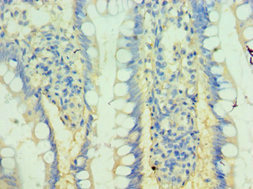
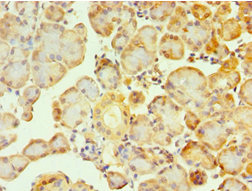
The antibody against GCK was raised in rabbit using the Recombinant Human Glucokinase protein (1-300AA) as the immunogen. This antibody exists as a non-conjugated isotype IgG, Antigen affinity purified. This antibody has been validated on ELISA, WB, IHC.

ADC-44127A

The antibody against GCK was raised in rabbit using the Recombinant Human Glucokinase protein (1-300AA) as the immunogen. This antibody exists as a non-conjugated isotype IgG, Antigen affinity purified. This antibody has been validated on ELISA, WB, IHC.

$299.00

Number
Order Exclusive Products Now

Request a Quote
High Purity LevelsPrecision and ReliabilityCustomization Options

Specifications


Cat.No ADC-44127A ClonalityPolyclonal
Host SpeciesRabbitTarget NameGCK
FormLiquidSpecies ReactivityHuman
IsotypeIgGStorage Buffer50% Glycerol, PBS with 0.02% sodium azide, pH7.3.
Purification MethodAntigen affinity purifiedConjugateNon-conjugated
ApplicationELISA, IHC, WBStorageUpon receipt

Immunogen Information


Immunogen DescriptionRecombinant Human Glucokinase protein (1-300AA)Target SpeciesHuman
Immunogen SequenceComplete sequences for the immunogen, target protein, and peptides are available upon request.Uniprot IDP35557
Background Information
  • Uniprot Id

    P35557

  • Target Species

    Human

  • Target Name

    GCK

  • Target Full Name

    Hexokinase-4

  • Target Function

    Catalyzes the phosphorylation of hexose, such as D-glucose, D-fructose and D-mannose, to hexose 6-phosphate (D-glucose 6-phosphate, D-fructose 6-phosphate and D-mannose 6-phosphate, respectively). Compared to other hexokinases, has a weak affinity for D-glucose, and is effective only when glucose is abundant. Mainly expressed in pancreatic beta cells and the liver and constitutes a rate-limiting step in glucose metabolism in these tissues. Since insulin secretion parallels glucose metabolism and the low glucose affinity of GCK ensures that it can change its enzymatic activity within the physiological range of glucose concentrations, GCK acts as a glucose sensor in the pancreatic beta cell. In pancreas, plays an important role in modulating insulin secretion. In liver, helps to facilitate the uptake and conversion of glucose by acting as an insulin-sensitive determinant of hepatic glucose usage. Required to provide D-glucose 6-phosphate for the synthesis of glycogen. Mediates the initial step of glycolysis by catalyzing phosphorylation of D-glucose to D-glucose 6-phosphate.

  • Target Involvement

    Maturity-onset diabetes of the young 2 (MODY2); Familial hyperinsulinemic hypoglycemia 3 (HHF3); Diabetes mellitus, non-insulin-dependent (NIDDM); Diabetes mellitus, permanent neonatal (PNDM)

  • Target Subcellular Location

    Cytoplasm. Nucleus. Mitochondrion.

  • Target Protein Families

    Hexokinase family

  • Target Synonyms

    ATP:D-hexose 6-phosphotransferase; FGQTL3; GCK; GK; GLK; Glucokinase; Hexokinase D pancreatic isozyme; Hexokinase type IV; Hexokinase-4; Hexokinase-D; HHF3; HK IV; HK4; HKIV; HXK4_HUMAN; HXKP; LGLK; MODY2

  • Target Background

    This gene encodes a member of the hexokinase family of proteins. Hexokinases phosphorylate glucose to produce glucose-6-phosphate, the first step in most glucose metabolism pathways. In contrast to other forms of hexokinase, this enzyme is not inhibited by its product glucose-6-phosphate but remains active while glucose is abundant. The use of multiple promoters and alternative splicing of this gene result in distinct protein isoforms that exhibit tissue-specific expression in the pancreas and liver. In the pancreas, this enzyme plays a role in glucose-stimulated insulin secretion, while in the liver, this enzyme is important in glucose uptake and conversion to glycogen. Mutations in this gene that alter enzyme activity have been associated with multiple types of diabetes and hyperinsulinemic hypoglycemia.

Inquire Rabbit anti-Human GCK Polyclonal Antibody Now


AbTriva respects your privacy and protects your personal data in accordance with AbTriva. For more information, please see our data protection statement. *

Notification