-
Chinese (Simplified)
-
English
-
German
-
Korean
-
Spanish
Chinese (Simplified)
English
German
Korean
Spanish
Sign up for an account to enjoy easy online shopping and instant order tracking.
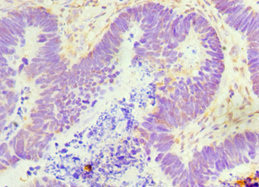
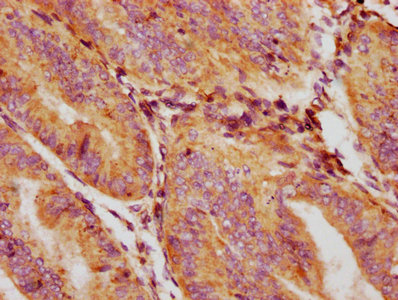
The antibody against GDF5 was raised in rabbit using the Recombinant Human Growth/differentiation factor 5 protein (202-501AA) as the immunogen. This antibody exists as a non-conjugated isotype IgG, Antigen affinity purified. This antibody has been validated on ELISA, WB, IHC, IF.
$299.00
| Cat.No | ADC-45251A | Clonality | Polyclonal |
|---|---|---|---|
| Host Species | Rabbit | Target Name | GDF5 |
| Form | Liquid | Species Reactivity | Human |
| Isotype | IgG | Storage Buffer | 50% Glycerol, PBS with 0.02% sodium azide, pH7.3. |
| Purification Method | Antigen affinity purified | Conjugate | Non-conjugated |
| Application | ELISA, IF, IHC, WB | Storage | Upon receipt |
| Immunogen Description | Recombinant Human Growth/differentiation factor 5 protein (202-501AA) | Target Species | Human |
|---|---|---|---|
| Immunogen Sequence | Complete sequences for the immunogen, target protein, and peptides are available upon request. | Uniprot ID | P43026 |
Uniprot Id
P43026
Target Species
Human
Target Name
GDF5
Target Full Name
Growth/differentiation factor 5
Target Function
Growth factor involved in bone and cartilage formation. During cartilage development regulates differentiation of chondrogenic tissue through two pathways. Firstly, positively regulates differentiation of chondrogenic tissue through its binding of high affinity with BMPR1B and of less affinity with BMPR1A, leading to induction of SMAD1-SMAD5-SMAD8 complex phosphorylation and then SMAD protein signaling transduction. Secondly, negatively regulates chondrogenic differentiation through its interaction with NOG. Required to prevent excessive muscle loss upon denervation. This function requires SMAD4 and is mediated by phosphorylated SMAD1/5/8. Binds bacterial lipopolysaccharide (LPS) and mediates LPS-induced inflammatory response, including TNF secretion by monocytes.
Target Involvement
Acromesomelic chondrodysplasia, Grebe type (AMDG); Acromesomelic chondrodysplasia, Hunter-Thompson type (AMDH); Brachydactyly C (BDC); Du Pan syndrome (DPS); Symphalangism, proximal 1B (SYM1B); Multiple synostoses syndrome 2 (SYNS2); Brachydactyly A2 (BDA2); Osteoarthritis 5 (OS5); Brachydactyly A1, C (BDA1C)
Target Subcellular Location
Secreted. Cell membrane.
Target Protein Families
TGF-beta family
Target Tissue Specificity
Predominantly expressed in long bones during embryonic development. Expressed in monocytes (at protein level).
Target Research Area
Cardiovascular
Target Synonyms
BMP14; Cartilage derived morphogenetic protein 1; Cartilage-derived morphogenetic protein 1; CDMP-1; CDMP1; GDF-5; Gdf5; GDF5_HUMAN; Growth differentiation factor 5; Growth/differentiation factor 5; LAP4; OS5; Radotermin; SYNS2
Target Background
This gene encodes a secreted ligand of the TGF-beta (transforming growth factor-beta) superfamily of proteins. Ligands of this family bind various TGF-beta receptors leading to recruitment and activation of SMAD family transcription factors that regulate gene expression. The encoded preproprotein is proteolytically processed to generate each subunit of the disulfide-linked homodimer. This protein regulates the development of numerous tissue and cell types, including cartilage, joints, brown fat, teeth, and the growth of neuronal axons and dendrites. Mutations in this gene are associated with acromesomelic dysplasia, brachydactyly, chondrodysplasia, multiple synostoses syndrome, proximal symphalangism, and susceptibility to osteoarthritis.
Notification