• Contact info@abtriva.com for inquiries and orders.
  • Chinese (Simplified)

  • English

  • German

  • Korean

  • Spanish

United States (English / $ USD)

Rabbit anti-Human GLB1 Polyclonal Antibody

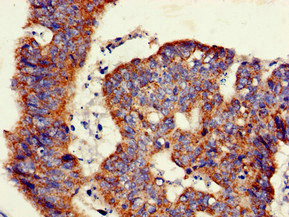
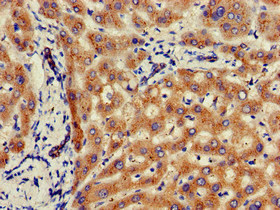
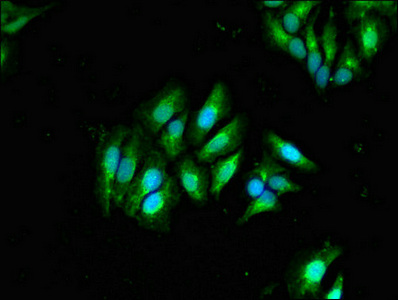
The antibody against GLB1 was raised in rabbit using the Recombinant Human Beta-galactosidase protein (317-455AA) as the immunogen. This antibody exists as a non-conjugated isotype IgG, purified by protein G with a purity greater than 95%. This antibody has been validated on ELISA, WB, IHC, IF.

ADC-11132A

The antibody against GLB1 was raised in rabbit using the Recombinant Human Beta-galactosidase protein (317-455AA) as the immunogen. This antibody exists as a non-conjugated isotype IgG, purified by protein G with a purity greater than 95%. This antibody has been validated on ELISA, WB, IHC, IF.

$299.00

Number
Order Exclusive Products Now

Request a Quote
High Purity LevelsPrecision and ReliabilityCustomization Options

Specifications


Cat.No ADC-11132A ClonalityPolyclonal
Host SpeciesRabbitTarget NameGLB1
FormLiquidSpecies ReactivityHuman
IsotypeIgGStorage Buffer0.01M PBS, 0.03% Proclin 300; Constituents: 50% Glycerol, PH 7.4
Purification Method>95%, Protein G purifiedConjugateNon-conjugated
ApplicationELISA, IF, IHC, WBStorageUpon receipt

Immunogen Information


Immunogen DescriptionRecombinant Human Beta-galactosidase protein (317-455AA)Target SpeciesHuman
Immunogen SequenceComplete sequences for the immunogen, target protein, and peptides are available upon request.Uniprot IDP16278
Background Information
  • Uniprot Id

    P16278

  • Target Species

    Human

  • Target Name

    GLB1

  • Target Full Name

    Beta-galactosidase

  • Target Function

    Cleaves beta-linked terminal galactosyl residues from gangliosides, glycoproteins, and glycosaminoglycans.; Has no beta-galactosidase catalytic activity, but plays functional roles in the formation of extracellular elastic fibers (elastogenesis) and in the development of connective tissue. Seems to be identical to the elastin-binding protein (EBP), a major component of the non-integrin cell surface receptor expressed on fibroblasts, smooth muscle cells, chondroblasts, leukocytes, and certain cancer cell types. In elastin producing cells, associates with tropoelastin intracellularly and functions as a recycling molecular chaperone which facilitates the secretions of tropoelastin and its assembly into elastic fibers.

  • Target Involvement

    GM1-gangliosidosis 1 (GM1G1); GM1-gangliosidosis 2 (GM1G2); GM1-gangliosidosis 3 (GM1G3); Mucopolysaccharidosis 4B (MPS4B)

  • Target Subcellular Location

    [Isoform 1]: Lysosome.; [Isoform 2]: Cytoplasm, perinuclear region.

  • Target Protein Families

    Glycosyl hydrolase 35 family

  • Target Tissue Specificity

    Detected in placenta (at protein level). Detected in fibroblasts and testis.

  • Target Synonyms

    Acid beta galactosidase; Acid beta-galactosidase; Beta galactosidase 1; Beta galactosidase; Beta-galactosidase; BGAL_HUMAN; EBP; EBP; included; Elastin receptor 1 (67kD); Elastin receptor 1 67kDa; Elastin receptor 1; Elastin receptor 1; included; Elastin-binding protein; included; ELNR1; Galactosidase beta 1; GLB 1; GLB1; Lactase; MPS4B; S-GAL; included

  • Target Background

    This gene encodes a member of the glycosyl hydrolase 35 family of proteins. Alternative splicing results in multiple transcript variants, at least one of which encodes a preproprotein that is proteolytically processed to generate the mature lysosomal enzyme. This enzyme catalyzes the hydrolysis of a terminal beta-linked galactose residue from ganglioside substrates and other glycoconjugates. Mutations in this gene may result in GM1-gangliosidosis and Morquio B syndrome.

Inquire Rabbit anti-Human GLB1 Polyclonal Antibody Now


AbTriva respects your privacy and protects your personal data in accordance with AbTriva. For more information, please see our data protection statement. *

Notification