-
Chinese (Simplified)
-
English
-
German
-
Korean
-
Spanish
Chinese (Simplified)
English
German
Korean
Spanish
Sign up for an account to enjoy easy online shopping and instant order tracking.
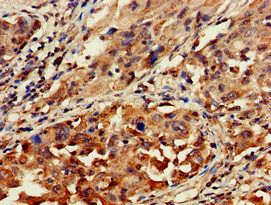
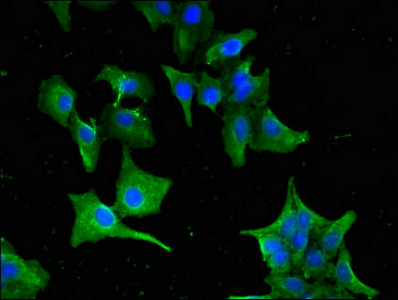
The antibody against GNAT1 was raised in rabbit using the Recombinant Human Guanine nucleotide-binding protein G(t) subunit alpha-1 protein (92-170AA) as the immunogen. This antibody exists as a non-conjugated isotype IgG, purified by protein G with a purity greater than 95%. This antibody has been validated on ELISA, WB, IHC, IF.
$299.00
| Cat.No | ADC-11125A | Clonality | Polyclonal |
|---|---|---|---|
| Host Species | Rabbit | Target Name | GNAT1 |
| Form | Liquid | Species Reactivity | Human, Mouse |
| Isotype | IgG | Storage Buffer | 0.01M PBS, 0.03% Proclin 300; Constituents: 50% Glycerol, PH 7.4 |
| Purification Method | >95%, Protein G purified | Conjugate | Non-conjugated |
| Application | ELISA, IF, IHC, WB | Storage | Upon receipt |
| Immunogen Description | Recombinant Human Guanine nucleotide-binding protein G(t) subunit alpha-1 protein (92-170AA) | Target Species | Human |
|---|---|---|---|
| Immunogen Sequence | Complete sequences for the immunogen, target protein, and peptides are available upon request. | Uniprot ID | P11488 |
Uniprot Id
P11488
Target Species
Human
Target Name
GNAT1
Target Full Name
Guanine nucleotide-binding protein G(t) subunit alpha-1
Target Function
Functions as signal transducer for the rod photoreceptor RHO. Required for normal RHO-mediated light perception by the retina. Guanine nucleotide-binding proteins (G proteins) function as transducers downstream of G protein-coupled receptors (GPCRs), such as the photoreceptor RHO. The alpha chain contains the guanine nucleotide binding site and alternates between an active, GTP-bound state and an inactive, GDP-bound state. Activated RHO promotes GDP release and GTP binding. Signaling is mediated via downstream effector proteins, such as cGMP-phosphodiesterase.
Target Involvement
Night blindness, congenital stationary, autosomal dominant 3 (CSNBAD3); Night blindness, congenital stationary, 1G (CSNB1G)
Target Subcellular Location
Cell projection, cilium, photoreceptor outer segment. Membrane; Peripheral membrane protein. Photoreceptor inner segment.
Target Protein Families
G-alpha family, G(i/o/t/z) subfamily
Target Tissue Specificity
Rod photoreceptor cells. Predominantly expressed in the retina followed by the ciliary body, iris and retinal pigment epithelium.
Target Synonyms
CSNBAD3; GBT1; GNAT1; GNAT1_HUMAN; GNATR; guanine nucleotide binding protein (G protein) alpha transducing activity polypeptide 1; guanine nucleotide binding protein G(T) alpha 1 subunit ; Guanine nucleotide-binding protein G(t) subunit alpha-1; Rod specific transducin; rod-type transducin alpha subunit; Transducin alpha-1 chain; transducin; rod-specific
Target Background
Transducin is a 3-subunit guanine nucleotide-binding protein (G protein) which stimulates the coupling of rhodopsin and cGMP-phoshodiesterase during visual impulses. The transducin alpha subunits in rods and cones are encoded by separate genes. This gene encodes the alpha subunit in rods. This gene is also expressed in other cells, and has been implicated in bitter taste transduction in rat taste cells. Mutations in this gene result in autosomal dominant congenital stationary night blindness. Multiple alternatively spliced variants, encoding the same protein, have been identified.
Notification