• Contact info@abtriva.com for inquiries and orders.
  • Chinese (Simplified)

  • English

  • German

  • Korean

  • Spanish

United States (English / $ USD)

Rabbit anti-Human GNB5 Polyclonal Antibody

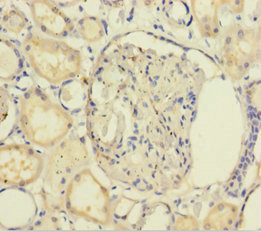
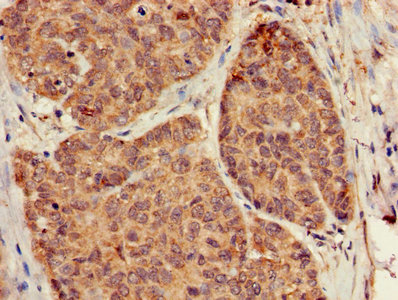
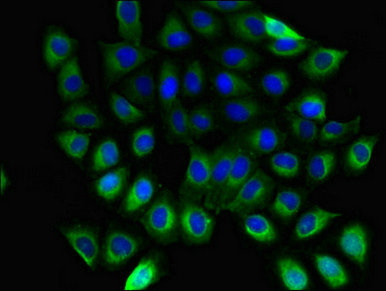
The antibody against GNB5 was raised in rabbit using the Recombinant Human Guanine nucleotide-binding protein subunit beta-5 protein (1-353AA) as the immunogen. This antibody exists as a non-conjugated isotype IgG, purified by protein G with a purity greater than 95%. This antibody has been validated on ELISA, IHC, IF.

ADC-45741A

The antibody against GNB5 was raised in rabbit using the Recombinant Human Guanine nucleotide-binding protein subunit beta-5 protein (1-353AA) as the immunogen. This antibody exists as a non-conjugated isotype IgG, purified by protein G with a purity greater than 95%. This antibody has been validated on ELISA, IHC, IF.

$299.00

Number
Order Exclusive Products Now

Request a Quote
High Purity LevelsPrecision and ReliabilityCustomization Options

Specifications


Cat.No ADC-45741A ClonalityPolyclonal
Host SpeciesRabbitTarget NameGNB5
FormLiquidSpecies ReactivityHuman
IsotypeIgGStorage Buffer0.01M PBS, 0.03% Proclin 300; Constituents: 50% Glycerol, PH 7.4
Purification Method>95%, Protein G purifiedConjugateNon-conjugated
ApplicationELISA, IF, IHCStorageUpon receipt

Immunogen Information


Immunogen DescriptionRecombinant Human Guanine nucleotide-binding protein subunit beta-5 protein (1-353AA)Target SpeciesHuman
Immunogen SequenceComplete sequences for the immunogen, target protein, and peptides are available upon request.Uniprot IDO14775
Background Information
  • Uniprot Id

    O14775

  • Target Species

    Human

  • Target Name

    GNB5

  • Target Full Name

    Guanine nucleotide-binding protein subunit beta-5

  • Target Function

    Enhances GTPase-activating protein (GAP) activity of regulator of G protein signaling (RGS) proteins, hence involved in the termination of the signaling initiated by the G protein coupled receptors (GPCRs) by accelerating the GTP hydrolysis on the G-alpha subunits, thereby promoting their inactivation (Probable). Increases RGS9 GTPase-activating protein (GAP) activity, hence contributes to the deactivation of G protein signaling initiated by D(2) dopamine receptors. May play an important role in neuronal signaling, including in the parasympathetic, but not sympathetic, control of heart rate.

  • Target Involvement

    Intellectual developmental disorder with cardiac arrhythmia (IDDCA); Language delay and attention deficit-hyperactivity disorder/cognitive impairment with or without cardiac arrhythmia (LADCI)

  • Target Subcellular Location

    Membrane.

  • Target Protein Families

    WD repeat G protein beta family

  • Target Tissue Specificity

    Widely expressed.

  • Target Research Area

    Signal Transduction

  • Target Synonyms

    FLJ37457; FLJ43714; G protein beta 5 subunit; G protein beta subunit 5L; GB 5; GB5; GBB5_HUMAN; Gbeta5; GNB 5; GNB5; Guanine nucleotide binding protein (G protein) beta 5; Guanine nucleotide binding protein beta 5; Guanine nucleotide binding protein beta 5 subunit; Guanine nucleotide binding protein beta subunit 5L; Guanine nucleotide binding protein subunit beta 5; Guanine nucleotide-binding protein subunit beta-5; Transducin beta chain 5

  • Target Background

    Heterotrimeric guanine nucleotide-binding proteins (G proteins), which integrate signals between receptors and effector proteins, are composed of an alpha, a beta, and a gamma subunit. These subunits are encoded by families of related genes. This gene encodes a beta subunit. Beta subunits are important regulators of alpha subunits, as well as of certain signal transduction receptors and effectors. Alternatively spliced transcript variants encoding different isoforms exist.

Inquire Rabbit anti-Human GNB5 Polyclonal Antibody Now


AbTriva respects your privacy and protects your personal data in accordance with AbTriva. For more information, please see our data protection statement. *

Notification