-
Chinese (Simplified)
-
English
-
German
-
Korean
-
Spanish
Chinese (Simplified)
English
German
Korean
Spanish
Sign up for an account to enjoy easy online shopping and instant order tracking.
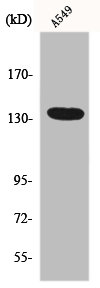
The antibody against ADGRG6 was raised in rabbit using the Synthesized peptide derived from the C-terminal region of Human DREG. as the immunogen. This antibody exists as a non-conjugated isotype IgG. The antibody was affinity-purified from rabbit antiserum by affinity-chromatography using epitope-specific immunogen. This antibody has been validated on WB, IF, ELISA.
$167.00
| Cat.No | ADC-38807A | Clonality | Polyclonal |
|---|---|---|---|
| Host Species | Rabbit | Target Name | ADGRG6 |
| Form | Liquid | Species Reactivity | Human, Mouse |
| Isotype | IgG | Storage Buffer | 0.5% BSA and 0.02% sodium azide., Liquid in PBS containing 50% glycerol |
| Purification Method | The antibody was affinity-purified from rabbit antiserum by affinity-chromatography using epitope-specific immunogen. | Conjugate | Non-conjugated |
| Application | ELISA, IF, WB | Storage | Upon receipt |
| Immunogen Description | Synthesized peptide derived from the C-terminal region of Human DREG. | Target Species | Human |
|---|---|---|---|
| Immunogen Sequence | Complete sequences for the immunogen, target protein, and peptides are available upon request. | Uniprot ID | Q86SQ4 |
Uniprot Id
Q86SQ4
Target Species
Human
Target Name
ADGRG6
Target Full Name
Adhesion G-protein coupled receptor G6
Target Function
G-protein coupled receptor which is activated by type IV collagen, a major constituent of the basement membrane. Couples to G(i)-proteins as well as G(s)-proteins. Essential for normal differentiation of promyelinating Schwann cells and for normal myelination of axons. Regulates neural, cardiac and ear development via G-protein- and/or N-terminus-dependent signaling. May act as a receptor for PRNP which may promote myelin homeostasis.
Target Involvement
Lethal congenital contracture syndrome 9 (LCCS9)
Target Subcellular Location
Cell membrane; Multi-pass membrane protein.
Target Protein Families
G-protein coupled receptor 2 family, Adhesion G-protein coupled receptor (ADGR) subfamily
Target Tissue Specificity
Expressed in placenta and to a lower extent in pancreas and liver. Detected in aortic endothelial cells but not in skin microvascular endothelial cells.
Target Research Area
Others
Target Synonyms
adhesion G protein coupled receptor G6; APG1; Developmentally regulated G protein coupled receptor; Developmentally regulated G-protein-coupled receptor; dj287g14.2; DREG; G protein coupled receptor 126; G-protein coupled receptor 126; GP126_HUMAN; GPR126; HBV PreS1 transactivated protein 2; HBV PreS1-transactivated protein 2; LCCS9; OTTHUMP00000017320; OTTHUMP00000237093; OTTHUMP00000237094; OTTHUMP00000237115; PR126; Probable G protein coupled receptor 126 [Precursor]; Probable G protein coupled receptor 126; Probable G-protein coupled receptor 126 [Precursor]; Probable G-protein coupled receptor 126; PS1TP2; Vascular inducible G protein coupled receptor; Vascular inducible G protein-coupled receptor; VIGR
Target Background
This gene, which is upregulated in human umbilical vein endothelial cells, encodes a G protein-coupled receptor. Variations in this gene can affect a person's stature. Multiple transcript variants encoding different proteins have been found for this gene.
Notification