-
Chinese (Simplified)
-
English
-
German
-
Korean
-
Spanish
Chinese (Simplified)
English
German
Korean
Spanish
Sign up for an account to enjoy easy online shopping and instant order tracking.
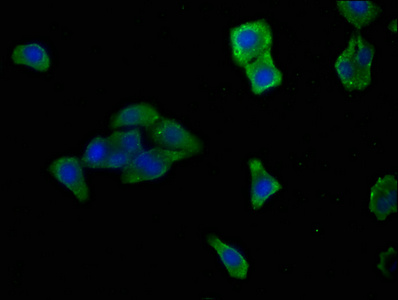
The antibody against HTRA1 was raised in rabbit using the Recombinant Human Serine protease HTRA1 protein (23-248AA) as the immunogen. This antibody exists as a non-conjugated isotype IgG, purified by protein G with a purity greater than 95%. This antibody has been validated on ELISA, IHC, IF.
$299.00
| Cat.No | ADC-00827A | Clonality | Polyclonal |
|---|---|---|---|
| Host Species | Rabbit | Target Name | HTRA1 |
| Form | Liquid | Species Reactivity | Human |
| Isotype | IgG | Storage Buffer | 0.01M PBS, 0.03% Proclin 300; Constituents: 50% Glycerol, PH 7.4 |
| Purification Method | >95%, Protein G purified | Conjugate | Non-conjugated |
| Application | ELISA, IF, IHC | Storage | Upon receipt |
| Immunogen Description | Recombinant Human Serine protease HTRA1 protein (23-248AA) | Target Species | Human |
|---|---|---|---|
| Immunogen Sequence | Complete sequences for the immunogen, target protein, and peptides are available upon request. | Uniprot ID | Q92743 |
Uniprot Id
Q92743
Target Species
Human
Target Name
HTRA1
Target Full Name
Serine protease HTRA1
Target Function
Serine protease with a variety of targets, including extracellular matrix proteins such as fibronectin. HTRA1-generated fibronectin fragments further induce synovial cells to up-regulate MMP1 and MMP3 production. May also degrade proteoglycans, such as aggrecan, decorin and fibromodulin. Through cleavage of proteoglycans, may release soluble FGF-glycosaminoglycan complexes that promote the range and intensity of FGF signals in the extracellular space. Regulates the availability of insulin-like growth factors (IGFs) by cleaving IGF-binding proteins. Inhibits signaling mediated by TGF-beta family members. This activity requires the integrity of the catalytic site, although it is unclear whether TGF-beta proteins are themselves degraded. By acting on TGF-beta signaling, may regulate many physiological processes, including retinal angiogenesis and neuronal survival and maturation during development. Intracellularly, degrades TSC2, leading to the activation of TSC2 downstream targets.
Target Involvement
Macular degeneration, age-related, 7 (ARMD7); Cerebral arteriopathy, autosomal recessive, with subcortical infarcts and leukoencephalopathy (CARASIL); Cerebral arteriopathy, autosomal dominant, with subcortical infarcts and leukoencephalopathy, 2 (CADASIL2)
Target Subcellular Location
Cell membrane. Secreted. Cytoplasm, cytosol.
Target Protein Families
Peptidase S1C family
Target Tissue Specificity
Widely expressed, with strongest expression in placenta (at protein level). Secreted by synovial fibroblasts. Up-regulated in osteoarthritis and rheumatoid arthritis synovial fluids and cartilage as compared with non-arthritic (at protein level).
Target Research Area
Signal Transduction
Target Synonyms
ARMD7; CARASIL; High-temperature requirement A serine peptidase 1; HtrA; HtrA serine peptidase 1; HTRA1; HTRA1_HUMAN; IGFBP5 protease; L56; ORF480; Protease serine 11 (IGF binding); protease serine 11; PRSS11 ; Serine protease 11; Serine protease HTRA1; Serine protease HTRA1 precursor
Target Background
This gene encodes a member of the trypsin family of serine proteases. This protein is a secreted enzyme that is proposed to regulate the availability of insulin-like growth factors (IGFs) by cleaving IGF-binding proteins. It has also been suggested to be a regulator of cell growth. Variations in the promoter region of this gene are the cause of susceptibility to age-related macular degeneration type 7.
Notification