• Contact info@abtriva.com for inquiries and orders.
  • Chinese (Simplified)

  • English

  • German

  • Korean

  • Spanish

United States (English / $ USD)

Mouse anti-Human IDE Monoclonal Antibody

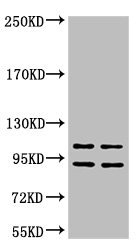
The antibody against IDE was raised in mouse using the Synthetic Peptide as the immunogen. This antibody exists as a non-conjugated isotype IgG. This antibody has been validated on ELISA, WB.

ADC-55692A

The antibody against IDE was raised in mouse using the Synthetic Peptide as the immunogen. This antibody exists as a non-conjugated isotype IgG. This antibody has been validated on ELISA, WB.

$167.00

Number
Order Exclusive Products Now

Request a Quote
High Purity LevelsPrecision and ReliabilityCustomization Options

Specifications


Cat.No ADC-55692A ClonalityMonoclonal
Host SpeciesMouseTarget NameIDE
FormLiquidSpecies ReactivityHuman
IsotypeIgGStorage BufferPH 7.4, containing 0.02% sodium azide as Preservative and 50% Glycerol., PBS
ConjugateNon-conjugatedApplicationELISA, WB
StorageUpon receipt

Immunogen Information


Immunogen DescriptionSynthetic PeptideTarget SpeciesHuman
Immunogen SequenceComplete sequences for the immunogen, target protein, and peptides are available upon request.Uniprot IDP14735
Background Information
  • Uniprot Id

    P14735

  • Target Species

    Human

  • Target Name

    IDE

  • Target Full Name

    Insulin-degrading enzyme

  • Target Function

    Plays a role in the cellular breakdown of insulin, APP peptides, IAPP peptides, natriuretic peptides, glucagon, bradykinin, kallidin, and other peptides, and thereby plays a role in intercellular peptide signaling. Substrate binding induces important conformation changes, making it possible to bind and degrade larger substrates, such as insulin. Contributes to the regulation of peptide hormone signaling cascades and regulation of blood glucose homeostasis via its role in the degradation of insulin, glucagon and IAPP. Plays a role in the degradation and clearance of APP-derived amyloidogenic peptides that are secreted by neurons and microglia (Probable). Degrades the natriuretic peptides ANP, BNP and CNP, inactivating their ability to raise intracellular cGMP. Also degrades an aberrant frameshifted 40-residue form of NPPA (fsNPPA) which is associated with familial atrial fibrillation in heterozygous patients. Involved in antigen processing. Produces both the N terminus and the C terminus of MAGEA3-derived antigenic peptide (EVDPIGHLY) that is presented to cytotoxic T lymphocytes by MHC class I.; (Microbial infection) The membrane-associated isoform acts as an entry receptor for varicella-zoster virus (VZV).

  • Target Subcellular Location

    Cytoplasm, cytosol. Cell membrane. Secreted. Note=Present at the cell surface of neuron cells. The membrane-associated isoform is approximately 5 kDa larger than the known cytosolic isoform.

  • Target Protein Families

    Peptidase M16 family

  • Target Tissue Specificity

    Detected in brain and in cerebrospinal fluid (at protein level).

  • Target Synonyms

    Abeta-degrading protease; FLJ35968; Ide; IDE_HUMAN; Insulin protease; Insulin-degrading enzyme; Insulinase; Insulysin; OTTHUMP00000020097

  • Target Background

    This gene encodes a zinc metallopeptidase that degrades intracellular insulin, and thereby terminates insulins activity, as well as participating in intercellular peptide signalling by degrading diverse peptides such as glucagon, amylin, bradykinin, and kallidin. The preferential affinity of this enzyme for insulin results in insulin-mediated inhibition of the degradation of other peptides such as beta-amyloid. Deficiencies in this protein's function are associated with Alzheimer's disease and type 2 diabetes mellitus but mutations in this gene have not been shown to be causitive for these diseases. This protein localizes primarily to the cytoplasm but in some cell types localizes to the extracellular space, cell membrane, peroxisome, and mitochondrion. Alternative splicing results in multiple transcript variants encoding distinct isoforms. Additional transcript variants have been described but have not been experimentally verified.

Inquire Mouse anti-Human IDE Monoclonal Antibody Now


AbTriva respects your privacy and protects your personal data in accordance with AbTriva. For more information, please see our data protection statement. *

Notification