• Contact info@abtriva.com for inquiries and orders.
  • Chinese (Simplified)

  • English

  • German

  • Korean

  • Spanish

United States (English / $ USD)

Rabbit anti-Human IGHG1 Polyclonal Antibody

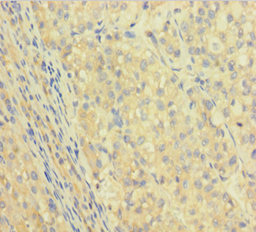
The antibody against IGHG1 was raised in rabbit using the Recombinant Human Immunoglobulin heavy constant gamma 1 protein (1-330AA) as the immunogen. This antibody exists as a non-conjugated isotype IgG, purified by protein G with a purity greater than 95%. This antibody has been validated on ELISA, IHC.

ADC-21980A

The antibody against IGHG1 was raised in rabbit using the Recombinant Human Immunoglobulin heavy constant gamma 1 protein (1-330AA) as the immunogen. This antibody exists as a non-conjugated isotype IgG, purified by protein G with a purity greater than 95%. This antibody has been validated on ELISA, IHC.

$299.00

Number
Order Exclusive Products Now

Request a Quote
High Purity LevelsPrecision and ReliabilityCustomization Options

Specifications


Cat.No ADC-21980A ClonalityPolyclonal
Host SpeciesRabbitTarget NameIGHG1
FormLiquidSpecies ReactivityHuman
IsotypeIgGStorage Buffer0.01M PBS, 0.03% Proclin 300; Constituents: 50% Glycerol, PH 7.4
Purification Method>95%, Protein G purifiedConjugateNon-conjugated
ApplicationELISA, IHCStorageUpon receipt

Immunogen Information


Immunogen DescriptionRecombinant Human Immunoglobulin heavy constant gamma 1 protein (1-330AA)Target SpeciesHuman
Immunogen SequenceComplete sequences for the immunogen, target protein, and peptides are available upon request.Uniprot IDP01857
Background Information
  • Uniprot Id

    P01857

  • Target Species

    Human

  • Target Name

    IGHG1

  • Target Full Name

    Immunoglobulin heavy constant gamma 1

  • Target Function

    Constant region of immunoglobulin heavy chains. Immunoglobulins, also known as antibodies, are membrane-bound or secreted glycoproteins produced by B lymphocytes. In the recognition phase of humoral immunity, the membrane-bound immunoglobulins serve as receptors which, upon binding of a specific antigen, trigger the clonal expansion and differentiation of B lymphocytes into immunoglobulins-secreting plasma cells. Secreted immunoglobulins mediate the effector phase of humoral immunity, which results in the elimination of bound antigens. The antigen binding site is formed by the variable domain of one heavy chain, together with that of its associated light chain. Thus, each immunoglobulin has two antigen binding sites with remarkable affinity for a particular antigen. The variable domains are assembled by a process called V-(D)-J rearrangement and can then be subjected to somatic hypermutations which, after exposure to antigen and selection, allow affinity maturation for a particular antigen.

  • Target Involvement

    Multiple myeloma (MM)

  • Target Subcellular Location

    Secreted. Cell membrane.

  • Target Research Area

    Immunology

  • Target Synonyms

    IGHG1; Immunoglobulin heavy constant gamma 1; Ig gamma-1 chain C region; Ig gamma-1 chain C region EU; Ig gamma-1 chain C region KOL; Ig gamma-1 chain C region NIE

  • Target Background

    IgG is a monomeric immunoglobulin, built of two heavy chains gamma and two light chains. Each molecule has two antigen binding sites. This is the most abundant immunoglobulin and is approximately equally distributed in blood and in tissue liquids, constituting 75% of serum immunoglobulins in humans. This is the only isotype that can pass through the human placenta, thereby providing protection to the fetus in its first weeks of life before its own immune system has developed. It can bind to many kinds of pathogens, for example viruses, bacteria, and fungi, and protects the body against them by complement activation (classic pathway), opsonization for phagocytosis and neutralisation of their toxins. There are 4 subclasses: IgG1 (66%), IgG2 (23%), IgG3 (7%) and IgG4 (4%).

Inquire Rabbit anti-Human IGHG1 Polyclonal Antibody Now


AbTriva respects your privacy and protects your personal data in accordance with AbTriva. For more information, please see our data protection statement. *

Notification