-
Chinese (Simplified)
-
English
-
German
-
Korean
-
Spanish
Chinese (Simplified)
English
German
Korean
Spanish
Sign up for an account to enjoy easy online shopping and instant order tracking.
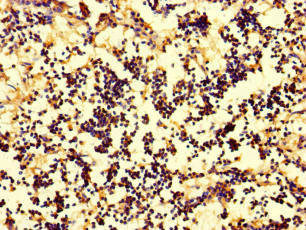
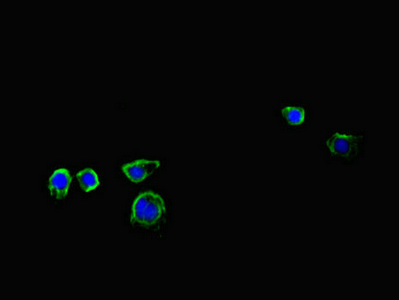
The antibody against IL17A was raised in rabbit using the Recombinant Human Interleukin-17A protein (26-132AA) as the immunogen. This antibody exists as a non-conjugated isotype IgG, purified by protein G with a purity greater than 95%. This antibody has been validated on ELISA, IHC, IF.
$299.00
| Cat.No | ADC-15561A | Clonality | Polyclonal |
|---|---|---|---|
| Host Species | Rabbit | Target Name | IL17A |
| Form | Liquid | Species Reactivity | Human |
| Isotype | IgG | Storage Buffer | 0.01M PBS, 0.03% Proclin 300; Constituents: 50% Glycerol, PH 7.4 |
| Purification Method | >95%, Protein G purified | Conjugate | Non-conjugated |
| Application | ELISA, IF, IHC | Storage | Upon receipt |
| Immunogen Description | Recombinant Human Interleukin-17A protein (26-132AA) | Target Species | Human |
|---|---|---|---|
| Immunogen Sequence | Complete sequences for the immunogen, target protein, and peptides are available upon request. | Uniprot ID | Q16552 |
Uniprot Id
Q16552
Target Species
Human
Target Name
IL17A
Target Full Name
Interleukin-17A
Target Function
Effector cytokine of innate and adaptive immune system involved in antimicrobial host defense and maintenance of tissue integrity. Signals via IL17RA-IL17RC heterodimeric receptor complex, triggering homotypic interaction of IL17RA and IL17RC chains with TRAF3IP2 adapter. This leads to downstream TRAF6-mediated activation of NF-kappa-B and MAPkinase pathways ultimately resulting in transcriptional activation of cytokines, chemokines, antimicrobial peptides and matrix metalloproteinases, with potential strong immune inflammation. Plays an important role in connecting T cell-mediated adaptive immunity and acute inflammatory response to destroy extracellular bacteria and fungi. As a signature effector cytokine of T-helper 17 cells (Th17), primarily induces neutrophil activation and recruitment at infection and inflammatory sites. In airway epithelium, mediates neutrophil chemotaxis via induction of CXCL1 and CXCL5 chemokines. In secondary lymphoid organs, contributes to germinal center formation by regulating the chemotactic response of B cells to CXCL12 and CXCL13, enhancing retention of B cells within the germinal centers, B cell somatic hypermutation rate and selection toward plasma cells. Effector cytokine of a subset of gamma-delta T cells that functions as part of an inflammatory circuit downstream IL1B, TLR2 and IL23A-IL12B to promote neutrophil recruitment for efficient bacterial clearance. Effector cytokine of innate immune cells including invariant natural killer cell (iNKT) and group 3 innate lymphoid cells that mediate initial neutrophilic inflammation. Involved in the maintenance of the integrity of epithelial barriers during homeostasis and pathogen infection. Upon acute injury, has a direct role in epithelial barrier formation by regulating OCLN localization and tight junction biogenesis. As part of the mucosal immune response induced by commensal bacteria, enhances host's ability to resist pathogenic bacterial and fungal infections by promoting neutrophil recruitment and antimicrobial peptides release. In synergy with IL17F, mediates the production of antimicrobial beta-defensins DEFB1, DEFB103A, and DEFB104A by mucosal epithelial cells, limiting the entry of microbes through the epithelial barriers. Involved in antiviral host defense through various mechanisms. Enhances immunity against West Nile virus by promoting T cell cytotoxicity. May play a beneficial role in influenza A virus (H5N1) infection by enhancing B cell recruitment and immune response in the lung. Contributes to influenza A virus (H1N1) clearance by driving the differentiation of B-1a B cells, providing for production of virus-specific IgM antibodies at first line of host defense.
Target Subcellular Location
Secreted.
Target Protein Families
IL-17 family
Target Tissue Specificity
Expressed in memory Th17 cells (at protein level).
Target Research Area
Immunology
Target Synonyms
CTLA 8; CTLA-8; CTLA8; cytotoxic T lymphocyte associated antigen 8; Cytotoxic T lymphocyte associated protein 8; Cytotoxic T lymphocyte associated serine esterase 8; Cytotoxic T-lymphocyte-associated antigen 8; IL 17; IL 17A; IL-17; IL-17A; IL17; IL17_HUMAN; Il17a; Interleukin 17 (cytotoxic T lymphocyte associated serine esterase 8); interleukin 17A; Interleukin-17A; interleukin17; Interleukin17A; OTTHUMP00000016597; OTTMUSP00000046003
Target Background
This gene is a member of the IL-17 receptor family which includes five members (IL-17RA-E) and the encoded protein is a proinflammatory cytokine produced by activated T cells. IL-17A-mediated downstream pathways induce the production of inflammatory molecules, chemokines, antimicrobial peptides, and remodeling proteins. The encoded protein elicits crucial impacts on host defense, cell trafficking, immune modulation, and tissue repair, with a key role in the induction of innate immune defenses. This cytokine stimulates non-hematopoietic cells and promotes chemokine production thereby attracting myeloid cells to inflammatory sites. This cytokine also regulates the activities of NF-kappaB and mitogen-activated protein kinases and can stimulate the expression of IL6 and cyclooxygenase-2 (PTGS2/COX-2), as well as enhance the production of nitric oxide (NO). IL-17A plays a pivotal role in various infectious diseases, inflammatory and autoimmune disorders, and cancer. High levels of this cytokine are associated with several chronic inflammatory diseases including rheumatoid arthritis, psoriasis and multiple sclerosis. The lung damage induced by the severe acute respiratory syndrome coronavirus 2 (SARS-CoV-2) is to a large extent, a result of the inflammatory response promoted by cytokines such as IL17A.
Notification