• Contact info@abtriva.com for inquiries and orders.
  • Chinese (Simplified)

  • English

  • German

  • Korean

  • Spanish

United States (English / $ USD)

Rabbit anti-Human INPP5E Polyclonal Antibody

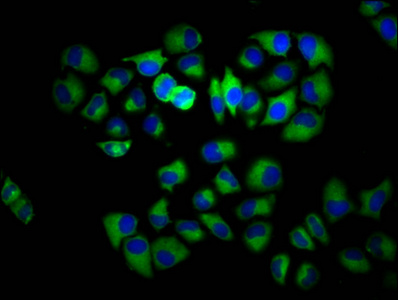
The antibody against INPP5E was raised in rabbit using the Recombinant Human 72 kDa inositol polyphosphate 5-phosphatase protein (1-133AA) as the immunogen. This antibody exists as a non-conjugated isotype IgG, purified by protein G with a purity greater than 95%. This antibody has been validated on ELISA, IHC, IF.

ADC-03827A

The antibody against INPP5E was raised in rabbit using the Recombinant Human 72 kDa inositol polyphosphate 5-phosphatase protein (1-133AA) as the immunogen. This antibody exists as a non-conjugated isotype IgG, purified by protein G with a purity greater than 95%. This antibody has been validated on ELISA, IHC, IF.

$299.00

Number
Order Exclusive Products Now

Request a Quote
High Purity LevelsPrecision and ReliabilityCustomization Options

Specifications


Cat.No ADC-03827A ClonalityPolyclonal
Host SpeciesRabbitTarget NameINPP5E
FormLiquidSpecies ReactivityHuman
IsotypeIgGStorage Buffer0.01M PBS, 0.03% Proclin 300; Constituents: 50% Glycerol, PH 7.4
Purification Method>95%, Protein G purifiedConjugateNon-conjugated
ApplicationELISA, IF, IHCStorageUpon receipt

Immunogen Information


Immunogen DescriptionRecombinant Human 72 kDa inositol polyphosphate 5-phosphatase protein (1-133AA)Target SpeciesHuman
Immunogen SequenceComplete sequences for the immunogen, target protein, and peptides are available upon request.Uniprot IDQ9NRR6
Background Information
  • Uniprot Id

    Q9NRR6

  • Target Species

    Human

  • Target Name

    INPP5E

  • Target Full Name

    Phosphatidylinositol polyphosphate 5-phosphatase type IV

  • Target Function

    Phosphatidylinositol (PtdIns) phosphatase that specifically hydrolyzes the 5-phosphate of phosphatidylinositol-3,4,5-trisphosphate (PtdIns(3,4,5)P3), phosphatidylinositol 4,5-bisphosphate (PtdIns(4,5)P2) and phosphatidylinositol 3,5-bisphosphate (PtdIns(3,5)P2). Specific for lipid substrates, inactive towards water soluble inositol phosphates. Plays an essential role in the primary cilium by controlling ciliary growth and phosphoinositide 3-kinase (PI3K) signaling and stability.

  • Target Involvement

    Joubert syndrome 1 (JBTS1); Mental retardation, truncal obesity, retinal dystrophy, and micropenis (MORMS)

  • Target Subcellular Location

    Cytoplasm, cytoskeleton, cilium axoneme. Golgi apparatus, Golgi stack membrane; Peripheral membrane protein; Cytoplasmic side. Cell membrane; Peripheral membrane protein; Cytoplasmic side. Cell projection, ruffle. Cytoplasm. Nucleus.

  • Target Protein Families

    Inositol 1,4,5-trisphosphate 5-phosphatase type IV family

  • Target Tissue Specificity

    Detected in brain, heart, pancreas, testis and spleen.

  • Target Synonyms

    5-bisphosphate 5-phosphatase; 72 kDa inositol polyphosphate 5-phosphatase; Inositol polyphosphate 5 phosphatase; INP5E_HUMAN; Inpp5e; Phosphatidylinositol (4,5) bisphosphate 5 phosphatase; Phosphatidylinositol 4; Phosphatidylinositol polyphosphate 5 phosphatase type IV; Phosphatidylinositol polyphosphate 5-phosphatase type IV; PPI5PIV

  • Target Background

    The protein encoded by this gene is an inositol 1, 4, 5-trisphosphate (InsP3) 5-phosphatase. InsP3 5-phosphatases hydrolyze Ins(1, 4, 5)P3, which mobilizes intracellular calcium and acts as a second messenger mediating cell responses to various stimulation. Studies of the mouse counterpart suggest that this protein may hydrolyze phosphatidylinositol 3, 4, 5-trisphosphate and phosphatidylinositol 3, 5-bisphosphate on the cytoplasmic Golgi membrane and thereby regulate Golgi-vesicular trafficking. Mutations in this gene cause Joubert syndrome; a clinically and genetically heterogenous group of disorders characterized by midbrain-hindbrain malformation and various associated ciliopathies that include retinal dystrophy, nephronophthisis, liver fibrosis and polydactyly. Alternative splicing results in multiple transcript variants encoding different isoforms.

Inquire Rabbit anti-Human INPP5E Polyclonal Antibody Now


AbTriva respects your privacy and protects your personal data in accordance with AbTriva. For more information, please see our data protection statement. *

Notification